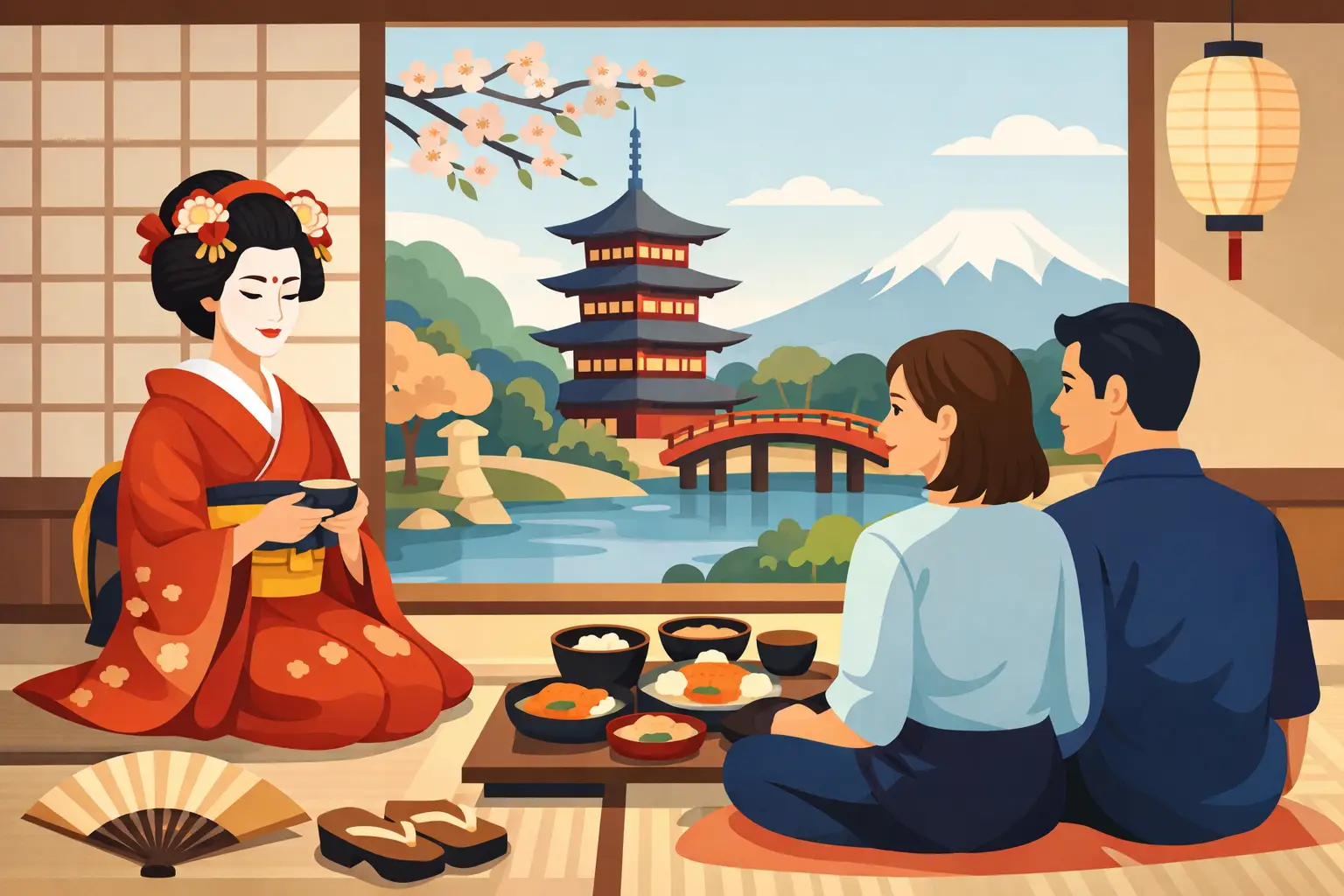
A geisha lunch is not simply a reservation for fine Kyoto cuisine. It is a rare Kyoto moment: an opportunity to sit close to a living artistic tradition, enjoy the grace of seasonal hospitality, and share time with geiko and maiko in an intimate setting. Knowing how to prepare for geisha lunch helps you arrive relaxed, appropriately dressed, and ready to appreciate every detail.
For international guests, the most rewarding approach is simple: come with curiosity, respect, and enough time to enjoy the occasion without rushing. You do not need to know Japanese customs perfectly. A thoughtfully curated experience with English-speaking support is designed to make the world of Kyoto’s traditional entertainment districts welcoming and accessible.
目次
Confirm the Details Before You Arrive
A geisha lunch is usually scheduled with care around the performers, the restaurant, and the flow of the meal. Review your confirmation the evening before, especially the meeting time, address, included elements, and dietary information you provided when booking.
Plan to arrive 10 to 15 minutes early. Kyoto’s narrow streets, taxi drop-off points, and seasonal crowds can make even a short journey less predictable than it appears on a map. Early arrival also gives you a quiet moment to settle in before the experience begins. Arriving late can interrupt a dance performance or delay a carefully timed meal, so allow extra travel time if you are coming from a major sightseeing area such as Arashiyama or Fushimi Inari.
If your lunch includes an interpreter, performances, traditional games, photographs, or live shamisen, treat the full duration as part of the occasion. Avoid scheduling another fixed reservation immediately afterward. A relaxed afternoon allows the experience to unfold naturally and leaves room for a few final photographs or conversation.
What to Wear to a Geisha Lunch
The right attire should feel polished rather than formal. Think of what you might wear for an elegant lunch at a respected restaurant: a tailored dress, smart trousers with a refined blouse, a jacket, or a collared shirt with neat shoes. Comfortable clothing matters, particularly if your meal is served in a traditional room where you may sit on floor cushions or remove your shoes.
There is no requirement to wear a kimono. For many visitors, choosing a kimono can be a beautiful addition to a Kyoto itinerary, but it is not necessary for enjoying a geisha lunch. If you do wear one, make sure you can move and sit comfortably. The focus should remain on the hospitality, cuisine, and performance rather than on managing an unfamiliar outfit.
Avoid clothing that feels overly casual for the setting, such as beachwear, athletic clothing, or garments with large, distracting slogans. Kyoto dining rooms favor understatement. Clean, tasteful attire photographs beautifully against traditional interiors and signals respect for the hosts and artists.
Understand Who You Will Meet
In Kyoto, the word geiko is commonly used for what international visitors call geisha. A maiko is an apprentice geiko, recognized by her distinctive hairstyle, vibrant kimono, and youthful style of dress. Both are highly trained professional artists, not costumed performers or museum figures.
Their work includes traditional dance, music, conversation, and the social arts that make a gathering feel light, attentive, and memorable. A lunch may include a dance accompanied by shamisen, an elegant game, or conversation through an interpreter. The atmosphere can be joyful and playful, but it remains grounded in professional artistry and longstanding custom.
This context is useful because it changes how you experience the room. Rather than treating the occasion as a spectacle, consider it a chance to observe the precision behind the beauty: the gestures in a dance, the seasonal motifs in a kimono, the poise of a greeting, and the humor woven into a traditional game.
How to Prepare for Geisha Lunch Etiquette
The most valuable etiquette is also the easiest: follow the host’s lead. Your interpreter or attendant will let you know where to sit, when a performance is about to begin, and whether photography is appropriate. A warm greeting, attentive listening, and a sincere thank-you go a long way.
When entering a traditional room, you may be asked to remove your shoes. Wear clean, presentable socks, and avoid walking in slippers where they are not intended. If you are seated on tatami, step carefully and do not place bags, drinks, or shoes on the mats unless directed. These are small gestures, but they show consideration for a space that may have welcomed guests for generations.
During a dance or musical performance, keep conversation low and put your phone away unless you have been invited to take photographs. Applause at the end is welcome. If a game is offered, join in with good humor. Traditional ozashiki games are meant to create connection, not to test your skill, and a willingness to participate often becomes one of the most memorable parts of the afternoon.
There is no need to bow perfectly or memorize Japanese phrases. A simple “thank you” is gracious, and “arigato gozaimasu” is always appreciated. If an interpreter is present, use that support freely. Asking a thoughtful question is far more meaningful than staying silent for fear of getting something wrong.
Enjoy Kyoto Cuisine at Its Own Pace
A geisha lunch often features seasonal Kyoto-style cuisine, arranged with remarkable attention to color, texture, and presentation. Each course may arrive in a deliberate sequence, so resist the impulse to rush through the meal or photograph every dish before tasting it.
If you are unfamiliar with a particular ingredient, ask. Kyoto cuisine can include delicate tofu preparations, seasonal vegetables, fresh fish, pickles, and subtle broths that may be very different from Japanese food you have had at home. Curiosity is welcome, particularly when it is expressed with appreciation for the chef’s craft.
Dietary needs should be communicated before your visit whenever possible. Vegetarian, vegan, gluten-free, allergy-sensitive, and halal requests can require advance planning in traditional Japanese kitchens, where dashi stock, soy sauce, and shared preparation areas are common. Be specific about serious allergies, but also understand that not every request can be accommodated at the last minute. Clear advance communication creates the best chance for a comfortable meal.
If alcohol is included or offered, enjoy it as part of the meal rather than as the focus of the event. A celebratory toast can be lovely, but moderation helps you remain present for the artistry, conversation, and photographs that follow.
Take Photographs With Consideration
Professional-style photo opportunities are often among the most treasured parts of a geisha lunch. A portrait with a geiko or maiko is a keepsake from an experience few Kyoto visitors have the chance to enjoy. Still, photography rules vary by venue and performer, so wait for guidance before taking candid images, recording video, or posting in real time.
When the moment comes, keep poses natural and let the host guide the arrangement. Do not touch a geiko or maiko’s kimono, hair ornaments, or sleeves unless she clearly invites it. Their appearance is the result of expert dressing and careful preparation, and even a small adjustment can disturb it.
If you wish to share photographs later, do so with the same discretion you would bring to the room itself. The most compelling images tend to be the ones that preserve the elegance of the setting rather than turning a cultural encounter into a performance for social media.
Bring the Right Questions
A geisha lunch becomes more personal when you arrive with a few questions in mind. You might ask about a dance’s seasonal theme, the meaning of a kimono motif, a favorite Kyoto tradition, or the years of training behind a particular art. Through an interpreter, these questions can open a warm exchange without placing pressure on the artists to discuss private matters.
Avoid intrusive questions about income, romance, or personal schedules. Geiko and maiko are professionals sharing their art within a formal hospitality setting. Respecting that boundary preserves the ease and dignity of the occasion.
A thoughtfully arranged experience such as GEISHAKYOTO allows guests to focus on these meaningful details, with interpretation and a clear format that remove the uncertainty often associated with traditional Kyoto entertainment.
Come prepared, but do not over-rehearse the moment. The finest part of a geisha lunch is often something unexpected: a smile during a game, the first notes of shamisen, a perfectly composed seasonal dish, or the quiet realization that Kyoto tradition is not distant at all. It is present in the room, offered with generosity, and best received with your full attention.
AUTHENTIC KYOTO EXPERIENCE