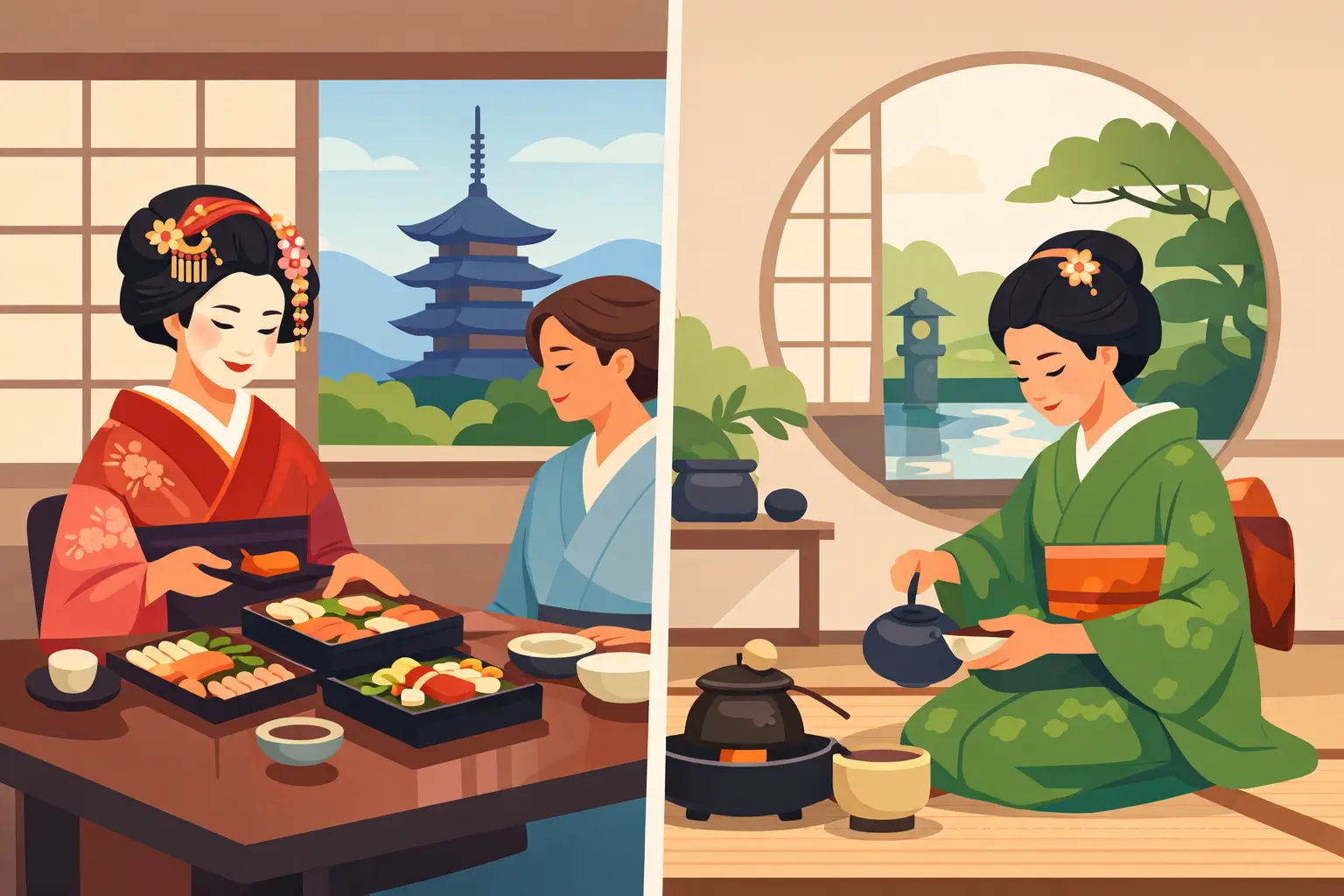
A private room in Kyoto can offer two very different kinds of stillness. In one, a tea master prepares a single bowl of matcha with deliberate, practiced precision. In the other, a maiko enters in formal kimono, the room brightens with music and conversation, and a seasonal meal becomes a rare Kyoto moment. Choosing a geisha lunch versus tea ceremony is less about which experience is more “Japanese” and more about the memory you want to bring home.
Both can be beautiful expressions of Kyoto culture. Yet they serve different interests, move at different rhythms, and offer different forms of access to tradition. For travelers with limited time – or those planning a honeymoon, celebration, or meaningful private outing – understanding that distinction makes the choice far easier.
目次
Geisha Lunch Versus Tea Ceremony: The Essential Difference
A tea ceremony, known as chanoyu or sado, centers on the preparation and sharing of matcha. It is a refined ritual shaped by hospitality, seasonality, craftsmanship, and quiet attention. The setting may be a traditional tea room, a garden pavilion, or a cultural venue designed for guests. Its focus is the tea itself and the thoughtful details around it: the tea bowl, the hanging scroll, the flower arrangement, the sweets, and the host’s movements.
A geisha lunch is a hosted cultural dining experience. It combines Kyoto cuisine with the living arts of Kyoto’s hanamachi districts, where geiko – Kyoto’s term for geisha – and maiko train in dance, music, etiquette, and traditional entertainment. Guests may enjoy a dance performance, conversation through an interpreter, lighthearted parlor games, photographs, and, depending on the experience, live shamisen music.
The difference is simple but significant. A tea ceremony invites contemplation. A geisha lunch invites participation.
Neither should be treated as a costume show or a checklist attraction. At their best, both are carefully held cultural encounters. The right choice depends on whether you are drawn more to ritual and quiet observation, or to dining, performance, and human connection.
What a Traditional Tea Ceremony Feels Like
Tea ceremony is often the more intimate and meditative choice. Even when adapted for international guests, it retains a sense of ceremony that asks you to slow down. You may remove your shoes, enter through a low doorway, sit on tatami, receive a seasonal sweet, and watch the host prepare matcha according to an established sequence.
For many visitors, the appeal is its restraint. There is no need to fill the room with conversation. Small details carry meaning: the placement of an object, the turn of the bowl before drinking, the awareness of the season outside. A well-led ceremony can be especially memorable for travelers interested in Japanese aesthetics, architecture, gardens, ceramics, or the philosophy of hospitality.
There are practical considerations. Traditional seating can be difficult for guests with knee, hip, or back concerns, though some venues offer chairs or accommodations. The experience is also usually brief, often around 30 to 60 minutes. It is not designed as a full meal, nor is it typically a performance.
Most importantly, geisha are not a standard feature of a traditional tea ceremony. There are events that pair tea with geiko or maiko appearances, but tea ceremony itself is a distinct discipline. If meeting a real geiko or maiko is central to your Kyoto plans, confirm exactly what the experience includes rather than assuming that matcha and geisha culture naturally come together.
Choose tea ceremony if you value quiet ritual
A tea ceremony is an excellent fit when you want a contemplative pause between temples, gardens, and museum visits. It suits solo travelers, couples, and small groups who appreciate subtlety and would rather observe one art form deeply than move through several activities in one sitting.
It can also be a thoughtful complement to a larger Kyoto itinerary. After a morning in Higashiyama or an afternoon among Arashiyama’s temples, the measured pace of tea provides a welcome change from sightseeing.
What a Geisha Lunch Feels Like
A geisha lunch places you at the table, rather than at the edge of the room. It is a more social, celebratory format, built around the pleasures of Kyoto hospitality: beautiful seasonal dishes, an elegant setting, skilled performance, and conversation that feels personal rather than distant.
The meal is part of the experience, not an interruption between activities. Kyoto-style cuisine reflects the season through ingredients, colors, tableware, and presentation. While a formal kaiseki dinner is often associated with geiko entertainment, lunch can offer a more approachable time of day while preserving the atmosphere of a special occasion.
During a thoughtfully curated experience, guests may see a traditional dance performed in close range, hear shamisen music, and learn about the traditions behind a geiko or maiko’s training and attire. Entertainment games add warmth and laughter, but they are not casual party games. They are part of the ozashiki tradition, historically enjoyed in private banquet rooms and adapted with care for guests.
For overseas visitors, interpretation changes everything. Without it, a meeting with geiko or maiko can remain visually impressive but difficult to understand. With English-speaking support, guests can ask respectful questions, follow the customs of the room, and appreciate the skill, discipline, and cultural context behind the performance.
Choose a geisha lunch if the people are the priority
A geisha lunch is ideal for travelers who want an authentic human encounter with Kyoto’s performing arts. It is particularly suited to couples celebrating a honeymoon, families marking a milestone, executive groups, and friends seeking one exceptional shared experience rather than another standard restaurant reservation.
It also offers more variety within a single occasion. Instead of choosing between a meal, cultural performance, photographs, and a conversation with a local tradition bearer, the experience can bring these elements together in a polished format. At GEISHAKYOTO, structured lunch experiences are designed around precisely this balance, with dining, performance, entertainment, photographs, souvenirs, and English support offered according to the selected plan.
How to Decide Based on Your Kyoto Itinerary
Consider the emotional shape of your day. Tea ceremony works beautifully as a quiet cultural interlude, especially if your schedule already includes a substantial lunch or dinner. A geisha lunch can become the centerpiece of the day, allowing you to reserve the morning for temples or shopping and leave the afternoon open for a relaxed walk through Gion.
Your group size matters as well. Tea ceremony often feels most natural in a smaller, quieter setting. A geisha lunch can be especially rewarding for private groups because the shared meal, music, and games create easy conversation and photographs that feel genuinely celebratory.
Budget is another honest consideration. A simple tea ceremony is generally less costly because it is more focused in scope. A premium geisha lunch reflects the rarity of arranging professional geiko or maiko participation, the meal, private hospitality, performance, interpretation, and the coordination required to present these traditions respectfully. If your trip calls for one significant cultural investment, a geisha lunch offers a fuller occasion. If you prefer several smaller cultural stops, tea may fit better.
Etiquette That Makes Either Experience More Meaningful
You do not need to arrive with expert knowledge. Polite curiosity is far more valuable than rehearsed formality. Dress neatly, arrive on time, listen to guidance from your host or interpreter, and ask before taking photographs. If you are offered a tea bowl, follow the host’s instructions rather than worrying about making a mistake.
At a geisha lunch, remember that geiko and maiko are highly trained artists and professionals. Their presence is a privilege, not a novelty. Avoid treating them as props for social media, and allow the exchange to be guided by the setting. A warm greeting, genuine interest in their arts, and respectful attention will always be appropriate.
Reservations are essential for both experiences, particularly during cherry blossom season, autumn foliage, and major holiday periods. The most sought-after occasions are not spontaneous finds. They are planned moments, made possible by thoughtful coordination.
If you are deciding between the quiet grace of matcha and the lively elegance of an ozashiki-style lunch, let your travel companions and your purpose guide you. Choose tea when you want Kyoto to whisper. Choose a geisha lunch when you want it to welcome you to the table.
AUTHENTIC KYOTO EXPERIENCE