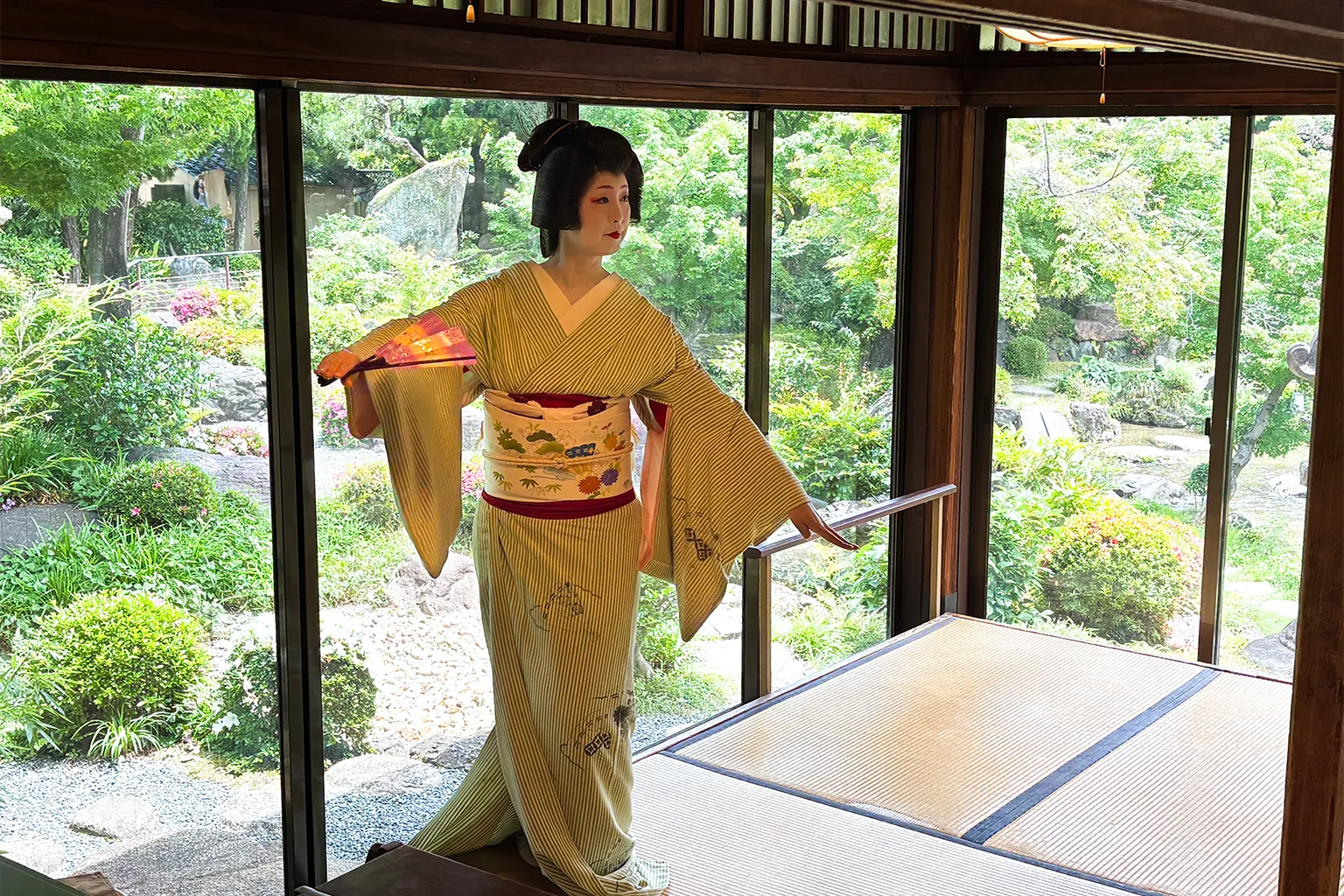
The first notes of shamisen change the atmosphere of the room. A maiko enters in a formal kimono, her movements measured and remarkably precise, and Kyoto’s tradition feels close rather than distant. For travelers seeking a maiko performance in Kyoto, this is not simply an item to check off an itinerary. It is a rare cultural afternoon shaped by music, artistry, hospitality, and personal connection.
A well-arranged experience makes this world approachable without making it feel ordinary. You can enjoy the elegance of Kyoto entertainment with a refined meal, clear English support, and the reassurance of knowing how to participate respectfully.
目次
Why a Maiko Performance Feels So Distinctly Kyoto
A maiko is an apprentice entertainer training in Kyoto’s historic hanamachi, or geisha districts. Her work involves years of study in classical dance, shamisen, song, tea ceremony, conversation, and the customs of formal hospitality. The image may be instantly recognizable, but the discipline behind it is easy to overlook.
During a performance, every detail has a purpose. The silk kimono, seasonal hair ornaments, white makeup, fan, and restrained gestures create a complete visual language. The dance is not designed for dramatic spectacle in the modern sense. It often expresses a season, a place, or a quiet emotion through controlled movement. A sleeve lifted at just the right moment or a turn of the fan can carry the meaning of an entire scene.
That restraint is part of the pleasure. Kyoto dance rewards attention, especially when it is paired with an introduction that explains what guests are seeing. The experience becomes richer when you understand that a performance is connected to a living tradition, not presented as a costume display for visitors.
What to Expect From a Maiko Performance in Kyoto
The setting matters as much as the dance. Traditionally, maiko and geiko entertain guests at ozashiki gatherings, intimate occasions where dining, music, conversation, and games unfold with polished hospitality. Private access to these spaces can be difficult for international visitors to arrange independently, particularly without local introductions or Japanese-language support.
A curated lunch experience offers a more welcoming way to enjoy the atmosphere. Guests are seated for Kyoto-style cuisine, then welcomed into an occasion that may include a traditional dance performance, conversation with the maiko, and opportunities to take photographs. Rather than watching from the back of a crowded theater, you can appreciate the details at close range in a composed, personal setting.
Dance, Music, and Meaning
A dance performance is often the emotional center of the afternoon. Maiko dance is graceful and carefully paced, using small gestures to suggest changing seasons, famous places, or scenes of romance and nature. It is an art form best enjoyed slowly. There is no need to understand every reference to feel the atmosphere, though a knowledgeable explanation adds welcome context.
Live shamisen brings another dimension to the room. The three-stringed instrument can sound bright and rhythmic or unexpectedly expressive, creating a strong contrast with the quiet precision of the dance. Not every experience includes live shamisen, so travelers who value music should check what is included in their chosen plan.
Conversation and Traditional Games
The most memorable moments are often informal. A maiko may speak with guests, answer appropriate questions through an interpreter, and lead a classic ozashiki game. These games are lighthearted, social, and designed to bring guests into the occasion rather than leave them as silent observers.
This is where a polished experience differs from a short stage performance. You are not only seeing a tradition. You are being welcomed into the hospitality around it.
A Real Cultural Encounter, Not a Generic Show
Kyoto offers many performances, from large seasonal dance productions to tourist-oriented shows with several Japanese arts presented in quick succession. These can be enjoyable, especially for travelers with limited time. But they offer a different kind of experience from sharing a meal and conversation with a maiko.
The trade-off is simple. A large theater performance can offer scale, elaborate staging, and a lower entry price. An intimate cultural dining experience offers proximity, personal interaction, and a more unhurried sense of occasion. For a honeymoon, celebration, executive visit, or meaningful family trip, the second option often feels more lasting.
Authenticity also requires care in how it is described. Maiko are working cultural professionals, not props for photographs. The most respectful experiences allow them to present their art with dignity while giving overseas guests a comfortable and well-guided introduction. A thoughtful host and English-speaking interpretation are not minor conveniences. They make it possible to understand the setting, communicate naturally, and relax into the moment.
Choosing the Right Experience for Your Visit
Start by considering the kind of memory you want to take home. If you primarily want to see formal dance, a public performance may be sufficient. If you want dining, personal interaction, photographs, and a closer view of Kyoto hospitality, choose a reservation-based experience designed around those elements.
The best options make the inclusions clear before you book: the duration, meal style, whether a maiko dance is included, whether there is live shamisen, the role of interpretation, and the photography policy. This clarity is especially valuable for international travelers, since traditional settings can otherwise feel difficult to navigate.
GEISHAKYOTO presents this type of occasion as a refined lunch experience, bringing together Kyoto cuisine, authentic maiko entertainment, traditional games, photo opportunities, souvenirs, and English-speaking guidance. Higher-tier arrangements may include live shamisen, adding a particularly resonant musical element to the afternoon.
Group size also changes the feeling. A private or small-group format offers more room for conversation and photographs, while a shared experience can be a lovely choice for travelers who enjoy a lively social atmosphere. Neither is automatically better. It depends on whether privacy or a more festive room matters most to you.
Etiquette That Lets You Feel at Ease
You do not need to speak Japanese or memorize a long list of rules to enjoy a maiko performance with grace. Arrive on time, dress neatly, and follow the guidance of your host. Listen closely during the dance, and wait for a natural pause before asking questions or moving around the room.
Photography should always follow the host’s direction. Many curated experiences include designated photo time, which is far more considerate than treating the performance itself as a photo session. Avoid touching a maiko’s kimono, hair ornaments, or makeup, and remember that a warm, respectful manner is more valuable than perfect etiquette.
When conversation is invited, ask about training, dance, seasonal customs, or Kyoto culture. These questions show sincere interest in the art. A skilled interpreter can help the exchange feel natural, ensuring that language never becomes a barrier between guests and the occasion.
Plan for a More Memorable Kyoto Afternoon
Because maiko schedules are shaped by training and professional commitments, availability can be limited. Booking in advance is wise, particularly during spring cherry blossom season, autumn foliage season, holiday periods, and peak weekends. A lunch format is often an elegant choice: it fits comfortably into a day of temple visits or gallery time while preserving the calm, ceremonial pace the experience deserves.
Leave a little space around the reservation rather than rushing from one attraction to the next. The pleasure of this encounter lies in its details: the presentation of the meal, the sound of the shamisen, a shared laugh during a game, and a photograph that recalls not just what Kyoto looked like, but how it felt.
Choose an experience that treats those details with the care they deserve, and your time with a maiko can become one of the most personal memories of Kyoto.
AUTHENTIC KYOTO EXPERIENCE