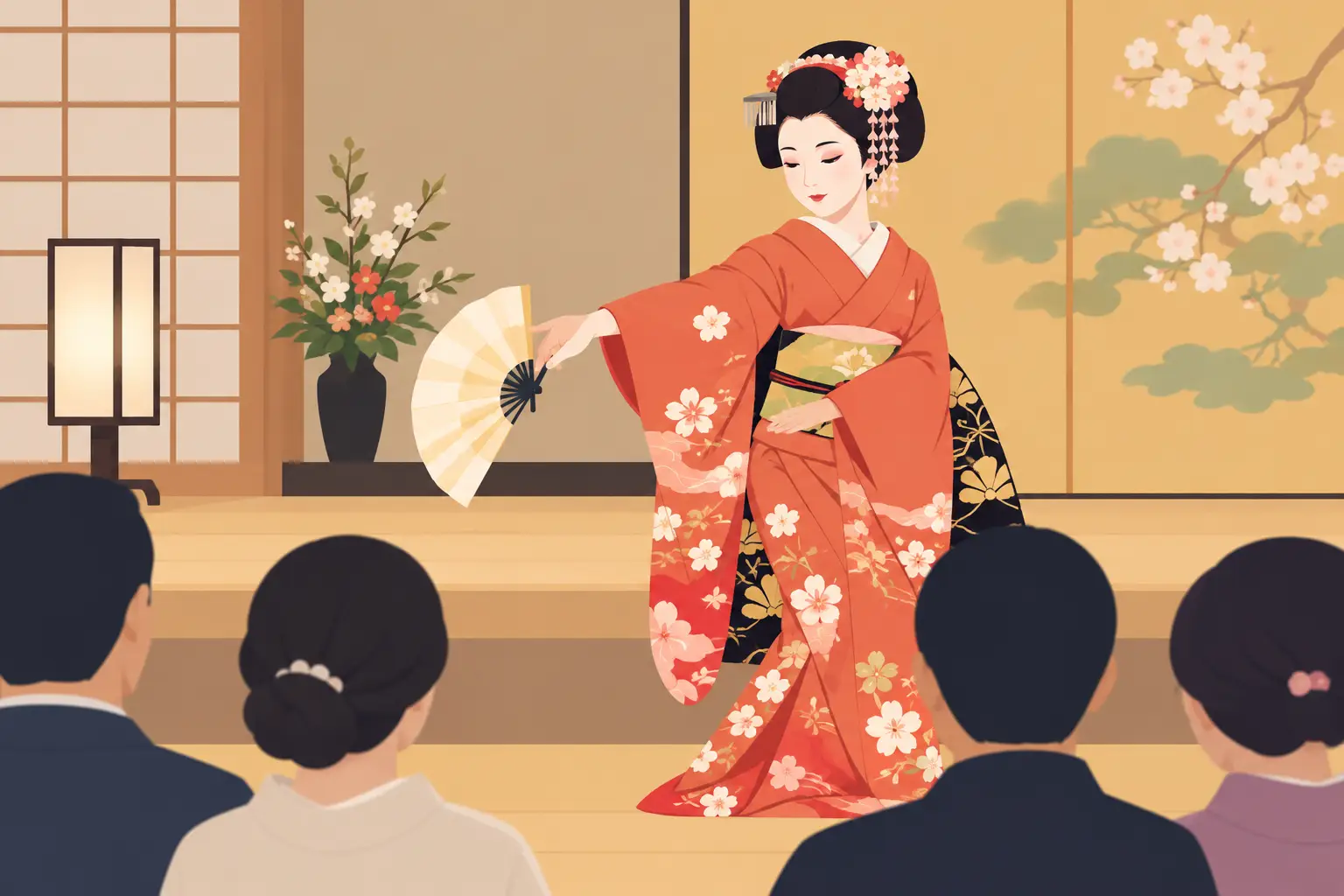
A thoughtful maiko performance review should begin with one distinction: this is not a theater show measured by volume, spectacle, or a familiar storyline. It is an intimate expression of Kyoto’s refined entertainment culture, shaped by delicate movement, live music, conversation, and the pleasure of sharing a formal occasion. For many international guests, that quiet sophistication becomes the most memorable part of their Kyoto journey.
A well-arranged maiko encounter offers something rare: the opportunity to sit close enough to appreciate the detail. The fall of a silk kimono sleeve, the controlled rhythm of a fan, the sound of shamisen strings, and a smile offered during a traditional game all carry meaning. With the right setting, interpretation, and hosts, guests are not simply watching a performance. They are welcomed into a living cultural tradition that remains deeply connected to Kyoto.
目次
What a Maiko Performance Is Actually Like
A maiko is an apprentice geiko, Kyoto’s term for a fully qualified geisha. Her appearance is immediately distinctive, from her elaborate hairstyle and hair ornaments to the richly patterned kimono and high wooden sandals. Yet the visual beauty is only one layer of the experience. A performance reflects years of demanding training in dance, music, etiquette, and the arts of hospitality.
The dance itself is generally restrained and precise. Rather than large gestures, guests will notice subtle changes in posture, expression, tempo, and the handling of a fan or small prop. A seasonal dance may suggest falling cherry blossoms, a river current, moonlight, or a scene from classical literature. The meaning is not always obvious to first-time viewers, and it does not need to be. The pleasure often comes from observing the discipline and atmosphere of the performance as a whole.
In premium dining settings, the performance is often paired with traditional Kyoto cuisine. This matters because the evening or luncheon unfolds at a gracious pace. Courses arrive thoughtfully, conversation has room to develop, and the artistic portion feels like a natural part of the hospitality rather than an interruption between tourist activities.
Dance, Music, and the Beauty of Restraint
Guests accustomed to large-scale stage productions may initially find a maiko dance understated. That is precisely its appeal. The art asks for attention rather than applause-driven excitement. A small tilt of the head or a carefully timed turn can convey more than a dramatic movement would in another tradition.
When live shamisen is included, the atmosphere becomes even more immediate. The three-stringed instrument has a crisp, expressive sound that anchors the rhythm of the dance. It also reveals how closely music and movement are connected in Kyoto’s flower and willow world. A recorded soundtrack can provide context, but live accompaniment brings a level of presence that discerning travelers often value.
The Interactive Portion Is Often the Surprise
The most warmly remembered part of many maiko experiences is not the dance alone. It is the moment when formality softens through traditional ozashiki entertainment. These lighthearted parlor games are designed to create rapport between guests and entertainers. They may involve clapping patterns, gestures, songs, or a friendly contest where the loser receives a playful consequence, often a sip of a beverage.
No prior knowledge is expected. A skilled interpreter and attentive host make the rules clear, while the maiko’s presence keeps the mood elegant and relaxed. This is where an authentic experience becomes personal. Guests are no longer observing from a distance. They are sharing laughter across language and cultural boundaries, while respecting the traditions of the room.
Maiko Performance Review: What Defines Quality
Not every experience advertised with a geisha or maiko image offers the same depth. A useful maiko performance review considers the complete arrangement, not just whether a guest saw a kimono-clad performer. The strongest programs are clear about who will attend, what artistic elements are included, and how guests will be guided through the occasion.
First, look for authenticity in the people and setting. A genuine maiko is an apprentice from Kyoto’s traditional entertainment districts, known as hanamachi. Her schedule is demanding, and her appearances are carefully arranged. Because of this, a legitimate encounter is a special occasion, not an attraction available at any moment without planning.
Second, consider the setting. A refined private dining room, a traditional restaurant, or an elegant venue suited to intimate hospitality will feel very different from a crowded banquet hall. Smaller groups generally allow better sightlines, easier conversation, and more meaningful photographs. Privacy also gives guests the confidence to ask respectful questions and enjoy the experience without rushing.
Third, assess the level of cultural support. For overseas visitors, English-speaking interpretation is not a minor convenience. It changes the experience. Interpretation can explain the dance, introduce the performers appropriately, guide participation in games, and help guests understand etiquette without making the occasion feel instructional or stiff.
Finally, review what is included. A brief photo opportunity and a single dance may suit travelers with limited time. For a milestone celebration, honeymoon, family gathering, or executive visit, a longer program with Kyoto cuisine, entertainment games, live shamisen, professional-style photographs, and a keepsake usually offers a more complete memory.
What to Expect From the Dining Experience
Kyoto dining is central to the tone of a maiko gathering. Depending on the venue and season, guests may enjoy a multi-course meal that highlights delicately prepared vegetables, tofu, fish, wagyu, or seasonal ingredients presented with exceptional care. The cuisine should complement the occasion, not compete with it.
The best experiences allow guests to enjoy both. There should be sufficient time to appreciate each course, watch the performance, join the interactive entertainment, and take photographs. A schedule that tries to fit everything into a short window can feel hurried. On the other hand, a very long meal may not suit families with younger children or travelers managing a full sightseeing itinerary. The ideal duration depends on the purpose of the occasion.
At GEISHAKYOTO, structured lunch experiences make this cultural access especially approachable for international guests. The format brings together Kyoto-style dining, an authentic maiko encounter, English support, and clear inclusions, allowing visitors to enjoy a rare Kyoto moment with confidence.
Photography and Etiquette
Photographs are often among the most cherished souvenirs from a maiko experience, but they should be handled with care. Wait for the host’s direction before taking images, especially during a dance. A designated photo session is preferable because it protects the performance while giving every guest a chance to create a beautiful portrait.
Etiquette is less intimidating than many travelers expect. Arrive on time, dress neatly, listen when the host introduces the performers, and follow guidance about photography and games. Guests do not need to speak Japanese or know formal customs in advance. Genuine curiosity, good manners, and an appreciation for the occasion are enough.
Avoid treating the maiko as a costume or a novelty. She is a trained artist and a young professional within a demanding traditional culture. Respectful engagement creates a warmer exchange and reflects the gracious spirit that makes these gatherings so distinctive.
Is a Maiko Performance Worth It?
For travelers seeking a quick checklist of famous Kyoto sights, a maiko performance may feel too subtle or too personal to justify the investment. But for guests who value atmosphere, artistry, and meaningful access, it can be one of the city’s finest experiences. The value lies in the combination of rarity and intimacy: a cultural encounter that cannot be recreated by walking through a historic district or viewing a display in a museum.
It is especially well suited to couples celebrating a honeymoon or anniversary, families marking a special trip, friends gathering for a private lunch, and business travelers hoping to offer guests something more considered than a conventional dinner. The experience is also valuable for first-time visitors who want to understand Kyoto beyond its temples and gardens.
A performance will not explain every aspect of geiko culture in an hour or two, nor should it try to. Its purpose is to offer a gracious introduction through the arts of hospitality. When arranged with care, it leaves guests with more than photographs. It leaves them with the feeling of having been genuinely received in Kyoto.
Choose a setting that honors both the performers and your occasion, then allow enough time to be present. The most rewarding maiko performance is not the one that promises the most activity. It is the one that gives tradition, conversation, and quiet beauty room to unfold.