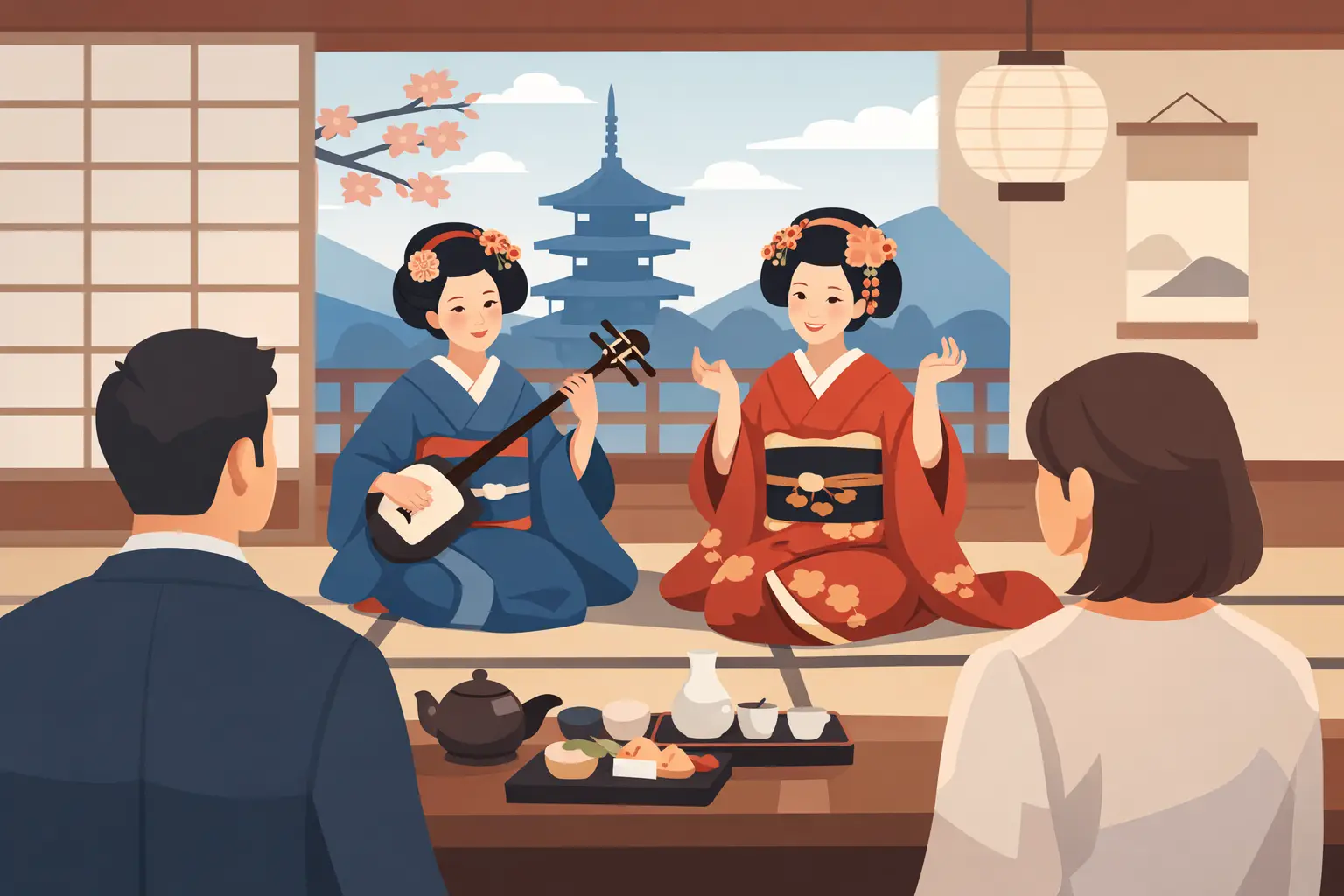
A Kyoto meal becomes something altogether different when the room quiets for the first notes of shamisen, a maiko begins her dance, and centuries of artistic discipline come into view. To arrange a geisha audience is not simply to book entertainment. It is to be welcomed into a refined tradition shaped by hospitality, conversation, music, dance, and careful mutual respect.
For international visitors, that distinction matters. Kyoto’s geiko and maiko communities are real working artistic communities, not a sightseeing attraction to be approached casually on the street. A well-arranged audience offers rare access in an appropriate setting, with the comfort of clear planning, gracious hosting, and English-language support when needed.
目次
What It Means to Arrange a Geisha Audience
In Kyoto, the term geiko is used for the highly trained female entertainers known internationally as geisha. A maiko is an apprentice geiko, recognizable by her elaborate hairstyle and vivid kimono. Both spend years studying traditional arts, including dance, shamisen, song, tea service, and the subtle art of hosting guests.
An audience is usually part of an ozashiki experience: a private or semi-private gathering held over a meal in a traditional setting. It may include a seasonal dance, shamisen performance, conversation, lighthearted parlor games, photographs at an appropriate moment, and attentive dining. The atmosphere is elegant, but it is not meant to feel stiff. At its best, it is warm, celebratory, and wonderfully personal.
The experience differs greatly from seeing a brief public performance. A theater program can be beautiful, particularly for travelers with limited time. An arranged audience, however, creates space for the human side of Kyoto hospitality: the introduction, the exchange of smiles, the rhythm of shared games, and the pleasure of being present for an art form performed at close range.
Why Advance Planning Is Essential
Geiko and maiko schedules are carefully managed, and reputable venues coordinate appearances well in advance. Kyoto’s busiest periods include cherry blossom season, autumn foliage season, year-end holidays, and major festivals. A last-minute request may be possible in some cases, but it is rarely the best way to secure the setting, cuisine, or level of privacy you have in mind.
Plan early if the occasion is significant. Honeymoons, milestone birthdays, executive gatherings, and family celebrations benefit from a reserved experience designed around the group. The earlier you inquire, the more likely it is that the arrangement can reflect your preferred date, party size, dietary needs, and desired level of entertainment.
There is also a practical reason to book through an established cultural host. Traditional introductions have historically depended on personal relationships. Visitors without local connections can find this world difficult to enter, especially when language and unfamiliar customs are involved. A curated arrangement removes that uncertainty while honoring the professional structure behind the occasion.
Choose the right format for your group
The right audience depends on what you hope to remember. A couple may prefer an intimate meal with time for conversation and photographs. A private group may enjoy the energy of traditional games and a more festive program. Corporate guests often value a polished format with clear timing, interpretation, and a setting that reflects Kyoto’s standards of hospitality.
Lunch can be an especially appealing choice for travelers who want a substantial cultural experience without giving up an entire evening. It also fits naturally into a Kyoto itinerary, leaving time afterward for a garden, temple visit, or quiet walk through historic streets. Evening audiences offer their own atmosphere, but they may require more flexibility with dining schedules and transportation.
Ask what is included before you reserve. A premium experience should make its value clear: the style of Kyoto cuisine, duration, number of performers, dance and music elements, English interpretation, photograph opportunities, and any commemorative gift. Details are not merely logistical. They determine whether the event feels like a complete cultural occasion rather than a meal with a short appearance.
How to Arrange a Geisha Audience Respectfully
Begin by selecting a provider that is transparent about its relationships, inclusions, and setting. Authenticity is not created by ornate décor alone. It comes from working respectfully with active geiko and maiko, presenting their arts in context, and treating each performer as the skilled professional she is.
Share your group details clearly at the time of inquiry. State the date, number of guests, preferred meal time, dietary restrictions, mobility requirements, and whether you are celebrating a particular occasion. If your group has guests who do not speak English, mention that as well. Thoughtful information allows the host to shape the occasion with care.
Do not assume that a private audience means unrestricted access. The performers’ time, comfort, and professional boundaries remain important. A gracious host will guide the flow of the event, including when photographs are welcome and how guests may participate in games or conversation. That structure is part of the luxury. You are free to enjoy the moment without worrying about what is expected.
GEISHAKYOTO presents this kind of occasion in a bookable, English-supported format, pairing Kyoto dining with authentic performance, traditional entertainment, and the practical reassurance international guests appreciate.
A few etiquette principles make a meaningful difference
You do not need to study formal Japanese etiquette before attending. Arrive on time, dress thoughtfully, and follow the lead of your host. Smart casual attire is suitable for most premium lunch settings, while more formal clothing may be fitting for a special celebration. Avoid overly casual beachwear, athletic clothing, or anything likely to feel out of place in a refined dining room.
During performances, give the artists your full attention. Keep phones silent and wait for permission before taking photographs or video. If you are invited to play a game, accept with good humor. These games are part of the ozashiki tradition and often create the most joyful memories, even for guests who arrive feeling shy.
Conversation need not be complicated. Ask about the music, dance, seasonal motifs, or kimono craftsmanship rather than personal questions about private life. A sincere compliment, offered through an interpreter if needed, is always appreciated. The goal is not to perform expertise. It is to be an engaged and considerate guest.
What a Memorable Audience Includes
The finest experiences feel composed rather than crowded. Kyoto cuisine sets the tone, often with seasonal ingredients presented with the same care seen in the performers’ costumes and gestures. The meal gives guests time to settle into the room and appreciate the setting before the artistic program begins.
A dance performance offers a glimpse of Kyoto’s restrained, expressive style. Its movements may seem delicate, yet each gesture carries intention. Live shamisen adds another dimension, bringing a bright, percussive sound that can transform the mood of the room in seconds. Higher-tier arrangements may include this live music, which is particularly compelling for guests who want a deeper encounter with the performing arts.
Entertainment games introduce a lighter note. They are social, often playful, and designed to bring guests and performers together without forcing conversation. Professional-style photographs, when included, provide a lasting keepsake, especially when taken after the formal performance at a moment approved by the host.
Not every experience needs every element. Travelers focused on cuisine may prioritize an exceptional seasonal meal. Those fascinated by music should seek an arrangement with live shamisen. Guests traveling for a once-in-a-lifetime celebration may value private seating, longer interaction, interpretation, and keepsakes. The best choice is the one that reflects why you came to Kyoto in the first place.
Make Space for the Moment
A geisha audience rewards attention. Resist the urge to treat it as one more item between crowded sightseeing stops. Allow time to arrive calmly, enjoy the meal, and leave without rushing toward the next reservation. This is a rare Kyoto moment precisely because it asks for presence.
When arranged with care, the occasion offers more than beautiful photographs or a story to tell at home. It creates a respectful encounter with living arts that continue because artists, hosts, and guests each play their part. Bring curiosity, dress with intention, and let the grace of the room set the pace.
AUTHENTIC KYOTO EXPERIENCE