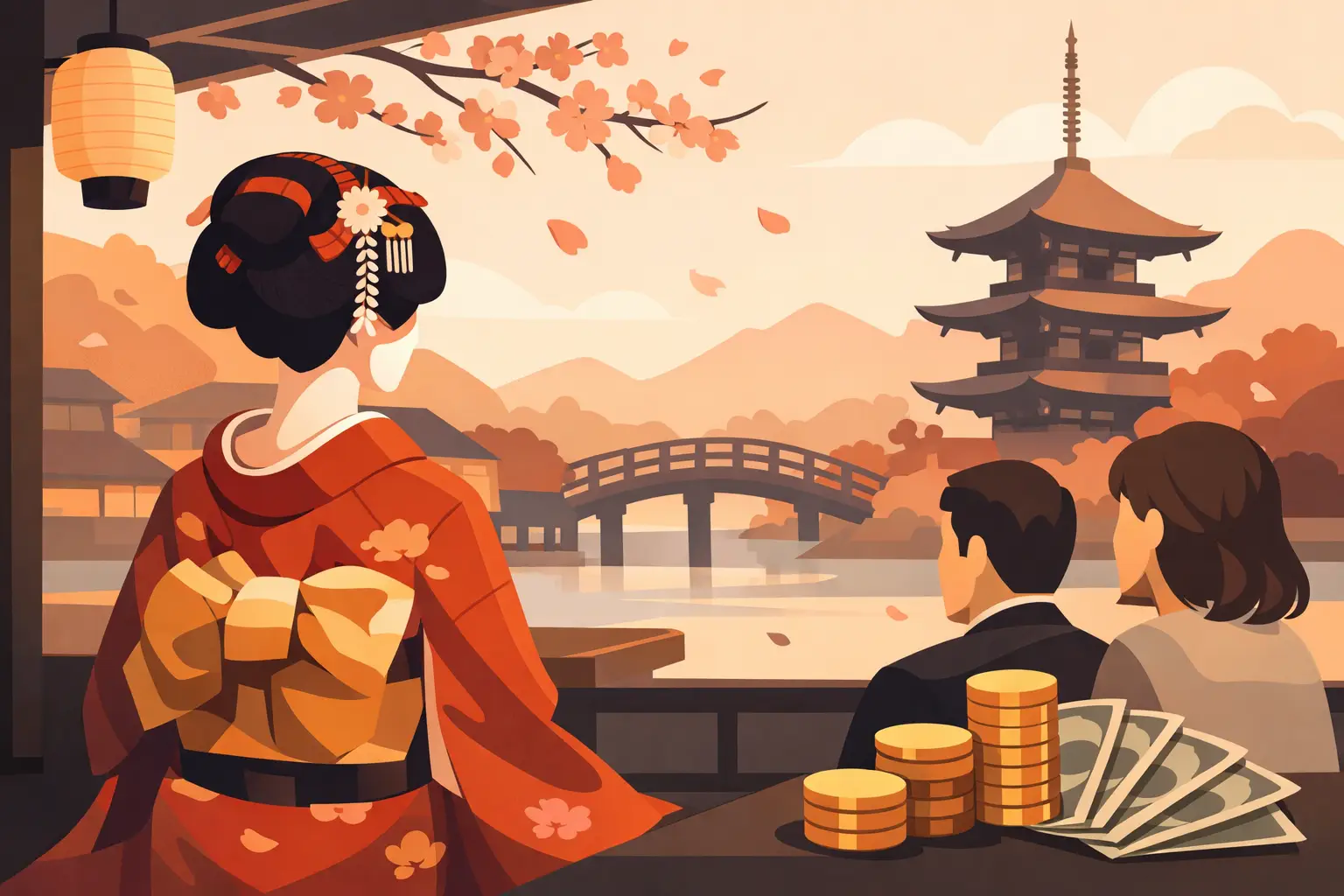
A Kyoto geisha experience is not simply a performance with a meal attached. It is a carefully hosted occasion shaped by living tradition, highly trained artists, refined cuisine, and the rare privilege of entering a world that is usually private. Visitors often ask, why are geisha experiences expensive? The short answer is that the price reflects far more than the time spent at the table.
For many international guests, this is a once-in-a-lifetime Kyoto moment: an intimate encounter with geiko and maiko, the entertainers often called geisha outside Kyoto. Understanding what happens behind the scenes makes the value clearer and helps you choose an experience with confidence.
目次
Why Geisha Experiences Are Expensive
The most significant part of the cost is the presence of the performers themselves. Geiko and maiko dedicate years to mastering traditional arts, including dance, shamisen, singing, conversation, seasonal customs, and the graceful hosting skills that make an evening feel effortless.
A maiko is an apprentice, while a geiko is an established professional artist. Their appearance may seem timeless, but it is supported by demanding daily practice, formal training, and a professional network rooted in Kyoto’s hanamachi, or geisha districts. A guest is not paying for a staged costume or a quick photo opportunity. They are being received by artists who preserve an exacting cultural practice.
Availability also matters. Geiko and maiko cannot simply be booked in unlimited numbers, at any hour, like conventional entertainers. Their schedules are limited, and their engagements often involve coordination through established relationships. A small group may share an intimate room with performers whose time is genuinely scarce. That sense of rarity is part of the experience, but it also carries a real cost.
The Artistry Begins Long Before Guests Arrive
The white makeup, elaborate hairstyle, silk kimono, hair ornaments, and footwear are not casual wardrobe choices. They are part of a visual language tied to season, seniority, occasion, and Kyoto tradition. Dressing correctly takes time and specialist skill. Maintaining formal kimono and accessories is also expensive, particularly when garments are handmade and designed to last for generations.
Then there is the performance itself. A dance may appear calm and simple to an untrained eye, yet every gesture, turn, fan movement, and pause has been practiced repeatedly. Live shamisen adds another level of artistry and coordination. These are not interchangeable show elements. They are crafts developed over years and presented with discipline.
The best experiences also allow room for the more personal side of geisha entertainment. Guests may enjoy ozashiki games, conversation, and photographs in a relaxed setting. This is where the evening becomes more than a viewing experience. The performers create an atmosphere of welcome, humor, and elegance while maintaining the etiquette and discretion of traditional hospitality.
Fine Dining and Private Hospitality Are Part of the Price
A proper Kyoto cultural occasion is often centered on the table. Depending on the format, guests may enjoy a beautifully prepared lunch or dinner that reflects the season through ingredients, presentation, and course progression. This is not merely a convenient meal before a performance. It is an essential expression of omotenashi, Japan’s thoughtful approach to hospitality.
Private dining spaces, attentive service, carefully selected tableware, and a composed pace all require planning. Premium venues must reserve space, prepare specialized menus, and coordinate timing precisely around the entertainers’ arrival and performance. For guests, the result feels natural. For the hosts, it is a detailed production.
This is also why the overall price can vary considerably. A shorter shared event with a simple meal will be priced differently from a private gathering with multiple performers, a full Kyoto-style course, live shamisen, photography time, interpretation, and personalized arrangements. Neither is automatically better. The right choice depends on whether you want a brief introduction or a more immersive celebration.
Access Is Valuable Because It Is Not Easily Arranged Alone
Kyoto’s geisha culture is built on trust, discretion, and long-standing relationships. Traditionally, many ozashiki engagements were arranged through introductions and established local connections. For overseas travelers, the barriers can be substantial: language differences, unfamiliar booking customs, uncertainty around etiquette, and difficulty confirming whether an offering is genuine.
A reputable, curated experience removes those barriers without treating the tradition as a spectacle. The organizer coordinates the venue, performers, schedule, dining, guest communication, and cultural context. English-speaking support can be especially valuable, allowing guests to understand what they are seeing, participate comfortably in games, and enjoy conversation without worrying about a language gap.
That coordination is not incidental. It is the bridge between a visitor’s wish for an authentic encounter and a cultural setting that deserves care. At GEISHAKYOTO, for example, structured lunch experiences bring together Kyoto cuisine, performance, traditional games, photo opportunities, and English interpretation in a format designed to feel welcoming while honoring the occasion.
Authenticity Requires Respectful Boundaries
Not every activity marketed with geisha imagery offers the same level of authenticity. Some experiences focus on transformation, where visitors dress in maiko-inspired attire for photographs. Others offer large-scale performances with little personal interaction. These can be enjoyable in their own right, but they are different from spending time with working geiko or maiko in a hosted dining setting.
The price of an authentic experience partly reflects those boundaries. Responsible hosts do not promise unlimited access, disrupt performers’ schedules, or reduce their work to a novelty. They create an appropriate setting where guests can observe, participate, and take photographs at suitable moments. This protects the dignity of the artists and preserves the quality of the encounter.
For travelers, this is an important trade-off to recognize. A less expensive option may be ideal if your priority is a quick performance or a souvenir photograph. A premium experience is better suited to guests who value direct interaction, a refined meal, cultural explanation, and the unhurried feeling of being personally hosted.
What to Look for Before You Reserve
Price alone does not tell the whole story. Before booking, look closely at what is included and how the experience is presented. Clear details are a sign of thoughtful hospitality: the length of the event, whether dining is included, the number and type of performances, whether shamisen is live, the availability of English support, group size, and opportunities for photographs.
It is also worth considering the setting. An intimate room can create a more memorable connection than a crowded hall, while a private arrangement offers a different level of flexibility for honeymoons, family celebrations, executive groups, and milestone trips. If you have dietary needs or mobility considerations, ask in advance. Premium hospitality should make these details easy to discuss.
Finally, choose an operator that speaks respectfully about the artists. The language should recognize geiko and maiko as trained professionals, not as props from another era. The most meaningful experiences leave guests with both beautiful photographs and a deeper appreciation for the people, discipline, and traditions behind them.
A geisha experience may be one of the more considered purchases on a Kyoto itinerary, yet that is precisely why it can become the memory guests speak about long after the trip. Reserve the level of access that feels right for your occasion, arrive with curiosity and respect, and allow the quiet precision of Kyoto hospitality to do what it does best.
AUTHENTIC KYOTO EXPERIENCE