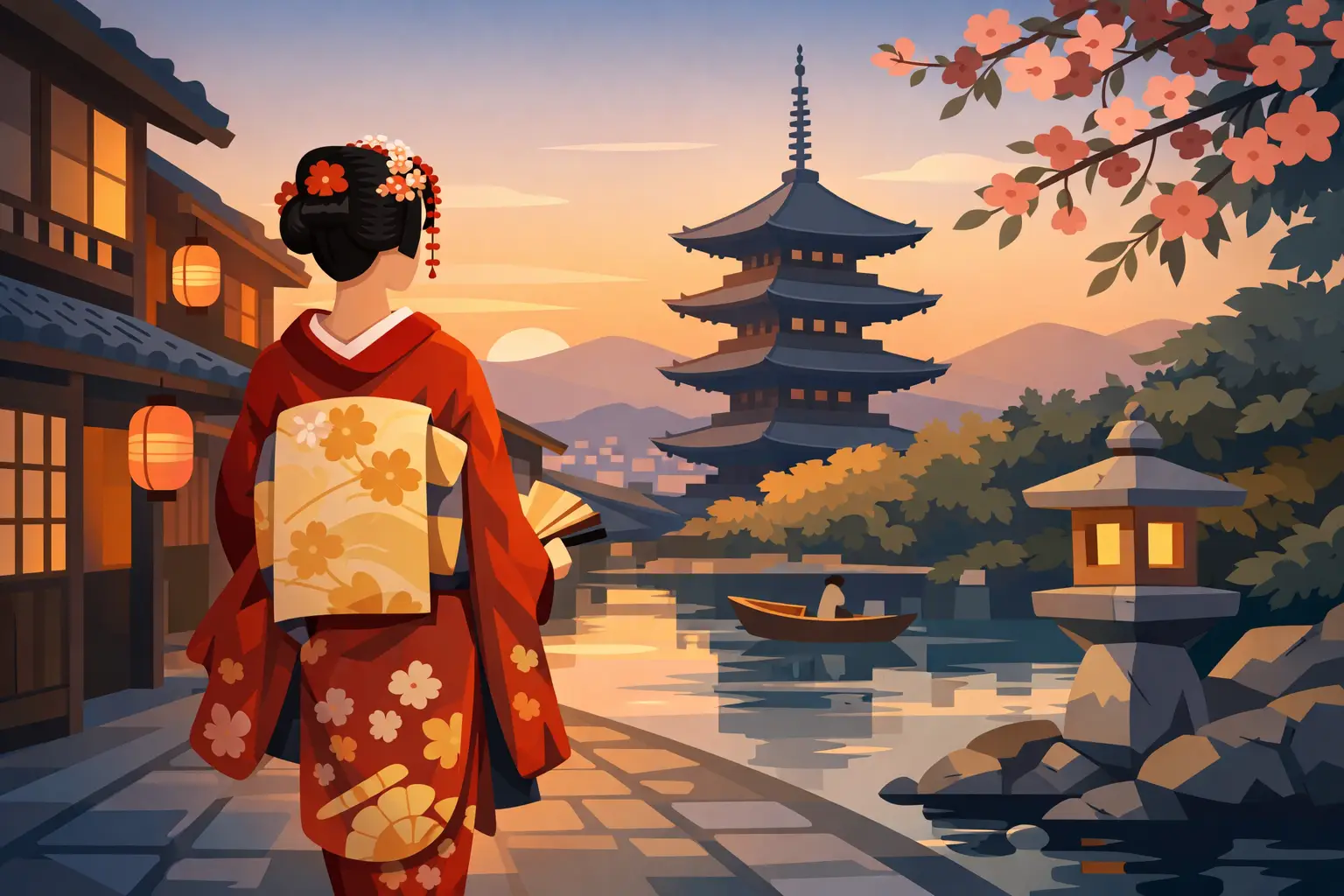
A maiko entertainment guide Kyoto should begin with one essential truth: this is not simply a performance to watch. A well-hosted encounter is an intimate expression of Kyoto hospitality, where traditional dance, music, conversation, and dining come together in a setting shaped by generations of custom. For international visitors, it can become one of the most memorable moments of a Kyoto stay – provided the experience is arranged with care.
目次
- What Maiko Entertainment Means in Kyoto
- Why a Curated Experience Is Worth Considering
- Choosing the Right Type of Maiko Entertainment
- What to Expect During a Maiko Luncheon or Dinner
- Etiquette That Makes Guests Feel at Ease
- Planning for a Smooth Kyoto Experience
- Authenticity Is Found in the Atmosphere
What Maiko Entertainment Means in Kyoto
A maiko is an apprentice entertainer training in Kyoto’s historic hanamachi, or geisha districts. She studies classical dance, shamisen music, singing, tea ceremony, conversation, and the gracious social arts that define an evening or luncheon gathering. After completing her apprenticeship, she becomes a geiko, the Kyoto term for a fully qualified geisha.
This distinction matters. Maiko entertainment is a living tradition, not costumed tourism. The elaborate hairstyle, kimono, hair ornaments, white makeup, and long sleeves are not theatrical decorations selected for visitors. They signal a particular stage of artistic training and carry conventions that Kyoto guests are invited to appreciate respectfully.
A typical gathering may include a seasonal dance, an introduction through an interpreter, light conversation, and ozashiki games – refined parlor games traditionally enjoyed over food and drink. Higher-level occasions can also feature live shamisen, adding a remarkable layer of sound and atmosphere to the room.
Why a Curated Experience Is Worth Considering
Kyoto’s geiko and maiko communities are deliberately private. Traditional introductions often occur through long-standing local relationships, and many teahouses do not accept first-time visitors without a trusted introduction. That discretion protects both the artists and the customs surrounding their work.
For travelers, a professionally arranged experience offers a graceful and appropriate way to enter this world. Rather than approaching a teahouse unprepared or mistaking a themed attraction for a genuine cultural encounter, guests can enjoy time with real artists in a structured setting that respects their schedules, training, and privacy.
The difference is felt in the details: a carefully prepared Kyoto-style meal, a suitable private venue, clear interpretation, and an unhurried flow from performance to games and photographs. Convenience is part of the luxury, especially for guests who do not speak Japanese or are planning a special occasion on a limited itinerary.
Choosing the Right Type of Maiko Entertainment
Not every Kyoto experience offers the same depth. Some public performances are beautiful introductions to dance and music, particularly for travelers with limited time. They are generally more accessible and less expensive, but the relationship is necessarily distant: you are seated among a larger audience, and direct interaction is limited.
A private or small-group dining experience is more personal. It allows guests to see a dance at close range, learn the context behind the traditions, participate in games, and speak with the maiko through an interpreter. This format is especially suited to couples, families celebrating a milestone, executive groups, and travelers seeking a rare Kyoto moment rather than another sightseeing stop.
When comparing options, look beyond the phrase “geisha experience.” Ask whether the artists are working maiko or geiko, whether dining is included, how much time is dedicated to direct interaction, and whether English-speaking interpretation is provided. Professional photographs, a keepsake, live shamisen, and a private setting may also make a meaningful difference, depending on the occasion.
What to Expect During a Maiko Luncheon or Dinner
The setting is usually elegant but warmly hospitable. Guests are welcomed into a traditional room, often with low tables, tatami flooring, or a refined Kyoto restaurant atmosphere. Your host or interpreter will explain the rhythm of the occasion, so there is no need to arrive knowing every custom.
Dining is often served in the Kyoto style, with seasonal ingredients presented with exceptional attention to color, texture, and balance. The meal is not an interruption to the entertainment. It is part of the occasion, offering time for introductions, conversation, and quiet appreciation before and after the performance.
A dance may be accompanied by recorded music or, in more elevated packages, by live shamisen. The movements are restrained, expressive, and deeply connected to seasonal imagery, poetry, and classical stories. You do not need to understand every reference to appreciate the artistry, although an interpreter’s explanation can make the experience more resonant.
After the performance, ozashiki games bring a lighter spirit to the room. These are playful but traditional games, often involving rhythm, gesture, and a little friendly competition. They offer a natural way to share laughter with the maiko without placing pressure on anyone to make conversation in Japanese.
Photography is commonly available at designated moments. A formal photo beside a maiko in full attire is a meaningful memento, especially for anniversaries and honeymoons. Follow the host’s direction on when photographs are welcome, and avoid treating the artist as a prop. A composed, respectful photo is far more fitting than a rushed stream of phone snapshots.
Etiquette That Makes Guests Feel at Ease
The most appreciated guests are attentive, relaxed, and willing to follow the host’s lead. Formal Japanese fluency is not expected. Courtesy is.
Arrive on time, preferably a few minutes early. These occasions are carefully timed around the maiko’s professional commitments, and lateness can disrupt the flow for everyone. Dress neatly, as you would for an excellent restaurant. Smart casual attire is generally suitable unless the venue advises otherwise; overly casual beachwear, athletic clothing, or conspicuous logos can feel out of place.
During the dance, keep conversation and movement to a minimum. When speaking with a maiko, a simple greeting, genuine curiosity about her art, and a willingness to listen are enough. Avoid personal questions about family, income, residence, or private life. Her professional name and public role are the appropriate focus.
Do not touch a maiko’s kimono, hair ornaments, hairstyle, or makeup. These elements are intricate and culturally significant, and her preparation can take many hours. If you are offered a game or a toast, join with good humor. Participation is not a test of cultural knowledge; it is part of the shared pleasure of the gathering.
Planning for a Smooth Kyoto Experience
Advance reservations are strongly recommended, especially during cherry blossom season, autumn foliage season, year-end holidays, and major festivals. Premium experiences have limited availability because the artists’ time is carefully managed. Booking early also provides more flexibility for private groups, dietary requirements, preferred dining times, and special celebrations.
If you have dietary needs, communicate them at the time of reservation. Kyoto cuisine may feature fish, shellfish, dashi broth, soy, sesame, and seasonal ingredients that need thoughtful accommodation. A quality organizer can advise what is possible rather than leaving guests to navigate a formal meal with uncertainty.
Consider the timing of your day as well. A leisurely lunch pairs beautifully with an afternoon in Gion, Higashiyama, or the gardens and temples of eastern Kyoto. An evening gathering can serve as the centerpiece of a celebratory night, but it may be less practical after a full day of early-morning sightseeing. Leave room to arrive composed and enjoy the occasion without watching the clock.
For overseas guests seeking a polished, English-accessible format, GEISHAKYOTO presents curated lunch experiences that combine Kyoto dining, authentic maiko entertainment, traditional games, interpretation, photography, and selected premium inclusions. The value lies not only in what is offered, but in the confidence of knowing the experience has been arranged with cultural respect.
Authenticity Is Found in the Atmosphere
A genuine maiko encounter should not feel rushed, loud, or overly scripted. It should leave space for stillness: the sound of shamisen strings, the subtle sweep of a dance sleeve, the care placed into a seasonal dish, and the pleasure of a shared game. Luxury in Kyoto is often expressed through restraint.
There is also no need to arrive as an expert. The finest hosts make tradition approachable without reducing it to a checklist. Come with thoughtful questions, a sense of occasion, and an openness to a form of hospitality that values presence over spectacle.
When your Kyoto itinerary calls for something more lasting than a photograph outside a historic street, reserve time for a gathering where tradition is not behind glass. Sit down, share the table, and let the evening unfold at Kyoto’s own measured pace.