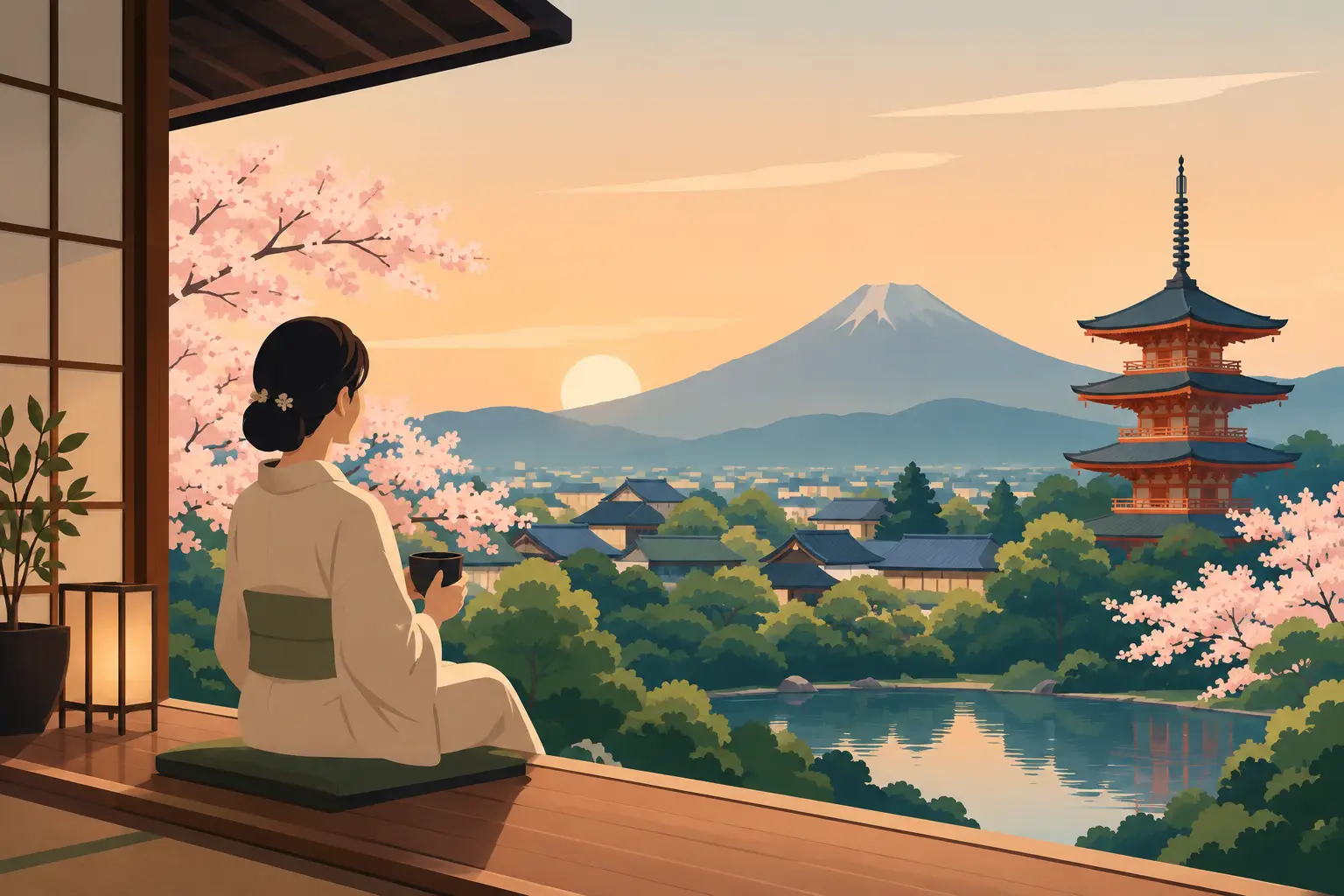
Kyoto reveals its most refined side in the pauses between major sights: a perfectly prepared cup of tea, the sound of shamisen in an intimate dining room, the stillness of a temple garden before the crowds arrive. Kyoto luxury travel is not defined by moving faster through a prestigious checklist. It is about being received with care, having the right access, and giving the city enough time to show its quieter layers.
For travelers accustomed to exceptional hotels and thoughtful service, Kyoto offers a different kind of luxury. Its finest experiences are often discreet rather than theatrical. A private guide who understands timing, a reservation at a small counter restaurant, and a personal introduction to an arts tradition can be more valuable than the most elaborate itinerary.
目次
What Makes Kyoto Luxury Travel Different
Kyoto has long been a center of Japanese court culture, craftsmanship, cuisine, and performing arts. That heritage still shapes its hospitality. Here, luxury is expressed through seasonality, precision, and respect for place. A room with a garden view may feel more special than one with a dramatic skyline, while a meal can become memorable because a chef selects a single ingredient at its peak.
This also means that access requires planning. The city’s most sought-after ryokan, restaurants, tea houses, and cultural programs work on limited capacity and reservations. Some are intentionally small. Others rely on established relationships or require a trusted host to make an introduction. Booking early is not simply practical. It allows your itinerary to feel composed rather than improvised.
The best approach balances celebrated landmarks with experiences that cannot be replicated elsewhere. Visit Kiyomizu-dera or Fushimi Inari, certainly, but pair them with private time in a lesser-known garden, a visit to a working artisan studio, or a traditionally hosted evening in Gion. The contrast is where Kyoto becomes personal.
Begin With a Well-Chosen Base
Where you stay shapes the rhythm of the entire visit. For a first stay, Higashiyama offers proximity to temples, historic lanes, and Gion’s atmospheric streets. It is an elegant choice for guests who want to step out early for a quiet walk before the day begins. The trade-off is that popular areas become busy, especially in spring and autumn.
Central Kyoto is often more convenient for dining, shopping, and rail connections. It suits travelers who appreciate contemporary design, larger suites, and a polished hotel environment while remaining within easy reach of cultural districts. Arashiyama, meanwhile, is compelling for a slower escape surrounded by river scenery and wooded hills, though it is less practical if your itinerary centers on evening dining in Gion or Pontocho.
A distinguished ryokan is worth considering for at least one night. The experience is not merely accommodation. It may include a beautifully prepared seasonal dinner, a deep soaking bath, tatami rooms, and service that anticipates needs without intruding. For a longer trip, many guests prefer combining a ryokan stay with a luxury hotel. This gives you both traditional immersion and the flexibility of modern city comforts.
Reserve the Experiences That Cannot Be Replaced
Kyoto’s most luxurious days should have room to breathe, but a few reservations deserve priority. Fine dining is one of them. Kyoto cuisine, or kaiseki, rewards attention: broth clarity, handmade ceramics, seasonal garnishes, and ingredients that reflect a precise moment in the calendar. A skilled concierge or specialist host can help match the restaurant to your preferences, whether you favor formal kaiseki, intimate sushi, temple cuisine, or a refined counter meal.
Private cultural encounters are equally valuable. A tea ceremony led by a knowledgeable host can provide meaningful context for gestures that might otherwise seem simple. An artisan visit can reveal the patience behind Kyo-yuzen textiles, incense, ceramics, or lacquerware. These are not performances designed for speed. They are opportunities to understand why Kyoto’s aesthetic traditions continue to matter.
For many international guests, time with geiko and maiko is the rare Kyoto moment they hope to find, yet it can be difficult to arrange with confidence. The traditions of the hanamachi, or geisha districts, are living cultural practices, not public attractions. A properly hosted experience offers a respectful setting for conversation, dance, music, and traditional games, with clear guidance on etiquette.
GEISHAKYOTO offers this access in a polished, English-supported format, combining Kyoto-style dining with authentic entertainment by geisha and maiko. Depending on the selected experience, guests may enjoy traditional dance, games, professional-style photographs, souvenirs, interpretation, and live shamisen. It is particularly well suited to honeymooners, private groups, and travelers who want an elegant cultural occasion without the uncertainty of arranging introductions independently.
Give Each Neighborhood a Distinct Purpose
A well-paced itinerary avoids treating Kyoto as one continuous sightseeing district. Let each area offer a different mood. Spend an early morning in Higashiyama, when the stone paths and temple grounds are at their most peaceful. Reserve Gion for a lingering afternoon and evening, when you can browse galleries and traditional shops before a special dinner or cultural engagement.
In northern Kyoto, temples such as Daitoku-ji and its sub-temples invite a more contemplative pace. The area is ideal for travelers who appreciate gardens, architecture, and the subtle art of restraint. Nishiki Market and the surrounding downtown streets provide a livelier counterpoint, particularly when paired with a private food-focused walk or a carefully chosen lunch reservation.
Arashiyama deserves more than a rushed bamboo-grove stop. Stay long enough to experience the river, visit a temple garden, and enjoy lunch away from the busiest paths. If your schedule allows, arrange private transport for the return journey or continue to a countryside property beyond the city. The comfort of not navigating transfers after a full day can be a genuine luxury.
Timing Is Part of the Experience
Kyoto changes dramatically with the seasons. Cherry blossom season and autumn foliage are visually extraordinary, but they bring substantial demand. Luxury travel during these periods depends on booking far in advance and accepting that even elegant neighborhoods may be active during the day. The reward is a city at its most photogenic, with seasonal menus and temple gardens at their peak.
Late May, June, early July, and late November can offer a more balanced experience, depending on your priorities. Winter is quieter and often overlooked. It is ideal for travelers who value intimate dining, warm hospitality, and atmospheric temple visits over outdoor color. A dusting of snow on a garden or tiled roof can make Kyoto feel remarkably private.
Plan major sights for early morning whenever possible. Then protect the middle of the day for lunch, a spa treatment, shopping, or time at your hotel. This is not lost sightseeing time. It is what keeps a luxury itinerary from becoming exhausting. Kyoto asks for attention, and attention is difficult when every hour is scheduled.
Dress, Etiquette, and Ease
The most polished visitors in Kyoto are rarely the loudest. Dress smartly for fine dining and cultural occasions, arrive on time, and allow your host to guide the formality of the setting. Shoes may be removed in temples, ryokan, private rooms, and traditional establishments, so choose footwear that is elegant but easy to manage.
Photography expectations vary. It is appropriate to ask before photographing people, particularly in Gion, and essential to follow guidance during private cultural programs. In a geiko or maiko setting, photos may be welcomed at specific times and arranged to create a beautiful keepsake. The difference is context and consent.
Language need not be a barrier when your experiences include English-speaking support. Still, a few Japanese greetings are warmly received, and a gracious attitude goes further than perfect pronunciation. Kyoto hospitality is deeply attentive. Meeting it with patience and curiosity creates a more generous exchange.
Leave Space for Beautiful Detours
The finest Kyoto itineraries include one unscripted afternoon. It may lead to a small antiques shop, a quiet incense boutique, an unexpected confectionery, or a garden you had not planned to enter. These moments cannot be reserved, but they become more likely when the essential elements of your trip are already handled with care.
Choose fewer experiences, choose them well, and let each one linger. In Kyoto, the most luxurious souvenir is often not an object at all, but the memory of having briefly entered a world that still values time, craft, and gracious attention.