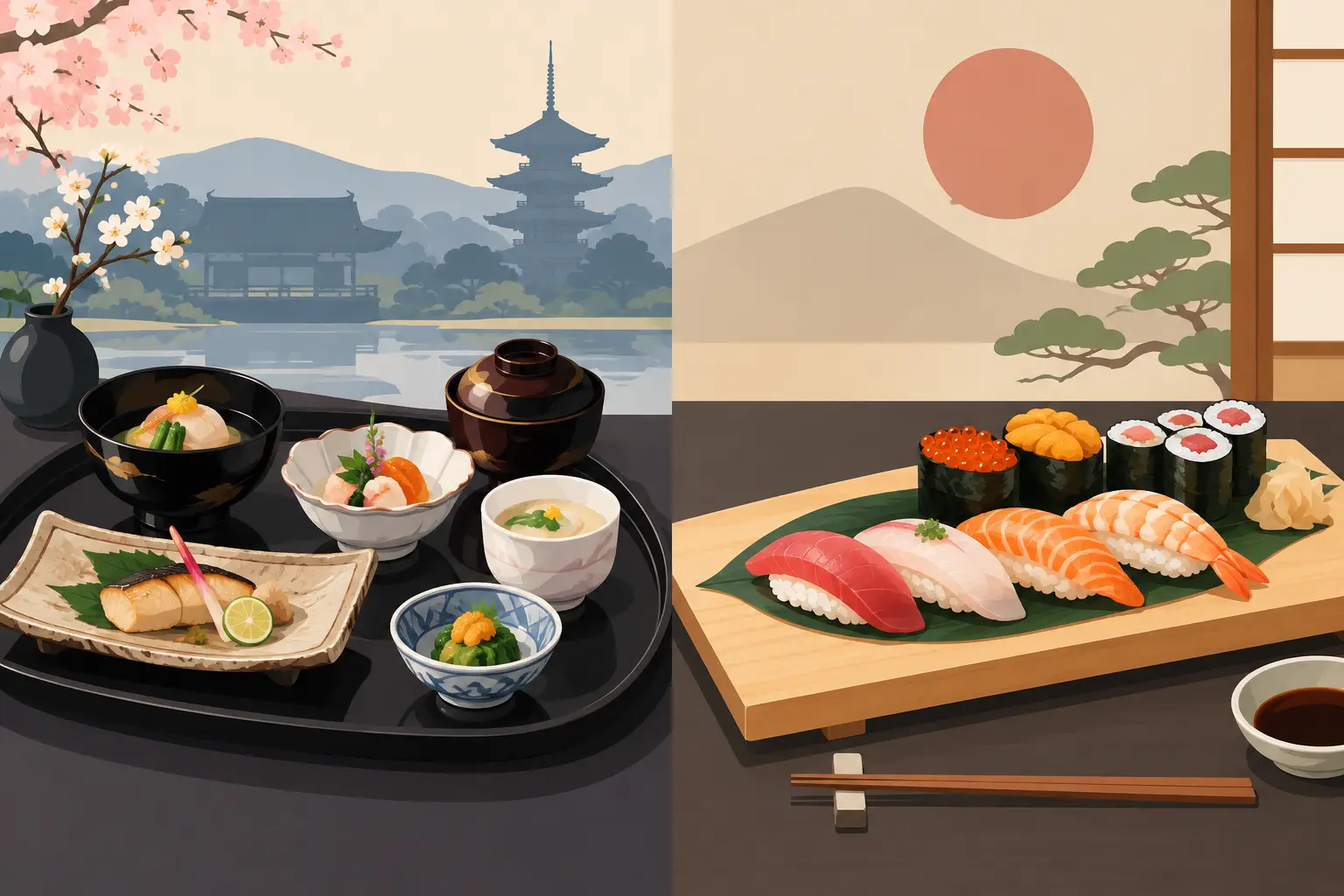
A Kyoto lunch can be far more than a meal. It may be the quiet reveal of a lacquered bowl, the fragrance of seasonal dashi, the precision of a chef’s hand, or a room briefly transformed by the dance of a maiko. When considering kaiseki versus sushi, the better choice is not simply about what you like to eat. It is about the kind of Japanese memory you wish to bring home.
Both are highly refined expressions of Japanese cuisine, yet they offer very different rhythms. Kaiseki is a composed, multi-course experience rooted in seasonality, hospitality, and Kyoto aesthetics. Sushi is centered on exceptional seafood, seasoned rice, and the immediate pleasure of each carefully made piece. One unfolds as a narrative; the other often arrives as a sequence of exquisite, direct moments.
目次
Kaiseki Versus Sushi: The Essential Difference
Kaiseki is traditionally a formal Japanese meal served in a series of small courses. Its purpose is not abundance in the Western sense. Instead, it creates balance: warm and cool, soft and crisp, delicate and savory, familiar and unexpected. The chef considers the season, the vessels, the colors on the plate, and even the view beyond the dining room.
A classic kaiseki meal may begin with an appetizer, followed by a clear soup, sashimi, a grilled course, a simmered dish, rice, soup, pickles, and a seasonal sweet. The exact progression varies by restaurant and season. In Kyoto, where the cuisine is known as Kyo-ryori, vegetables, tofu, yuba, mountain ingredients, and refined dashi often receive as much attention as fish or meat.
Sushi, by contrast, places its focus on a smaller set of essential elements: the quality of the fish, the temperature and seasoning of the rice, and the chef’s judgment. At a sushi counter, a meal may be served omakase-style, meaning the chef selects the sequence. A piece of sea bream might arrive first, followed by squid, tuna, sea urchin, or anago, each portion shaped and served at the precise moment it is ready.
The distinction is not that kaiseki is formal while sushi is casual. Sushi can be among Japan’s most exclusive dining experiences, particularly at a small, reservation-only counter. The difference lies in emphasis. Kaiseki presents the wider language of Japanese cuisine. Sushi concentrates that language into rice and seafood with remarkable clarity.
Why Kaiseki Feels So Closely Connected to Kyoto
Kyoto is one of the finest places in Japan to experience kaiseki because the city’s culinary culture has long been shaped by imperial court traditions, Buddhist temple cuisine, tea culture, and an appreciation for the changing seasons. Here, a meal may reflect the first cherry blossoms of spring, the cooling dishes of summer, the deep mushrooms and chestnuts of autumn, or the serene warmth of winter.
The presentation is part of the experience. A grilled dish may be placed on a ceramic plate chosen for the time of year. A single maple leaf, a sprig of pine, or an edible flower can create a sense of place without becoming theatrical. This restraint is central to the pleasure. Kaiseki does not ask for attention through excess. It rewards attention already given.
For travelers seeking a rare Kyoto moment, this is especially meaningful. Kaiseki offers time to slow down, to notice the details, and to understand why Japanese hospitality is often described as an art form. It is an excellent choice for anniversaries, honeymoons, milestone trips, or an afternoon designed around culture rather than sightseeing alone.
Kaiseki and Geisha Entertainment
Kaiseki is also the dining style most commonly associated with an elegant geisha entertainment experience, although the two are not interchangeable. A meal in the presence of a geiko or maiko is a cultural occasion that may include traditional dance, shamisen music, conversation, drinking games, and photographs. The cuisine supports the atmosphere, but the value lies in the living artistry of the entertainment and hospitality.
In Kyoto’s historic geisha districts, access to private ozashiki gatherings has traditionally been difficult for international visitors and first-time guests. A carefully arranged experience such as GEISHAKYOTO offers a more welcoming path, pairing Kyoto-style dining with authentic performances and English-speaking support. For visitors, this removes uncertainty while preserving the grace and ceremony that make the occasion so memorable.
If your priority is cultural immersion, kaiseki or Kyoto-style course dining is usually the more natural setting. Courses arrive at a pace that leaves room for conversation, performance, and appreciation of the room itself. Sushi counters, by design, tend to keep the focus closely on the chef and the food.
What a Sushi Experience Offers Instead
Sushi is ideal when you want culinary intensity with fewer formal layers. A superb sushi meal can feel almost meditative: the chef prepares one piece, places it before you, and invites you to enjoy it immediately. The flavor may be clean and minimal, but the technique behind it is not simple. Fish may be aged, lightly cured, brushed with sauce, scored, marinated, or paired with a small accent chosen to reveal its best character.
Many guests arrive expecting sushi to be a familiar choice, only to discover how different a high-level Japanese sushi experience can be from sushi abroad. The rice may be slightly warm. The wasabi may already be placed beneath the fish. Soy sauce may be unnecessary, or used sparingly. The portion sizes are modest, which allows the meal to remain precise rather than heavy.
Sushi can be an outstanding choice for travelers who love seafood and want direct interaction with a chef. It is also often easier to fit into a busy Kyoto itinerary. A lunch omakase may be shorter than a full kaiseki meal, though the finest counters still require advance reservations and punctual arrival.
There are trade-offs. Guests who do not enjoy raw fish, have broad dietary restrictions, or hope for a varied menu may find kaiseki more accommodating and satisfying. Conversely, serious sushi lovers may prefer the concentration of a counter experience over a long, multi-course meal.
How to Choose Between Kaiseki and Sushi
Begin with the feeling you want from the occasion. Choose kaiseki when you want a full expression of Kyoto: seasonal ingredients, beautiful tableware, multiple cooking methods, and an unhurried sense of ceremony. It is particularly suited to travelers who see dining as part of their cultural itinerary, rather than a pause between attractions.
Choose sushi when the meal itself is the main event and you want to follow a chef’s point of view through seafood and rice. A great sushi counter can be intimate, focused, and deeply personal. It is a strong choice for couples, devoted food lovers, and guests who appreciate the pleasure of restraint.
Your schedule matters as well. Kaiseki commonly lasts two to three hours, sometimes longer when paired with entertainment. Sushi omakase often ranges from one to two hours, depending on the format. Neither is a meal to rush, but sushi can be the more compact option when you have an afternoon temple visit or private tour planned.
It is also worth considering the season. Kaiseki changes visibly throughout the year, so it can feel especially tied to the month of your visit. Sushi changes with the market as well, but its seasonal shifts may be subtler to first-time guests. In spring, summer, autumn, or winter, kaiseki gives the season a place at the table.
Etiquette That Helps You Feel at Ease
At either style of restaurant, arrive on time and let the staff know about allergies or dietary needs well in advance. Reservation-only venues plan carefully, and last-minute changes can be difficult to accommodate. In particular, vegetarian, vegan, halal, and severe seafood-related requests should be discussed before booking rather than assumed to be available.
For sushi, watch the chef’s pace and eat each piece soon after it is served. You may use chopsticks or your fingers for nigiri. If the chef has already seasoned the sushi, additional soy sauce may distract from the intended balance.
For kaiseki, there is no need to understand every ingredient or ritual. Simply receive each course with curiosity. A sincere expression of appreciation is always welcome, and your hosts will guide you if there is a particular way to enjoy a dish.
The most rewarding choice is the one that matches your reason for coming to Kyoto. Reserve kaiseki when you want the city to reveal itself course by course, especially in a setting shaped by traditional entertainment. Reserve sushi when a masterful, concentrated expression of Japan’s seafood culture is calling your name. Leave room in your itinerary for the meal to linger a little longer than planned – that lingering is often where Kyoto becomes unforgettable.