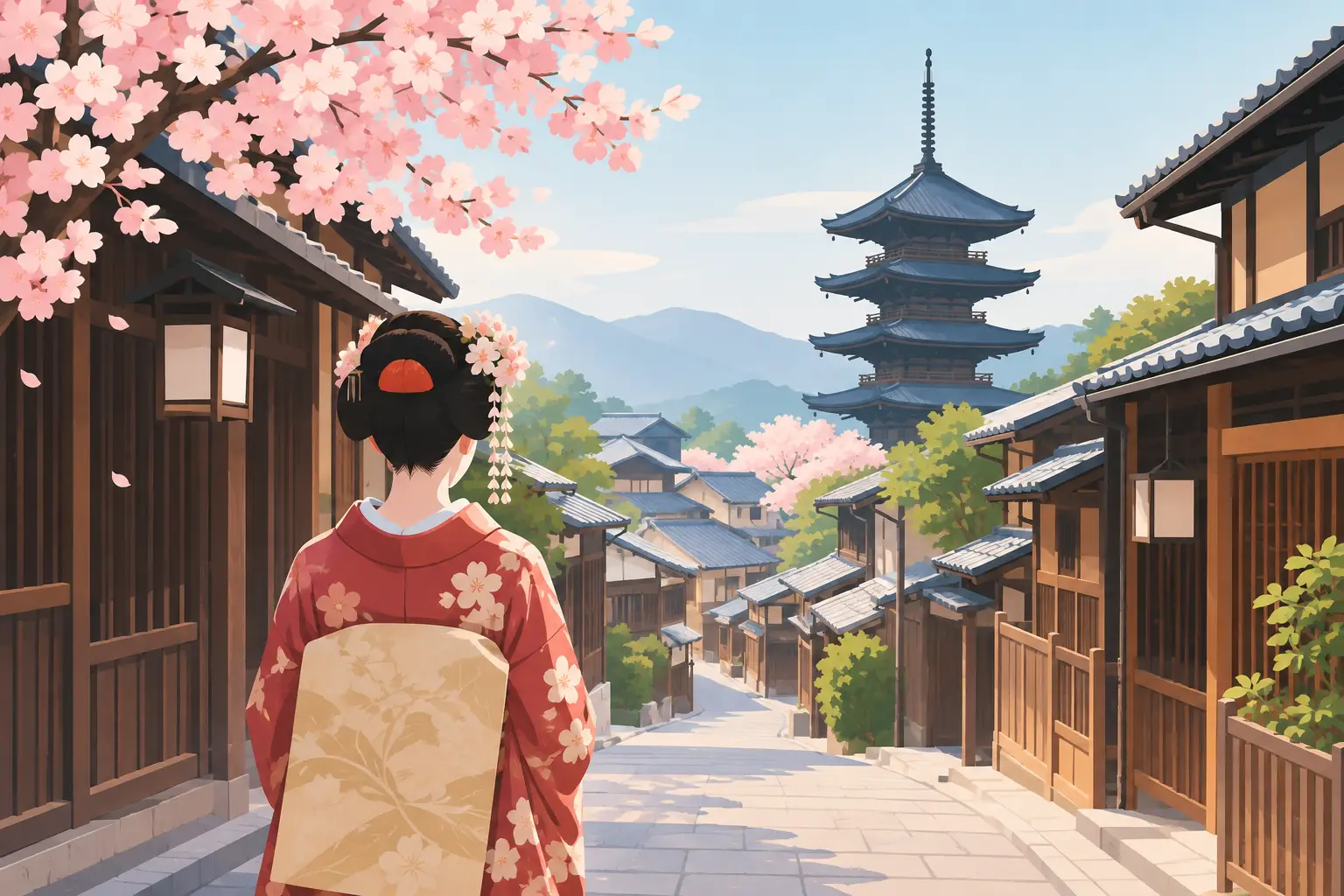
At dusk, Kyoto’s hanamachi reveal themselves in small, considered details: a lantern warming a wooden façade, the hush of a stone-paved lane, the glimpse of a kimono sleeve passing toward an appointment. This Kyoto hanamachi guide is designed for travelers who want to appreciate that atmosphere with the discretion it deserves – and who seek a genuine encounter with Kyoto’s geiko and maiko culture rather than a hurried photograph.
目次
What Is a Hanamachi?
Hanamachi translates as “flower town,” a poetic name for Kyoto’s traditional entertainment districts. These are living cultural neighborhoods where geiko, Kyoto’s term for geisha, and maiko, their apprentice counterparts, train and work with the support of tea houses, dance schools, kimono specialists, musicians, and other craftspeople.
A hanamachi is not a theme park, nor is it a single venue open for casual entry. Its rituals are shaped by longstanding professional relationships. An evening may include refined conversation, traditional dance, shamisen music, drinking games, and seasonal cuisine, all conducted with an ease that comes from years of training.
For guests, that distinction matters. Walking through a hanamachi can be beautiful, but it is an introduction to the setting, not the same as being welcomed into the culture through a properly arranged engagement.
Kyoto Hanamachi Guide: The Five Districts
Kyoto has five principal hanamachi, collectively known as Gokagai, or the Five Flower Towns. Each has its own character, performance traditions, and relationship with the city’s past.
Gion Kobu
Gion Kobu is Kyoto’s largest and most internationally recognized hanamachi. Centered around Hanamikoji Street near Yasaka Shrine, it is known for its preserved machiya townhouses, elegant tea houses, and the annual Miyako Odori spring dance performance. Its streets can be busy during the day, especially around the most photographed lanes, yet the district becomes more restrained as evening appointments begin.
This is the hanamachi many first-time visitors hope to see. It offers a powerful sense of place, but its popularity also makes respectful behavior especially essential.
Gion Higashi
Just east of the Kamo River, Gion Higashi is smaller and quieter than Gion Kobu. The area retains an intimate, residential feeling, with narrow streets and a more understated visual rhythm. Its annual Gion Odori performance is a cherished autumn tradition.
Travelers drawn to atmosphere rather than landmark chasing may find Gion Higashi particularly appealing. Still, it is a working district, not an invitation to peer into private entrances or follow performers.
Pontocho
Pontocho runs along a slim alley between the Kamo River and Kiyamachi Street. It is famous for dining, riverside terraces in warmer months, and a lively evening energy. While restaurants make it more accessible than some hanamachi streets, its geiko and maiko traditions remain formal and relationship-based.
Pontocho is an excellent choice for a sophisticated dinner setting. A meal there, however, does not automatically include geiko entertainment. Those arrangements are separate and should be made through a trusted host or specialist experience.
Miyagawacho
Miyagawacho lies near the Kamo River south of Gion and has long been associated with the performing arts. It is known for the Kyo Odori spring dance and a strong theatrical heritage. The district offers a graceful alternative to the crowds of central Gion, with traditional buildings and a quieter approach to the river.
Its history is closely tied to Kyoto’s culture of dance, making it especially meaningful for visitors who wish to understand the artistry behind a geiko or maiko appearance. The makeup and kimono are striking, but dance, music, hospitality, and conversation are the deeper disciplines.
Kamishichiken
Near Kitano Tenmangu Shrine, Kamishichiken is considered Kyoto’s oldest hanamachi. It feels removed from the better-known Gion area, with a calmer pace and a strong local character. The Kitano Odori dance performance is held here in spring.
For travelers with more time in Kyoto, Kamishichiken offers a compelling reason to venture beyond the standard itinerary. Its quieter setting can feel remarkably personal, though authentic access still requires advance arrangement.
What You May See – and What You Should Not Expect
It is possible to see geiko or maiko moving between engagements in the early evening, particularly in Gion or Pontocho. Treat this as a chance encounter, not the objective of your visit. A performer walking to work is not providing a public appearance.
Do not block the street, touch a kimono, call out for attention, or walk alongside someone for a photo. Kyoto has introduced rules in certain private lanes because intrusive behavior has placed real pressure on residents and performers. The most elegant response is also the simplest: give space, lower your camera, and let the moment pass.
Equally, do not assume that every woman in formal kimono is a maiko. Kyoto kimono rental is a popular and enjoyable activity, and visitors often dress in styles inspired by the city’s traditional fashion. A genuine maiko’s appearance reflects a demanding apprenticeship, with details of dress, hairstyle, manner, and schedule that cannot be reduced to costume.
The Best Way to Meet Geiko and Maiko
Historically, geiko entertainment was arranged through introductions and established tea-house relationships. This protects privacy, preserves standards of hospitality, and allows the evening to unfold naturally. For overseas visitors, the traditional system can be difficult to access independently, particularly without Japanese language ability or a local introduction.
A curated dining experience offers a respectful alternative. Rather than hoping to spot someone on the street, guests can enjoy an arranged occasion where performers are present by invitation, compensated fairly, and able to share their arts in the proper setting.
At GEISHAKYOTO, this may include Kyoto-style dining, traditional dance, geiko entertainment games, English interpretation, and professional-style photographs. Higher-tier arrangements can also include live shamisen. The value is not simply proximity. It is the rare opportunity to understand the warmth, wit, and accomplished artistry behind a tradition that is often misunderstood from afar.
When choosing any experience, look for clarity about what is included, the identity and professional standing of the hosts, interpretation support, group size, and dining standards. Premium does not have to mean stiff or intimidating. The right setting should feel polished, welcoming, and culturally responsible.
Etiquette That Honors the Occasion
A few courtesies will help you feel at ease. Arrive on time, as schedules around performances and dinner service are precise. Dress smartly, avoiding overly casual clothing if the venue is formal. Let your host guide introductions, seating, and photographs.
During a performance, give the artists your full attention. If you are invited to participate in an ozashiki game, accept with good humor. These games are designed for shared enjoyment, not competition, and a willingness to laugh at yourself is part of the charm.
Tipping is generally not expected in Japan and can create awkwardness. Follow the guidance of your organizer if there is a specific customary arrangement. Most of all, approach conversation with curiosity rather than a checklist of personal questions. Geiko and maiko are highly trained professionals, and their privacy deserves the same regard you would offer any accomplished artist.
When to Visit Kyoto’s Hanamachi
Hanamachi neighborhoods are evocative throughout the year, but the experience changes with the seasons. Spring brings dance performances, cherry blossoms, and exceptionally high demand. Autumn offers crisp evenings, colored maple leaves, and important seasonal programs such as Gion Odori. Winter can be quieter and deeply atmospheric, while summer brings the distinctive sight of riverside dining platforms along the Kamo River.
For a private or curated cultural experience, advance planning is wise in every season. The most sought-after dates, especially during cherry blossom season, fall foliage season, and major holidays, may require reservations well before arrival. If your Kyoto schedule is flexible, a weekday lunch can provide a more relaxed rhythm than a peak evening.
The finest way to experience a hanamachi is not to ask it to perform for you from the sidewalk. Make space for its dignity, choose an introduction that supports its artists, and allow Kyoto’s living traditions to meet you properly.