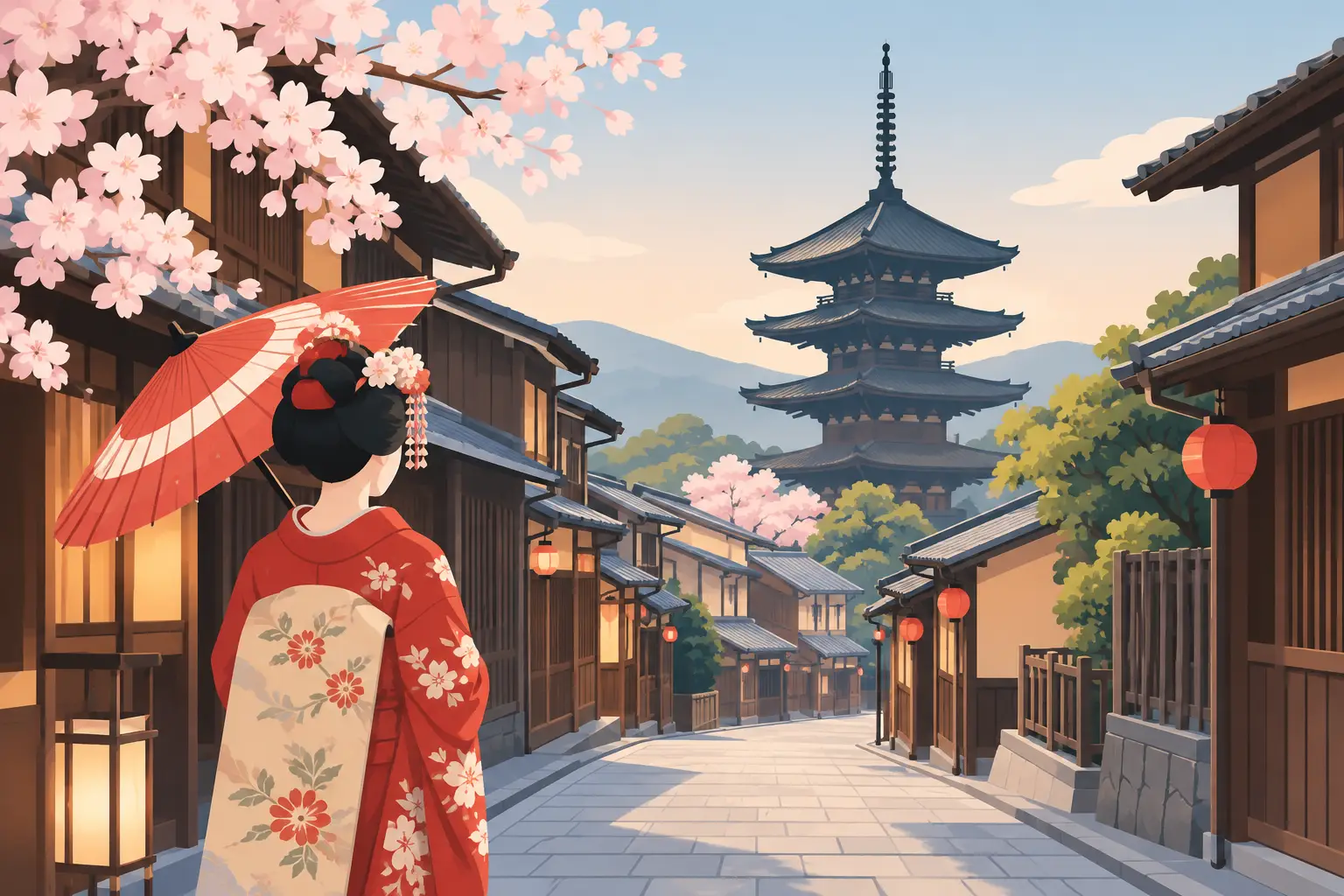
Gion is most rewarding when it is treated as more than a district to photograph. The best Gion cultural activities create a more intimate connection with Kyoto’s living traditions: an afternoon of seasonal cuisine, the measured sound of shamisen, a bowl of tea prepared with intention, or a quiet walk past lantern-lit teahouses. For visitors who value meaningful access over hurried sightseeing, this is where Kyoto becomes personal.
目次
- Begin With an Authentic Geisha and Maiko Dining Experience
- See a Seasonal Dance at Gion Kobu Kaburenjo
- Attend a Tea Ceremony With Time to Notice the Details
- Walk Hanamikoji Street With Cultural Context
- Visit Yasaka Shrine at the Right Time of Day
- Learn a Kyoto Craft From a Working Artisan
- Enjoy Kaiseki or Kyoto-Style Cuisine Slowly
- See Gion Shirakawa After Sunset
- Plan the Best Gion Cultural Activities Around One Exceptional Moment
Begin With an Authentic Geisha and Maiko Dining Experience
A hosted meal with real geisha and maiko is among the rarest cultural experiences available in Gion. It brings together several Kyoto arts in one gracious setting: seasonal cuisine, dance, traditional games, music, conversation, and the refined hospitality for which the city is known.
This is not a restaurant performance viewed from a distance. In a thoughtfully arranged experience, guests share time with performers, watch an elegant dance, enjoy lighthearted ozashiki games, and learn the customs behind the occasion through English interpretation. A higher-tier occasion may also include live shamisen, professional-style photographs, and a keepsake to take home.
For international guests, this format solves a genuine challenge. Kyoto’s traditional entertainment world is built on long-standing relationships and reservations, and casual access is limited. A curated experience such as GEISHAKYOTO offers a welcoming, bookable way to encounter this culture with appropriate context and care. Reserve well ahead, especially during spring and autumn, and dress smartly out of respect for the setting.
See a Seasonal Dance at Gion Kobu Kaburenjo
Gion’s public dance performances offer a beautiful introduction to the artistry of geiko and maiko. These seasonal productions are staged at Gion Kobu Kaburenjo and combine formal dance, elaborate kimono, live traditional music, and stage design that changes with the time of year.
The best-known spring program is Miyako Odori, but other seasonal presentations may be available depending on the calendar. A dance performance is more formal and less interactive than a private dining experience, yet it reveals the extraordinary discipline behind each gesture, turn, and glance. Even visitors unfamiliar with Japanese classical dance can appreciate the precision and visual poetry.
Choose this activity if you have a limited schedule or want to see a large-scale performance. Choose a hosted geisha occasion if personal conversation and participation matter more to you. Many guests enjoy both: a stage performance for the spectacle, followed by a more intimate experience for human connection.
Attend a Tea Ceremony With Time to Notice the Details
Tea ceremony is often described as a ritual, but that word can make it sound remote. In reality, it is a concentrated expression of hospitality. The host considers the season, the utensils, the flower arrangement, the sweet served before the tea, and the pace at which guests are welcomed.
A well-led ceremony near Gion gives visitors a calmer counterpart to the district’s livelier streets. Watch how the tea is prepared, accept the bowl with both hands, and take a moment before drinking. You do not need to know every rule in advance. A good host will guide you, and attentive curiosity is more valuable than perfect technique.
Private or small-group ceremonies are especially appealing for couples and families who prefer a quiet, unhurried experience. If you are pairing tea with other Gion activities, schedule it early in the day, before the crowds and before a more festive evening meal.
Walk Hanamikoji Street With Cultural Context
Hanamikoji Street is often the first image travelers associate with Gion: machiya townhouses, noren curtains, discreet entrances, and lanes that seem to hold another era close. It is also an active neighborhood, not a film set. Geiko, maiko, residents, shop owners, and hospitality professionals move through these streets every day.
The difference between a pleasant walk and a meaningful one is context. Join a small guided walk or spend time learning how the kagai, or geisha district, operates. Notice the architecture of ochaya teahouses, the latticework called koshido, and the understated signs that mark establishments with deep local histories.
Respect makes this experience better for everyone. Do not stop performers for photographs, block narrow streets, enter private lanes, or treat a passing maiko as an attraction. If you happen to see one on her way to an engagement, a discreet moment of appreciation is enough.
Visit Yasaka Shrine at the Right Time of Day
At the eastern end of Shijo Avenue, Yasaka Shrine connects Gion’s refined entertainment culture to Kyoto’s spiritual life. It is particularly atmospheric in the late afternoon, when the stone pathways soften in the fading light and the lanterns begin to glow.
The shrine is closely associated with the Gion Festival, one of Japan’s most celebrated summer events. Even outside July, it offers a useful perspective on the district’s name and history. Take time to observe the etiquette at the purification fountain, make a quiet offering if you wish, and avoid rushing directly through the grounds.
An early morning visit provides the greatest sense of stillness. At dusk, it pairs naturally with a dinner reservation or an evening walk through Gion Shirakawa. The better choice depends on the mood you want: contemplative and quiet, or luminous and social.
Learn a Kyoto Craft From a Working Artisan
Kyoto’s cultural legacy lives in the hands of craftspeople as much as on theater stages. A hands-on workshop can add a tactile dimension to a Gion itinerary, whether you are drawn to incense blending, fan painting, wagashi confectionery, textile work, or traditional kimono accessories.
Not every workshop is equally meaningful. Look for sessions led by practitioners who explain the materials, regional history, and techniques behind the finished object. The result does not need to be perfect. The value lies in understanding why Kyoto craftsmanship prizes restraint, seasonality, and repetition.
This is an excellent choice for private groups and multigenerational travelers. It also provides a thoughtful balance if one guest is less interested in performance arts but still wants a genuine connection to local culture.
Enjoy Kaiseki or Kyoto-Style Cuisine Slowly
Kyoto cuisine is an art form with its own vocabulary of season, texture, color, and presentation. A carefully paced kaiseki meal may feature mountain vegetables in spring, river fish in summer, matsutake mushrooms in autumn, or warming root vegetables in winter. The intention is not excess. It is harmony.
In Gion, dining can be exceptionally polished, but reservations and expectations vary widely. Some restaurants are quiet and ceremonial; others feel more relaxed while still offering serious cooking. If you are investing in a premium meal, confirm the length of the experience, dietary accommodations, and whether English support is available. This small amount of planning prevents uncertainty from interrupting the evening.
For the fullest effect, avoid booking a packed schedule immediately afterward. Kyoto cuisine rewards attention, and the memory often comes from a small detail: a hand-cut ceramic plate, a seasonal garnish, or the host’s explanation of a dish.
See Gion Shirakawa After Sunset
Gion Shirakawa, with its canal, willow trees, and preserved wooden buildings, is one of Kyoto’s loveliest evening walks. After sunset, the area feels quieter than the busiest sections of Hanamikoji, though it remains popular. Come after dinner rather than arriving solely for photographs.
Keep your pace gentle and your voice low. The charm of the canal is not only visual. It comes from being allowed a few unhurried minutes in a neighborhood where tradition remains part of daily life. In wet weather, reflections on the stone path and water can make the scene especially memorable.
Plan the Best Gion Cultural Activities Around One Exceptional Moment
The temptation in Kyoto is to collect experiences. In Gion, a more luxurious approach is to leave room for one exceptional occasion and let the rest of the day support it. A morning tea ceremony, a leisurely lunch with geisha and maiko, or an evening performance can become the center of an itinerary that also includes a shrine visit, fine dining, and a respectful walk through the historic streets.
Book signature experiences in advance, particularly during cherry blossom season, autumn foliage, and major holiday periods. Then keep the surrounding hours light enough to arrive composed rather than hurried. Gion is at its finest when you have time to listen, observe, and be fully present for a rare Kyoto moment.