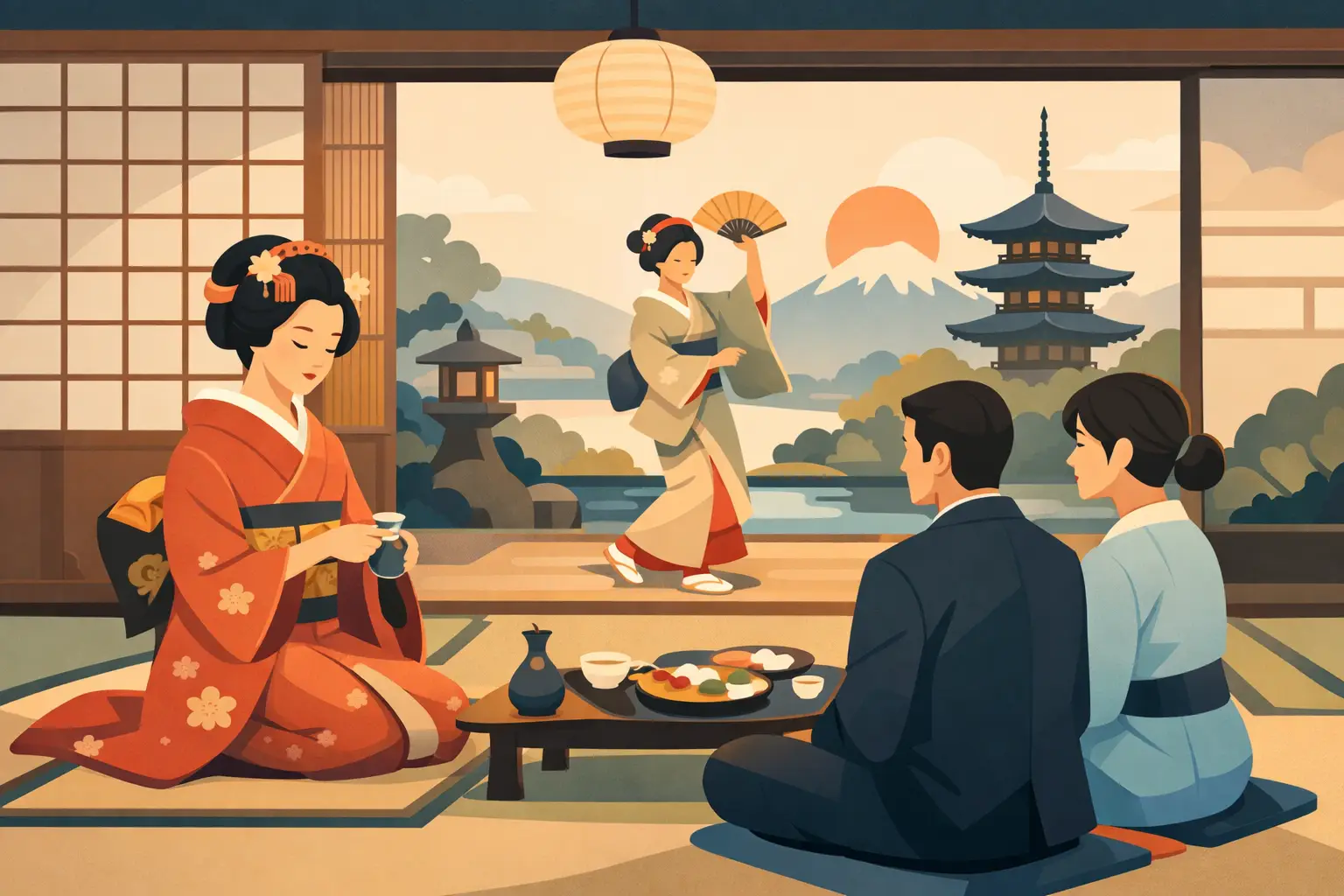
A Japanese ozashiki customs guide is less about memorizing rigid rules than understanding the spirit of the occasion. An ozashiki is an intimate gathering where Kyoto cuisine, seasonal beauty, conversation, music, dance, and hospitality meet. Guests who arrive with curiosity, restraint, and a willingness to follow their host will find the experience far more relaxed than they may expect.
For many international visitors, the rare pleasure is not simply seeing a performance by a geiko or maiko. It is sharing a refined room with them, responding to their artistry, and taking part in an evening tradition that has been shaped by Kyoto’s hanamachi districts over generations. A few thoughtful gestures allow you to be fully present for that moment.
目次
What an Ozashiki Is – and Is Not
In Kyoto, an ozashiki is a formal entertainment gathering, traditionally held in an ochaya, ryotei, or private dining room. Geiko, Kyoto’s term for geisha, and maiko, their apprentices, may perform dance, play shamisen, lead parlor games, and converse with guests. The atmosphere is polished, but it is not a museum display. It is living hospitality, sustained by skill, trust, and long-standing relationships.
The level of formality depends on the venue, host, group, and occasion. A private business dinner may follow conventions more closely than a curated cultural lunch designed for overseas guests. In a professionally arranged experience with English interpretation, guests can relax into the occasion without worrying that a missed gesture will cause offense. Courtesy matters, but warmth matters too.
It is also helpful to separate tradition from popular fantasy. Geiko and maiko are accomplished professional entertainers and cultural artists. Treating them as performers with agency, rather than as costumes or curiosities, is the foundation of good etiquette.
Japanese Ozashiki Customs Guide: Before You Enter
Arrive on time, ideally five to ten minutes early. A traditional gathering runs according to a careful sequence, from the welcome and meal to the performance and games. Late arrival interrupts not only your own experience but also the work of the hosts, kitchen team, interpreters, and entertainers.
Dress with quiet polish. For lunch or an evening gathering, smart casual clothing is usually appropriate unless the host specifies otherwise. Think tailored trousers, a dress, a jacket, or a refined blouse rather than sportswear, beach sandals, or conspicuous logos. You do not need to wear a kimono to show respect. In fact, comfortable, well-chosen attire will help you move naturally and enjoy the meal.
Shoes are often removed before entering a tatami room. Wear clean socks without holes, and be prepared to follow guidance on slippers. Avoid stepping onto tatami in slippers if the host indicates they should be left outside the room. This small point is one of the most visible signs of care in a Japanese interior.
Fragrance deserves special consideration. Traditional dining rooms can be intimate, and subtle seasonal cuisine is designed to be appreciated through aroma as well as taste. Skip heavy perfume or strongly scented products. The same restraint applies to phone use: silence your device before the gathering begins and keep it out of sight unless photography is invited.
Seating, Dining, and Toasting With Grace
Your host or interpreter will usually indicate where to sit. In more formal settings, seating reflects seniority and the room’s layout. There is no need to decode the arrangement yourself. Simply wait to be guided, and do not begin eating or drinking until the host signals that the meal may start.
Tatami seating can involve sitting on the floor, sometimes with a low chair or back support. If kneeling in seiza is uncomfortable, do not force yourself through the meal. Sitting cross-legged or with your legs gently to one side is generally more comfortable for visitors, and a discreet adjustment is far better than enduring pain. Some venues can arrange chairs in advance, especially when requested during booking.
Kyoto cuisine often arrives in several seasonal courses. Pace yourself. Admire the presentation, taste each course as it comes, and resist the urge to rush ahead for photographs while others are being served. A brief appreciative comment about the food, the season, or the craftsmanship is always welcome.
At a small gathering, guests may pour drinks for one another, particularly when beer or sake is served. If someone pours for you, lift your cup slightly with both hands as a gracious response. When offering a drink, use both hands if it feels natural. These gestures are not tests. They are a visible way of acknowledging the person across from you.
Wait for the opening toast, often accompanied by “kanpai,” before taking your first sip. Sake may be offered, but you never need to drink alcohol to participate. A simple, warm “No, thank you” or a request for tea or a nonalcoholic alternative is perfectly acceptable. Good hospitality should never require discomfort.
Meeting Geiko and Maiko Respectfully
A geiko or maiko may greet your group, perform, and speak with guests during the gathering. Conversation is part of the art, though the rhythm may be different from a Western cocktail party. Ask thoughtful, light questions about Kyoto, music, dance, seasonal traditions, or daily training. Let the interpreter help when language is a barrier.
Avoid overly personal questions about age, income, relationships, residence, or why someone chose this profession. Do not ask whether a maiko is “really” a geisha, and do not make assumptions based on films or online stereotypes. If you are unsure how to address someone, follow the introduction offered by your host.
Physical boundaries are especially important. Do not touch a geiko or maiko’s kimono, hair ornaments, makeup, or hair without explicit invitation. These are carefully prepared elements of professional presentation, often requiring considerable time and expertise. The same principle applies to personal space: friendly interest is welcome; familiarity is not presumed.
Photography should be treated as a privilege, not an entitlement. Some occasions include a dedicated photo opportunity, often after the performance, while others limit photographs to protect the intimacy of the room. Ask before taking any image, avoid flash unless specifically permitted, and never record a performance or conversation without clear approval. When a photo is arranged, follow the host’s direction and enjoy the moment rather than trying to stage it yourself.
During Dance, Shamisen, and Games
Traditional dance may appear delicate, but every movement carries meaning. A fan, sleeve, glance, or measured step can suggest a season, a journey, rain, courtship, or a scene from classical literature. Watch quietly and save conversation for afterward. Applause at the end is appropriate and warmly appreciated.
Live shamisen brings a different energy to the room. Listen for the expressive contrast between crisp rhythmic passages and more spacious, lyrical phrases. You do not need specialist knowledge to respond well. Attentive silence, followed by sincere appreciation, is the right response.
Ozashiki games are often the most joyful part of a gathering. These simple, spirited games may involve rhythm, hand movements, songs, and lighthearted forfeits. The point is shared laughter, not flawless technique. Join when invited, accept a loss with good humor, and let the entertainers set the pace. A guest who tries earnestly is usually more memorable than one who hangs back in fear of getting it wrong.
Payments, Gifts, and Small Courtesy
In a traditional private ozashiki, arrangements around fees can be complex and are normally handled through the host. In a curated dining experience, the inclusions and payment are generally settled in advance. Do not place cash on the table or offer tips directly to geiko or maiko unless your host has specifically explained that it is appropriate.
Gifts are not expected. A small, thoughtful item from your home country may be welcome in certain private settings, but it should be offered through the host rather than presented impulsively. For most visitors, sincere thanks and respectful attention are the most fitting expression of appreciation.
At the end of the gathering, thank the entertainers, hosts, and interpreters before departing. A simple “arigato gozaimasu” is lovely, but English gratitude delivered warmly is equally meaningful. If the occasion includes a souvenir or formal photograph, receive it with both hands when practical and take a moment to acknowledge it.
A well-curated Kyoto experience, such as those arranged by GEISHAKYOTO, gives international guests the reassurance of English support while preserving the intimacy and elegance that make an ozashiki special. The finest preparation is simple: arrive ready to observe, participate when invited, and let Kyoto’s hospitality set the rhythm of the room.