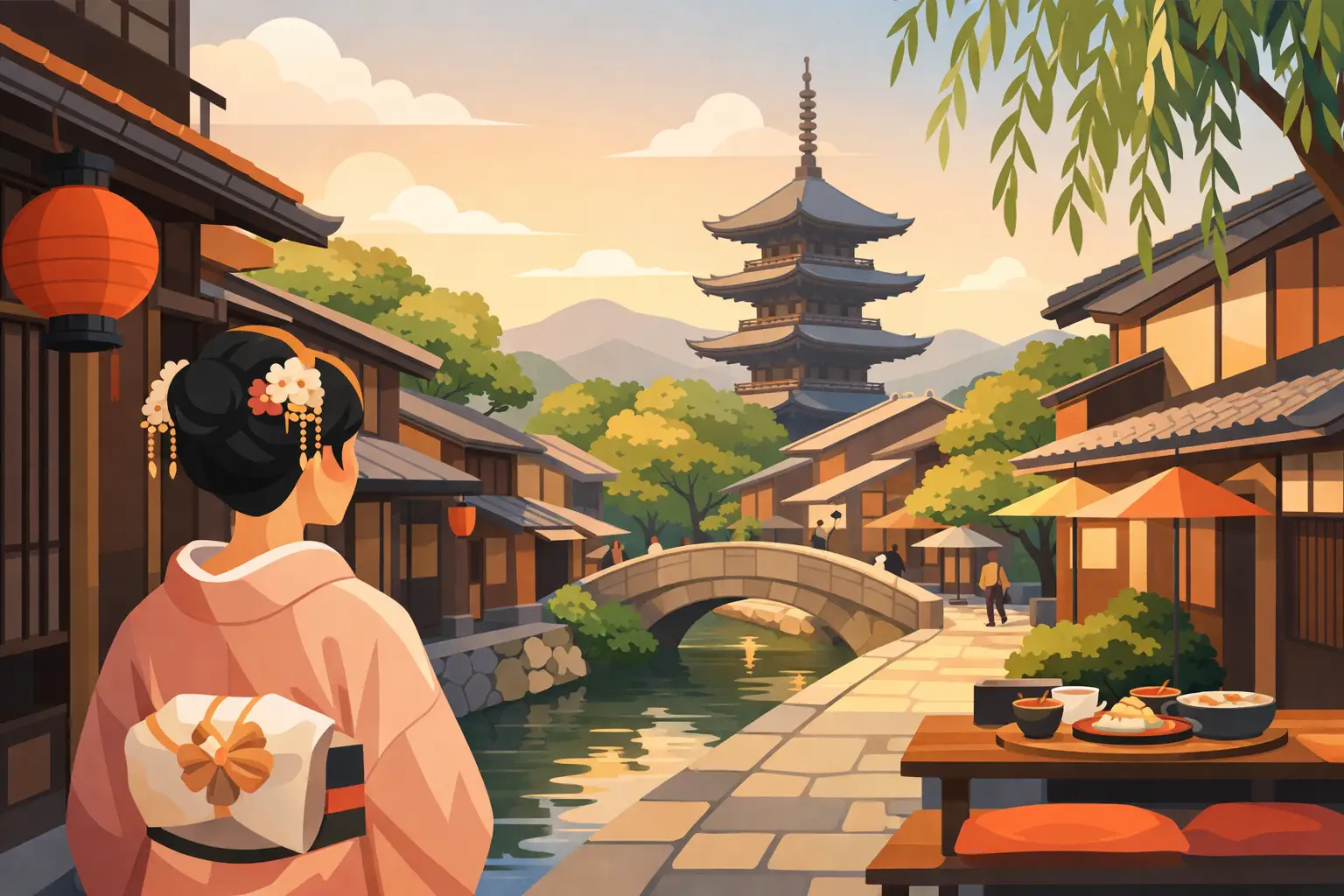
Gion restaurants can offer one of Kyoto’s most memorable pleasures: a meal shaped by season, ceremony, and quiet craftsmanship. Yet in a district known for its lantern-lit lanes and geiko culture, the most meaningful table is not always the one that is easiest to find. For international guests, choosing well means looking beyond a beautiful menu and considering what kind of Kyoto moment you hope to take home.
A refined lunch in Gion can be an intimate introduction to kaiseki cuisine, a relaxed riverside meal, or a rare cultural gathering with geisha or maiko entertainment. Each has a different rhythm, level of formality, and reservation process. The right choice depends on whether you are seeking culinary discovery, an elegant celebration, or direct access to one of Kyoto’s living traditions.
目次
What Makes Gion Restaurants Different
Gion is not simply a dining neighborhood. It is one of Kyoto’s historic hanamachi, or geisha districts, where traditional arts continue alongside centuries-old temples, tea houses, and machiya townhouses. A meal here often carries a strong sense of place: carefully composed rooms, seasonal flowers, ceramics selected for the course, and dishes that reflect the particular moment in Kyoto’s calendar.
At the highest level, the cuisine is intentionally restrained. Rather than relying on richness or spectacle, Kyoto cooking often honors an ingredient at its peak: tender spring bamboo shoots, summer ayu fish, fragrant matsutake mushrooms in autumn, or sweet winter turnip. Presentation matters, but not as decoration alone. A lacquer bowl, a hand-thrown plate, or a maple leaf placed beside a course can express the season as clearly as the food itself.
This is also why price is not the only measure of quality. Some exceptional Gion restaurants are formal kaiseki establishments with private rooms and extensive tasting menus. Others serve beautifully prepared tofu cuisine, sushi, soba, or Kyoto-style home cooking in a more relaxed setting. The most suitable experience is the one that matches your appetite, schedule, and comfort with Japanese dining customs.
Choose the Experience Before the Restaurant
For visitors with limited time, the first decision should be the type of afternoon or evening you want. A long, multi-course kaiseki meal rewards guests who want to focus on food and can enjoy a slower pace. It may last two to three hours, and the subtlety of each course is part of the occasion.
A more casual lunch can be ideal between temple visits, particularly if you are traveling with family or prefer flexibility. It may still feature excellent seasonal ingredients, but with fewer courses and less ceremony. This is often the better choice when the meal supports a full day of sightseeing rather than becoming the day’s centerpiece.
For a special occasion, a cultural dining experience offers something fundamentally different. Instead of trying to arrange access to a traditional ozashiki gathering independently, guests can enjoy Kyoto cuisine alongside authentic performances and conversation in a structured, welcoming setting. This is especially valuable for travelers who want the atmosphere of Gion’s traditional entertainment culture but do not speak Japanese or have local introductions.
A meal with geisha or maiko entertainment
Dining with geisha or maiko is not a themed restaurant performance. It is a form of living cultural hospitality, with artistry developed through years of disciplined training. Depending on the format, guests may see a traditional dance, hear live shamisen music, enjoy refined party games, and have time for photographs.
The distinction matters. A standard restaurant may provide excellent food and a lovely room, but it cannot necessarily provide a meaningful encounter with Gion’s performing arts. Conversely, an entertainment-focused gathering may be the right choice for guests who value the human connection, storytelling, and shared celebration as much as the meal itself.
GEISHAKYOTO presents this experience in an English-supported lunch format, pairing Kyoto-style cuisine with authentic geisha and maiko arts, traditional games, photo opportunities, and select package enhancements such as live shamisen. It is designed for international guests who would like an elevated cultural occasion without the uncertainty of arranging a private engagement on their own.
Reservations: Where the Real Planning Begins
Many of Gion’s most respected dining rooms are reservation-only, and some traditional establishments accept bookings primarily through hotels, concierge services, or Japanese-speaking contacts. This is not meant to exclude visitors. It reflects the intimate scale of the restaurants, the careful purchasing of seasonal ingredients, and the importance placed on preparing for each guest.
Book early for weekends, cherry blossom season, autumn foliage, and year-end travel. Lunch is often a wise choice: it can offer a similarly beautiful setting to dinner at a more accessible price, while leaving your evening open for a stroll through Gion or a visit to nearby Kiyomizu-dera.
When reserving, communicate dietary needs clearly and as far in advance as possible. Vegetarian, vegan, gluten-free, halal, and allergy-friendly requests can sometimes be accommodated, but Kyoto cuisine frequently uses dashi made from bonito flakes and may include ingredients that are difficult to substitute at short notice. A premium venue will usually be honest about what it can provide. That clarity is preferable to a promise that compromises the integrity or safety of the meal.
Private rooms are worth considering for honeymoons, anniversaries, family celebrations, and executive groups. They offer a quieter setting, more personal service, and room to appreciate the progression of a meal without distraction. For a geisha entertainment experience, a private or small-group format can also make conversation and participation feel more natural.
Etiquette That Lets You Relax
Guests do not need to be experts in Japanese etiquette to enjoy Gion gracefully. The most appreciated qualities are punctuality, curiosity, and respect for the setting. Arrive a few minutes early, silence your phone, and let the staff guide you through the room and the meal.
If shoes are removed at the entrance, follow the lead of your host. Avoid placing personal items directly on tatami, and ask before photographing interiors, dishes, performers, or other guests. Some restaurants welcome photos of the cuisine but prefer that guests do not photograph the kitchen, private spaces, or neighboring tables.
During a formal meal, there is no need to rush through courses or feel pressured to identify every ingredient. A simple question about a dish, a piece of pottery, or the season is usually warmly received. If you are attending a performance, give it the same attention you would offer a concert. Applause is welcome, while continuous filming can make the atmosphere less comfortable for both artists and guests.
Tipping is generally not expected in Japan. Exceptional hospitality is built into the experience and reflected in the service charge or menu price. A sincere thank-you is the most appropriate gesture.
How to Recognize a Worthwhile Gion Dining Experience
The finest experiences tend to be clear about what they offer. Look for transparent details about the meal format, duration, inclusions, language support, private-room arrangements, cancellation policies, and dietary accommodations. For cultural programs, ask whether the entertainers are active geisha or maiko and whether the gathering includes genuine traditional arts rather than a generic stage show.
Authenticity is not measured by how difficult something is to book. A restaurant with English-speaking staff, a polished reservation process, or a clearly presented package can still be deeply rooted in Kyoto tradition. In fact, thoughtful accessibility allows guests to concentrate on the experience rather than worry about logistics.
There are trade-offs. A tiny counter restaurant may feel wonderfully spontaneous and local, but it may not accommodate a large party, photography, or dietary restrictions. A luxurious private dining package brings comfort, interpretation, and certainty, though it will naturally require a greater investment. Neither approach is universally better. The question is what will make your time in Kyoto feel most personal.
Make Space for the Afternoon
The most elegant way to enjoy Gion is to avoid treating lunch as a stop between appointments. Allow time afterward to walk slowly through the district, notice the wooden lattice facades, and pause at the Shirakawa Canal. Gion is at its best when the meal, the performance, and the streets beyond the restaurant are allowed to become one unhurried memory.
Choose a table that gives you more than a reservation. Choose one that leaves you with a deeper sense of Kyoto, a story worth retelling, and the feeling that for a brief afternoon, the city welcomed you in.
AUTHENTIC KYOTO EXPERIENCE