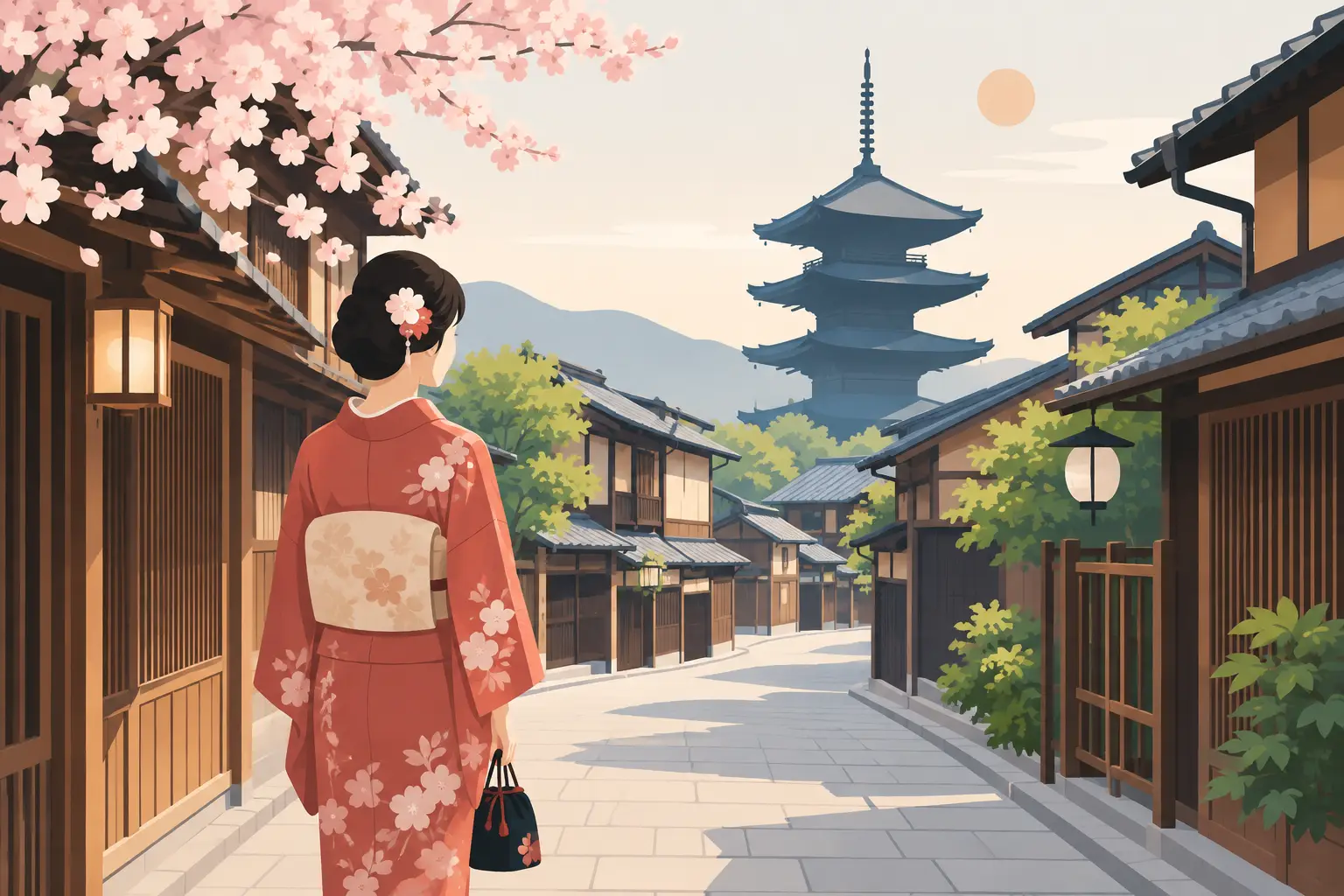
A narrow stone lane in Gion can feel like a scene preserved from another era: softly lit machiya townhouses, noren curtains at discreet entrances, and the brief glimpse of a maiko hurrying to an evening engagement. This Gion etiquette guide is designed to help you enjoy that rare Kyoto atmosphere without mistaking a living cultural district for a stage set.
Gion is beautiful precisely because it is not a theme park. It remains a working hanamachi, or geisha district, where geiko and maiko travel between rehearsals, teahouses, restaurants, and private appointments. A thoughtful approach protects the privacy and dignity that make the neighborhood so extraordinary.
目次
What Makes Gion Different
Gion has long been associated with Kyoto’s refined performing arts and hospitality traditions. In Kyoto, geisha are called geiko, while apprentices are known as maiko. Their work is highly disciplined: traditional dance, shamisen, song, conversation, seasonal customs, and the art of making guests feel at ease all require years of training.
For visitors, the distinction matters. A geiko or maiko walking through the neighborhood may be on her way to work, not offering an informal public appearance. She may also be a local resident, an entertainer in costume, or a visitor wearing a rental kimono. Assumptions can quickly become intrusive.
The most rewarding way to experience this world is through an arranged cultural occasion, where performance, conversation, dining, and photography take place with mutual understanding. In that setting, you are welcomed as a guest rather than trying to capture a passing moment.
Gion Etiquette Guide: Photography With Respect
Photography is where good intentions most often go astray. Gion’s streets are deeply photogenic, but private homes, businesses, and guests deserve the same consideration you would offer in any residential neighborhood.
Take photographs of public streets, architecture, lanterns, and seasonal details with care. Before photographing a person, ask permission when possible. Do not follow, block, touch, call out to, or surround someone in geiko or maiko attire for a picture. A single hurried encounter should never become a crowd scene.
Some private lanes and areas display signs restricting photography. Treat these instructions as non-negotiable, even if others appear to ignore them. Do not use flash near doorways or peer into restaurants, teahouses, or residences. A reserved entrance may look mysterious, but its privacy is part of the culture.
If you are invited to a hosted geiko or maiko experience, the expectations are different. Hosts will explain when photos are welcome and may arrange polished photo opportunities at an appropriate moment. This is one reason a private, interpreted experience feels so relaxed: you can be present for the occasion instead of wondering whether you have crossed a line.
On the Streets: Quiet, Space, and Awareness
Gion is best enjoyed at an unhurried pace. Keep your voice low, particularly on narrow lanes in the early morning or evening. Sound carries between traditional wooden buildings, and many streets are home to families as well as businesses.
Walk to one side, avoid stopping in the middle of a lane, and be mindful of bicycles, delivery staff, and guests arriving for reservations. If your group needs to check a map or take a photo, step aside where you will not obstruct the path. These small gestures are natural in Kyoto, where consideration for shared space is a form of courtesy.
Smoking, eating while walking, and leaving litter behind can also disrupt the calm of the neighborhood. Use designated smoking areas, finish food at the shop where you purchased it when appropriate, and carry any trash until you find a proper bin. Kyoto’s streets are often remarkably clean because people take personal responsibility for them.
Evening is an especially sensitive time. The softly illuminated lanes are alluring, but it is also when appointments, dinners, and performances begin. Resist the urge to linger outside doorways or wait in hopes of seeing a maiko. Choose a dinner, a performance, or a guided cultural experience instead, then let the neighborhood continue its evening with dignity.
Entering Restaurants, Teahouses, and Cultural Venues
Gion offers everything from casual cafés to some of Kyoto’s most distinguished dining rooms. Many fine establishments operate by reservation, and some traditional teahouses are private venues that welcome guests through trusted introductions. A closed door is not a challenge to overcome. It is simply part of how these places maintain a quiet, personal standard of hospitality.
Arrive on time for a reservation, ideally a few minutes early. If you are delayed, contact the venue as soon as possible through your hotel concierge or interpreter. Last-minute cancellations can have an outsized impact on small restaurants with limited seating and carefully prepared seasonal menus.
At the entrance, follow the staff’s lead. You may be asked to remove your shoes, wear slippers, or place footwear in a designated area. Keep socks clean and presentable, especially if you expect tatami seating. Avoid stepping on tatami in slippers unless instructed otherwise, and do not place bags directly on the mats.
When dining, wait until everyone has been served before beginning if the host suggests it. “Itadakimasu” before the meal and “gochisosama deshita” afterward are gracious phrases, though a warm thank-you in English is also appreciated. Chopsticks should never be planted upright in rice or used to pass food directly from one pair of chopsticks to another, as both gestures recall funeral rites.
A traditional meal may proceed at a slower rhythm than guests expect. Allow the chef’s seasonal courses, the room, and the conversation to set the pace. Luxury in Kyoto is often expressed through restraint, not display.
Meeting a Geiko or Maiko
If you meet a geiko or maiko during an organized occasion, a few simple courtesies will make you a welcome guest. Begin with a respectful greeting and allow your host or interpreter to make introductions. A light bow is appropriate; there is no need for an elaborate gesture.
Use the terms geiko and maiko rather than treating either as a costume or a photo subject. Ask thoughtful questions about dance, music, seasonal traditions, or training, but avoid overly personal questions about age, relationships, income, home life, or future plans. Their profession is public in one sense, yet their private lives remain their own.
During a performance, keep phones silent and refrain from speaking unless invited. When entertainment games begin, join with good humor. These games are designed to create warmth and laughter, not to test anyone’s skill. A willingness to participate is far more elegant than trying to perform perfectly.
Tipping is not customary in most Japanese settings, and it should not be offered directly to a geiko or maiko. If you are uncertain about a gesture of thanks, follow the guidance of your host. Thoughtfulness, punctuality, and genuine attention are the most meaningful forms of appreciation.
Dress for the Occasion, Not for a Costume
For a premium lunch, dinner, or cultural gathering in Gion, polished smart casual attire is a reliable choice. Think tailored trousers, a dress or skirt of an appropriate length, a refined blouse, a jacket, or a collared shirt. Clean, understated shoes are preferable, especially because you may remove them indoors.
There is no need to wear formal Japanese attire unless it is provided or you have chosen a proper kimono experience. If you do wear kimono, do so with care for the setting rather than as an excuse to occupy narrow streets for extended photo sessions. The goal is to participate appreciatively, not to turn the neighborhood into a personal backdrop.
Fragrance deserves restraint. Traditional dining rooms and intimate performance spaces are close quarters, and strong perfume can distract from food, incense, or the natural scent of tatami. The same principle applies to jewelry and accessories: elegant is welcome; distracting is unnecessary.
How a Curated Experience Removes the Guesswork
The finest Gion moments are rarely accidental. They are shaped by relationships, timing, and hosts who understand the customs of the room. For international guests, that can be difficult to arrange independently, especially when language, reservation practices, and etiquette all intersect.
A curated experience such as GEISHAKYOTO offers a more comfortable path into this tradition. With Kyoto-style dining, authentic entertainment, English interpretation, and clear guidance on participation and photography, guests can relax into the occasion with confidence. The result is not simply access, but a more respectful form of access.
Gion rewards visitors who slow down. Let the lanes remain quiet, let private doors remain private, and save your most memorable encounter for a setting where you have been genuinely welcomed. That courtesy is not a limit on the experience. It is what allows its grace to endure.