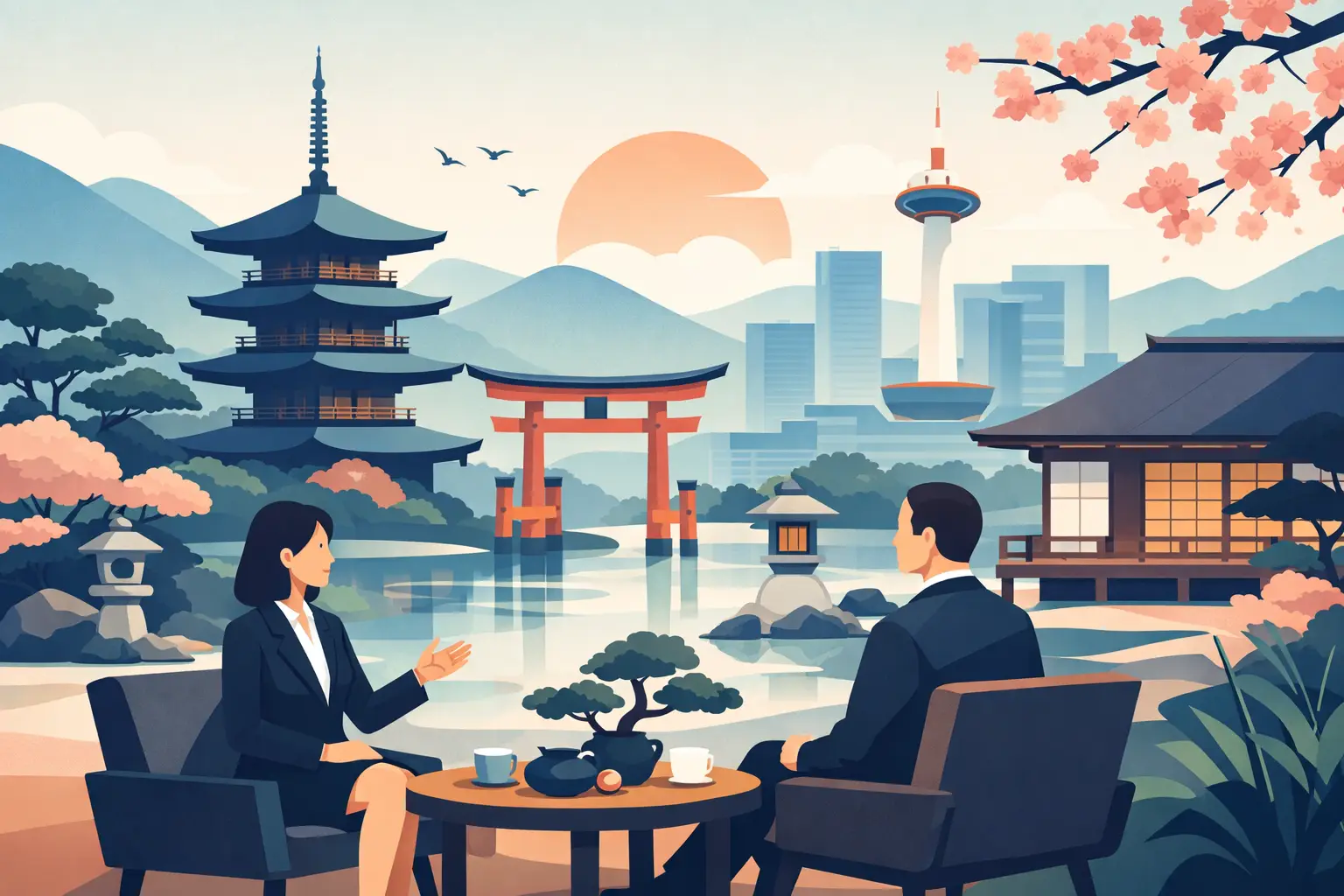
A private meal can be pleasant. A gathering where guests share Kyoto cuisine, witness traditional dance, hear live shamisen, and take part in a centuries-old form of hospitality becomes something more enduring. Kyoto executive hosting is most effective when it gives international clients and senior colleagues a genuine sense of place, without asking them to navigate unfamiliar customs alone.
For a board-level visitor, a valued partner, or a small incentive group, Kyoto offers an alternative to the expected private dining room. Its cultural traditions bring ceremony, artistry, and human connection to an occasion that might otherwise feel transactional. The difference lies in choosing an experience designed with both authenticity and guest comfort in mind.
目次
- Why Kyoto Is Made for Meaningful Business Hospitality
- Kyoto Executive Hosting Is About Access, Not Excess
- What a Strong Hosted Experience Should Include
- Planning the Occasion Around Your Guests
- Etiquette That Helps Guests Feel at Ease
- The Trade-Off Between Privacy and Atmosphere
- A Rare Kyoto Moment Worth Planning Well
Why Kyoto Is Made for Meaningful Business Hospitality
Kyoto has long valued the details that make a guest feel considered: the rhythm of a meal, the seasonality of ingredients, the placement of a flower, and the respectful exchange between host and visitor. Those qualities translate naturally to executive entertaining. Rather than relying on spectacle, a well-curated occasion creates space for conversation and a shared memory that carries beyond the trip.
This matters particularly when hosting guests who have already experienced excellent restaurants and luxury hotels around the world. They may not remember every course of a formal dinner. They are far more likely to remember the moment a maiko performs a dance at close range, the sound of the shamisen in an intimate room, or the laughter that follows a traditional parlor game explained in clear English.
A cultural program also gives a mixed group an easy point of connection. Colleagues who do not know one another well have something meaningful to discuss, while hosts are freed from carrying every conversation. The setting remains refined, but it is not stiff.
Kyoto Executive Hosting Is About Access, Not Excess
The best executive events in Kyoto do not try to compress every local custom into one afternoon. They select a few elements with care and present them properly. The aim is not to turn a business gathering into a tourist attraction. It is to offer access to a living cultural tradition that is usually difficult for overseas visitors to arrange independently.
Geisha culture is a clear example. In Kyoto, geiko and maiko work within established traditions and professional communities. Their entertainment is not a costume performance created for a generic audience. Dance, music, conversation, and games each have their own role in the hospitality of an ozashiki gathering.
For international hosts, this distinction is essential. A trusted, structured experience ensures that guests meet real professionals in a respectful setting, understand what they are seeing, and know how to participate comfortably. English-speaking interpretation removes the uncertainty that can otherwise keep visitors at a distance from the occasion.
This is where a premium format earns its place. It does not merely arrange a meal and entertainment. It considers the guest journey: arrival, introductions, etiquette, interpretation, photo opportunities, timing, and the tone of farewell. Every element should feel gracious rather than overly scripted.
What a Strong Hosted Experience Should Include
A business gathering succeeds when its cultural elements support the purpose of the visit. For many groups, lunch is the most practical choice. It preserves the evening for private engagements, fits within a busy Kyoto itinerary, and creates an elegant pause between meetings or site visits.
The dining should reflect Kyoto’s culinary sensibility, with seasonal presentation and attentive service. This is not only about luxury. A thoughtfully paced meal gives guests time to settle in before the cultural program begins and time afterward to speak more freely about what they have experienced.
Traditional dance offers a quiet, visually striking focal point. It rewards attention and creates the sense that guests have been welcomed into an intimate Kyoto setting. Geisha entertainment games then shift the atmosphere toward warmth and participation. They are especially useful for groups that need a gentle way to move beyond formal introductions.
For a more elevated occasion, live shamisen adds emotional texture that a recorded soundtrack cannot provide. The instrument’s sound changes the room immediately, making the event feel personal and present. Professional-style photos and a considered souvenir can extend the value of the experience after the guests have returned home, provided they are offered with discretion rather than treated as an interruption.
GEISHAKYOTO brings these elements together in a bookable format for overseas guests, combining Kyoto-style dining, authentic geisha and maiko entertainment, interpretation, and premium additions according to the selected plan.
Planning the Occasion Around Your Guests
The right format depends on why you are hosting. A client thank-you, an executive retreat, and a celebration after a successful negotiation may all involve the same number of people, yet they call for different pacing and levels of privacy.
For a first meeting with prospective partners, choose an experience that leaves generous room for conversation. Cultural entertainment can create a memorable opening or closing, but the primary goal may be trust-building. A smaller group and an unhurried lunch often work better than a long program with too many moving parts.
For a visiting leadership team, a fuller experience can be appropriate. These guests may have traveled a great distance and have limited time in Kyoto. Including dance, games, and live music gives them a substantial cultural memory without requiring them to secure difficult reservations or decipher etiquette on their own.
Celebratory groups can be more relaxed, although thoughtfulness still matters. Confirm dietary needs early, consider whether guests are comfortable sitting in a traditional style, and set expectations about photography before the event. A polished operator will guide these details quietly and offer practical alternatives when needed.
Group size also changes the character of the gathering. Intimacy is one of Kyoto hospitality’s greatest strengths. Small groups allow for better interaction with the geiko or maiko and make interpretation feel natural. Larger parties can still be elegant, but they require more deliberate room planning and a program that prevents guests at the far end of the table from becoming observers rather than participants.
Etiquette That Helps Guests Feel at Ease
International guests do not need a detailed lesson before they can enjoy a geisha experience. In fact, too much instruction can make the occasion feel academic. A few clear principles are enough: arrive on time, follow the host’s guidance on photographs, listen during performances, and participate in games with good humor.
Hosts should avoid presenting geisha and maiko as props for a corporate photo. They are trained artists and hospitality professionals, and treating the interaction with respect improves the experience for everyone in the room. The most memorable photographs tend to come after guests have relaxed into the event, not when they are rushed through a posed moment.
Language support is more than a convenience. It lets guests understand the significance of the music, dance, and games as they happen. It also allows natural conversation to develop, which is often the part visitors value most. When the interpreter is skilled, guests feel welcomed into the room rather than spoken at from outside it.
The Trade-Off Between Privacy and Atmosphere
Some hosts assume that the most private room is always the best choice. Privacy is valuable for sensitive conversations, but complete seclusion can occasionally make an international group feel overly formal. The ideal balance depends on the purpose of the event and the personalities involved.
If confidential business discussion is central, reserve time before or after the cultural portion for private conversation. Let the geisha entertainment be a gracious interlude rather than background to negotiations. This respects the artists and allows guests to give the performance their full attention.
If relationship-building is the priority, an atmosphere with warmth and participation may be more valuable than a highly controlled agenda. Traditional games create moments of shared laughter that are difficult to manufacture in a conference room. They also allow a senior executive to appear approachable without sacrificing the occasion’s sense of refinement.
A Rare Kyoto Moment Worth Planning Well
Exceptional hosting is remembered because it reflects care. In Kyoto, that care can take the form of seasonal cuisine, a private welcome, a performance of extraordinary discipline, and the reassurance that every guest can take part with confidence.
When arranging your next executive occasion, begin with the memory you want your guests to carry home. If it is a memory of being genuinely welcomed into Kyoto’s cultural world, choose a setting where tradition is treated with the respect it deserves and every practical detail has already been thoughtfully considered.