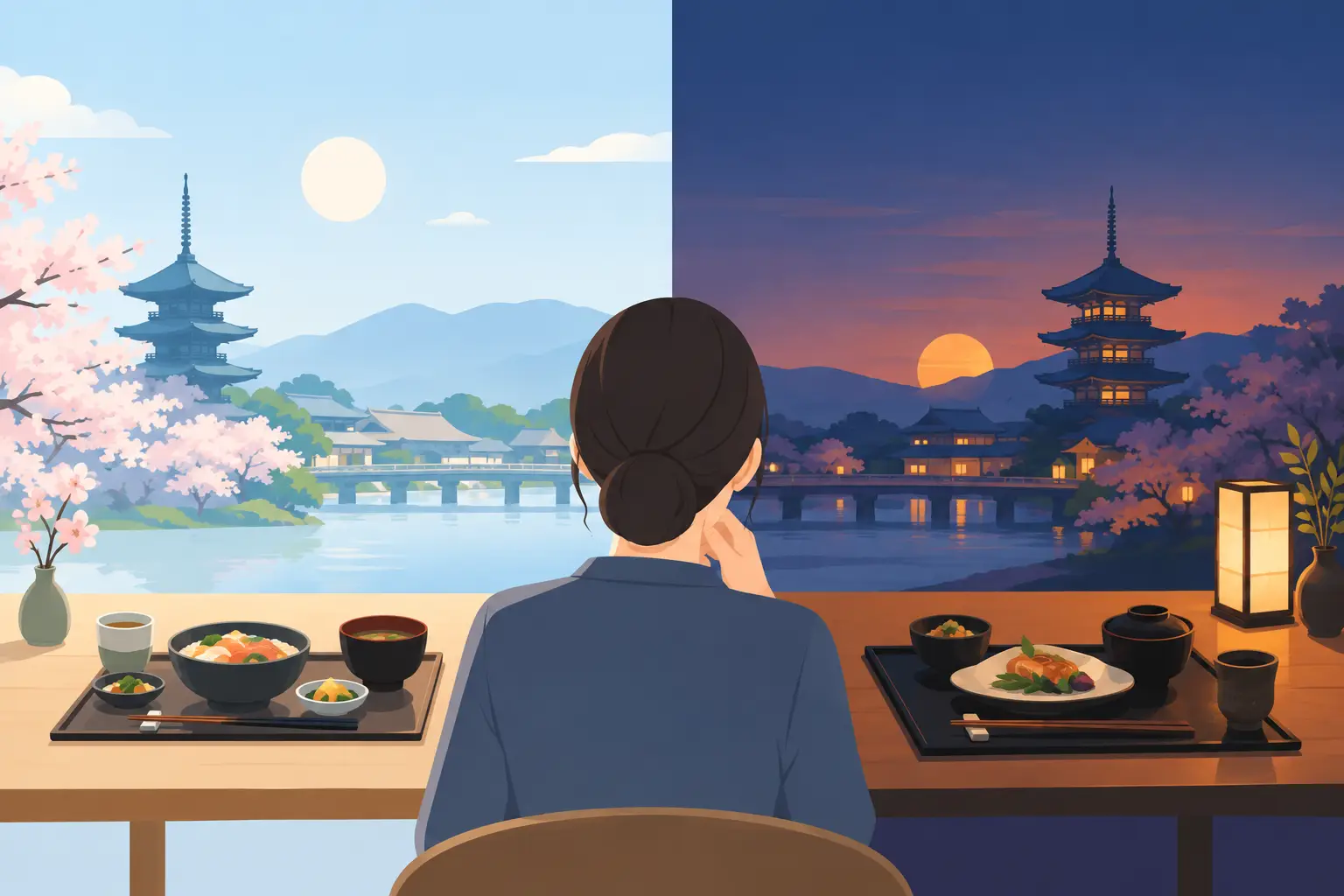
A Kyoto luncheon versus dinner event is not simply a question of what time you prefer to eat. It shapes the pace of your day, the mood of your photographs, the style of hospitality you enjoy, and the kind of memory you take home. For travelers seeking an authentic encounter with Kyoto’s geisha culture, both can be extraordinary. The right choice depends on whether you want your cultural experience to become the centerpiece of a bright, beautifully paced afternoon or the elegant finale to an evening in Japan’s most storied city.
目次
The essential difference: daylight or evening atmosphere
A luncheon has a sense of clarity and ease. Kyoto’s refined cuisine, seasonal tableware, kimono, dance, and conversation can be appreciated in natural light, often after a morning of temple visits or before a relaxed afternoon in Gion. It is particularly appealing for guests who want a meaningful cultural experience without giving up their evening for another dinner reservation, a stroll along the Kamo River, or time to rest before an early departure.
A dinner event carries a different kind of anticipation. As daylight fades, the atmosphere becomes more intimate and ceremonial. Lantern-lit streets, evening attire, and a longer, slower meal can make the occasion feel especially suited to a honeymoon, anniversary, executive gathering, or celebratory night in Kyoto.
Neither format is inherently more authentic. Geisha and maiko entertainment is rooted in the hospitality of Kyoto’s traditional entertainment districts, where timing, conversation, music, and gracious attention all matter. The more useful question is which atmosphere best fits the rhythm and purpose of your visit.
Why a Kyoto luncheon can be the wiser choice
For many international visitors, a luncheon offers the rare pleasure of an elevated cultural experience without the logistical pressure that often surrounds dinner in Kyoto. You can arrive rested, dressed comfortably, and fully present. There is no need to navigate a late return to your hotel after a long day of sightseeing, and no concern that travel fatigue will dull an occasion you have been looking forward to for months.
A strong choice for a limited Kyoto itinerary
Kyoto rewards unhurried travel, but most visitors have only a few days. A thoughtfully organized lunch creates a natural anchor in the middle of the day. You might begin with an early visit to a quiet temple, arrive for a leisurely Kyoto-style meal and live cultural entertainment, then continue into the afternoon with enough energy for a garden, museum, tea stop, or walk through historic streets.
This format is especially effective if your evenings are already spoken for. Perhaps you have booked a fine-dining restaurant, planned a private tour, or simply want to preserve the flexibility to follow Kyoto’s evening atmosphere wherever it leads. A luncheon gives you the cultural access you came for while leaving the rest of the day open.
Daylight is ideal for photographs and detail
A geisha or maiko experience is richly visual. The artistry of kimono, hair ornaments, makeup, dance gestures, shamisen performance, and seasonal cuisine deserves close attention. Daytime light can be flattering for professional-style photographs and makes the colors and details of the setting feel vivid.
For couples, families, and small groups, this may be more than a practical benefit. A photograph taken in this setting becomes a record of a rare Kyoto moment: polished, personal, and far removed from a standard sightseeing snapshot.
A polished introduction to geisha culture
Lunch can feel more approachable for guests who are curious about geisha culture but unsure what to expect. The setting remains refined, but the daytime pace tends to feel relaxed and welcoming. With English-speaking interpretation, guests can understand the context of the performance, participate in traditional entertainment games with confidence, and enjoy genuine interaction without worrying about language or etiquette.
That reassurance matters. Kyoto’s traditional hospitality has its own rhythms, and a well-curated luncheon makes those rhythms accessible without making them feel simplified. You are not merely watching a performance. You are being welcomed into an occasion shaped by dining, conversation, music, and presence.
When a dinner event feels more special
Dinner is often the preferred choice when the evening itself is the occasion. If you are celebrating an engagement, milestone birthday, honeymoon, company achievement, or long-awaited first trip to Japan, the extended atmosphere of an evening event can be deeply memorable.
More time to linger
A dinner event often invites a slower transition from one course and conversation to the next. Guests may appreciate having nowhere else to be. There is a pleasure in setting aside the sightseeing schedule, changing for the evening, and allowing the experience to unfold at a gentler pace.
This can be particularly valuable for private groups. Friends traveling together, multigenerational families, and business hosts often find that an evening meal gives everyone more space to settle in and share the occasion. The meal becomes part of the evening’s conversation rather than an interlude between activities.
An intimate setting for celebrations
At night, Kyoto feels more hushed and theatrical. A refined dinner paired with geisha or maiko entertainment can create the feeling of stepping beyond the public city and into a more private world. For travelers drawn to romance and ceremony, that mood is difficult to replicate at midday.
Still, an evening event is best chosen deliberately. If your flight arrived that morning, if your itinerary begins early the next day, or if you have been walking since sunrise, a late, elaborate meal may feel more demanding than luxurious. Premium experiences are most rewarding when guests can arrive with the time and energy to enjoy every detail.
Dining and entertainment: what should guide your decision?
The quality of the cultural encounter should matter more than the clock. Look for an experience that clearly explains what is included: Kyoto-style cuisine, traditional dance, opportunities for interaction, entertainment games, interpretation, photography, and any live musical elements. A dinner with vague promises may not offer more value than a carefully designed luncheon with meaningful access and thoughtful service.
At GEISHAKYOTO, luncheon packages are structured to give overseas guests a complete and comfortable experience of Kyoto hospitality. Depending on the selected plan, the occasion can include seasonal cuisine, elegant dance performances, traditional games with geisha or maiko, live shamisen, photography opportunities, souvenirs, and English-speaking interpretation. That combination is valuable because it removes the uncertainty that can make traditional cultural access feel out of reach.
For a first-time visitor, this clarity can be more significant than whether the meal takes place at noon or after sunset. You want to know that the experience is authentic, graciously hosted, and designed for you to participate rather than observe from a distance.
Practical considerations for your Kyoto schedule
A luncheon is generally the stronger choice if you are traveling with older relatives, adjusting to jet lag, visiting Kyoto on a tight schedule, or planning additional evening dining. It also works beautifully for guests staying outside central Kyoto who prefer to return to their hotel before late evening.
Dinner may be worth prioritizing if your schedule has space for a dedicated celebration and you want an immersive, unhurried night. Consider transportation after the event, your group’s preferred dining time, and how formal you would like the occasion to feel. In Kyoto, a perfectly timed experience can feel effortless. A poorly timed one can leave even a beautiful evening feeling rushed.
Season also plays a role. In spring and autumn, when daylight is gentle and sightseeing days are especially full, lunch can provide a welcome pause. In winter, an evening dinner may feel particularly inviting, while summer guests may prefer to avoid the heat of midday and reserve their cultural dining experience for later.
Choosing the experience you will remember most
Choose a luncheon if you value light, flexibility, photography, and a refined cultural highlight that leaves your evening open. Choose dinner if you want romance, lingering conversation, and the sense that your Kyoto night has been set apart for something exceptional.
The best choice is the one that lets you arrive unhurried and leave with the feeling that Kyoto offered you more than a meal: a gracious, living encounter with its artistry, hospitality, and enduring traditions.