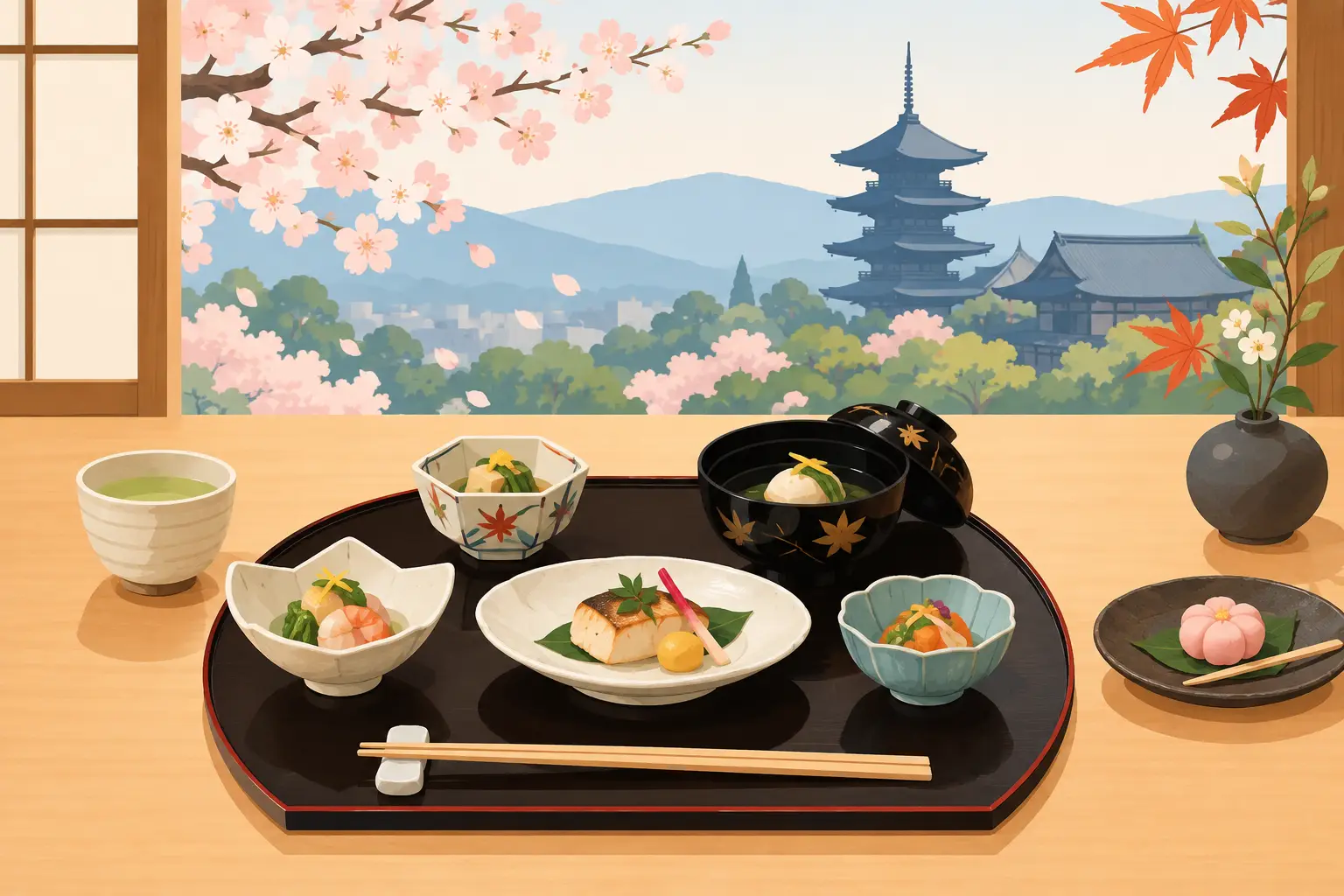
Kyoto’s seasons are not simply observed at the table. They are composed into it: the first tender bamboo shoots of spring, the cool clarity of summer dishes, matsutake mushrooms in autumn, and warming roots and delicate crab in winter. To select seasonal kaiseki lunch well is to choose more than an elegant meal. It is to reserve a few unhurried hours shaped by the particular beauty of Kyoto at that moment.
For travelers seeking a rare Kyoto moment, lunch is often the most graceful way to experience kaiseki. It can offer the same attention to season, craftsmanship, and hospitality associated with evening dining, while fitting naturally between a morning temple visit and an evening in Gion. The finest choice depends on what you hope to remember: the food itself, an intimate traditional setting, or an occasion elevated by authentic geisha entertainment.
目次
What Makes a Kaiseki Lunch Seasonal?
Kaiseki is a multi-course Japanese dining tradition built around balance. A chef considers taste, texture, temperature, aroma, color, and the progression of each course. Seasonality is central, but it is expressed with restraint. You may see a spring leaf motif on a dish, a chilled bowl in summer, or a ceramic vessel chosen to suggest the deeper tones of autumn.
A seasonal kaiseki lunch should not rely on a decorative reference to the time of year alone. Look for a menu that changes with local ingredients and adjusts its cooking methods accordingly. In early spring, that may mean mountain vegetables with a gentle bitterness, young bamboo shoot rice, or cherry sea bream. Summer can bring river fish, fragrant herbs, and cool, lightly seasoned preparations. Autumn favors mushrooms, chestnuts, persimmon, and richer grilled courses. In winter, dashi, simmered vegetables, and seafood become especially comforting.
There is a practical reason to care about this. A seasonal menu is usually a sign that the kitchen is cooking with intention rather than presenting a fixed tasting menu designed for convenience. Exact ingredients may vary according to market availability, and that is part of the appeal. The meal should feel like Kyoto now, not Kyoto at any time of year.
Select a Seasonal Kaiseki Lunch for the Occasion
The right lunch begins with an honest sense of the occasion. A quiet meal for two, a family celebration, and a once-in-a-lifetime cultural experience call for different settings and levels of formality.
If your priority is cuisine, choose a restaurant known for a chef-led menu and allow enough time to appreciate its pacing. Kaiseki is not designed to be hurried. A shorter lunch may include several beautifully prepared courses, while a more elaborate experience can extend into a fuller progression with seasonal rice, soup, and dessert.
If the occasion is a honeymoon, milestone birthday, or private gathering, the setting matters as much as the menu. A private tatami room, garden view, or historical dining space can make lunch feel distinctly separate from the rest of the day’s sightseeing. Ask whether seating is traditional floor seating, low tables with a recessed footwell, or chairs. Guests with mobility concerns will be more comfortable when this is clear in advance.
For many overseas visitors, the most memorable choice combines kaiseki dining with a genuine encounter with Kyoto’s living arts. A structured cultural lunch can include maiko or geisha dance, traditional games, conversation through English interpretation, and photographs in an appropriate, respectful setting. This changes the character of the afternoon. Rather than watching a distant performance, guests share a carefully hosted moment with artists who preserve a refined Kyoto tradition.
Read the Menu Beyond the Number of Courses
It is tempting to compare kaiseki lunches by course count or price alone. Neither tells the complete story. A six-course lunch prepared with exceptional ingredients, fine dashi, and precise service can be more satisfying than a longer menu that feels repetitive.
Instead, consider the rhythm of the meal. A well-designed seasonal lunch often begins with a small appetizer that introduces the season, followed by a clear soup or sashimi course. Grilled, simmered, or steamed dishes create contrast before the meal closes with rice, miso soup, pickles, and a modest dessert. The sequence should move from delicate flavors to more resonant ones without becoming heavy.
Pay attention to whether beverages are included and whether the experience accommodates dietary needs. Vegetarian, vegan, gluten-free, halal, and allergy-related requests can require advance notice in Japan, especially for a multi-course menu built around fish stock, soy sauce, or seasonal seafood. A premium host should address these requests plainly rather than making promises that the kitchen cannot honor.
Price also reflects what surrounds the food: the room, service, ingredients, presentation, interpretation, entertainment, and access to an otherwise difficult-to-arrange experience. If you are deciding between a restaurant lunch and a hosted cultural package, compare the full value of the afternoon, not only the dish placed before you.
Choose a Setting That Feels Like Kyoto
Kyoto has no shortage of beautiful restaurants, yet the atmosphere can vary widely. Some dining rooms are contemporary and discreet. Others are in restored machiya townhouses, traditional wooden residences with intimate rooms, sliding screens, and carefully arranged seasonal flowers. Neither is inherently superior. The best setting is the one that fits the experience you want.
A restaurant close to your hotel may be convenient, but a lunch in Gion or another historic district can add a sense of occasion. Allow time for the neighborhood itself. Arriving flustered from a tight sightseeing schedule works against the calm pacing that makes kaiseki rewarding.
For guests hoping to meet a geisha or maiko, discretion and credibility are essential. The term “geisha experience” is used broadly by many operators, and not every offering provides direct interaction with professional Kyoto entertainers. Confirm what is actually included: whether there is a live dance, shamisen performance, ozashiki games, conversation, photographs, and English-speaking support. These details distinguish an authentic, hosted encounter from a brief photo opportunity or a staged presentation without meaningful connection.
GEISHAKYOTO presents this kind of occasion in a polished, approachable format, pairing Kyoto-style dining with authentic geisha and maiko entertainment and clear English interpretation. For visitors who value cultural access but do not want to navigate private introductions, language barriers, or uncertain etiquette alone, that structure can be part of the luxury.
A Few Etiquette Details Worth Knowing
Kaiseki hospitality is welcoming, and guests are not expected to know every custom. Still, a little preparation allows you to relax. Arrive on time, dress neatly, and keep your phone away from the table unless photography is specifically welcomed. In an intimate dining room, quiet appreciation is more fitting than constant documentation.
If you are served a dish you have not encountered before, it is perfectly acceptable to ask for guidance. A host or interpreter can explain how to enjoy it and what is in season. Try not to rush through each course. The pauses are intentional, giving the chef and service team room to guide the meal’s progression.
When meeting geisha or maiko, follow the host’s direction regarding conversation, games, and photography. Genuine hospitality does not require perfect behavior. It asks for curiosity, courtesy, and an understanding that these artists are skilled professionals, not sightseeing props.
Book With the Season, Not Just the Calendar
Kyoto’s most celebrated periods can be extraordinarily busy. Cherry blossom season and autumn foliage bring high demand, but they are not the only times worth booking a kaiseki lunch. Early summer’s fresh greens, rainy season hydrangeas, crisp late-autumn air, and quiet winter streets each create their own atmosphere.
Reserve early if your dates are fixed, particularly for a private room or an experience involving geisha and maiko. At the same time, leave room for the menu to surprise you. The finest seasonal meals are not controlled down to every ingredient weeks in advance. They are responsive to what the chef finds at its best.
Choose the lunch that gives you time to be present. A bowl of fragrant rice, a small seasonal sweet, the sound of shamisen in a private room, and a gracious exchange across cultures can stay with you long after Kyoto’s temple gates and lantern-lit lanes have passed from view.