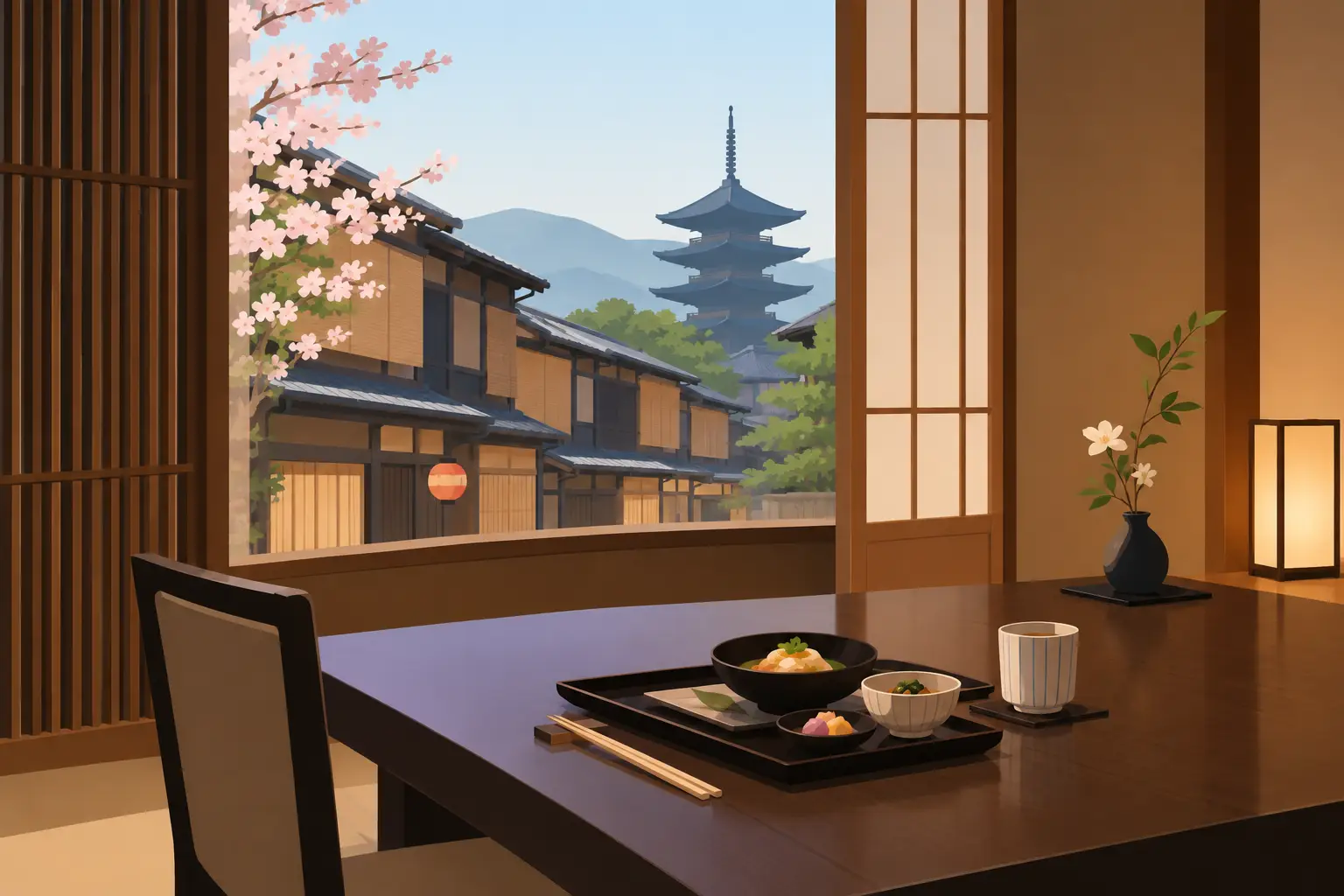
At lunchtime, Gion moves at a quieter rhythm than many visitors expect. Behind its narrow lanes and preserved facades are dining rooms designed for measured conversation, seasonal cuisine, and gracious hospitality. For travelers seeking Gion lunch privacy, the appeal is not simply being away from a crowd. It is the chance to experience Kyoto culture with attention, comfort, and appropriate discretion.
A private or carefully reserved lunch can transform a meal into a rare Kyoto moment. It allows couples, families, executive groups, and celebratory travelers to settle into the occasion without the rush of a public restaurant floor. When the experience includes authentic geisha or maiko entertainment, privacy also creates the respectful setting that this living tradition deserves.
目次
What Gion Lunch Privacy Really Means
Privacy in Gion is not one fixed feature. A restaurant may offer a separate room, a screened area, a small exclusive seating arrangement, or a venue reserved for your party. Each creates a different atmosphere, and the right choice depends on whether your priority is confidential conversation, an intimate celebration, or focused cultural engagement.
A truly private dining room offers the greatest separation from other guests. It is particularly suited to honeymooners, multigenerational families, corporate hosts, and travelers marking a significant occasion. You can enjoy the pacing of the meal without nearby tables, while your host can tailor the flow of the experience to your group.
Yet privacy should not be confused with isolation. The finest Gion lunches remain connected to the character of Kyoto: the changing courses of kaiseki-style cuisine, the quiet attention of the staff, the architecture of the room, and the sense that every detail has been considered. The room may be discreet, but the experience should still feel alive with place and tradition.
Privacy for a Gion Lunch With Geisha Entertainment
When a lunch includes time with a geisha or maiko, a reserved setting has particular value. Guests are able to watch traditional dance, hear conversation through an interpreter when needed, and participate in ozashiki entertainment games without feeling like observers in a busy public venue. The mood is relaxed, but never casual in the careless sense. It is an opportunity to be present.
Authentic encounters are built on mutual respect. Geisha and maiko are highly trained artists and cultural professionals, not background decoration for a meal. A private setting gives guests the space to appreciate dance, music, conversation, and hospitality as intended, rather than treating the occasion as a fleeting spectacle.
This is also where experienced coordination matters. A thoughtfully arranged cultural lunch may include Kyoto-style dining, a traditional performance, entertainment games, a photo opportunity, and English-speaking support. In a higher-tier format, live shamisen can add another layer of atmosphere. These elements need careful timing so that the meal feels elegant rather than over-programmed.
For international visitors, interpretation can be one of the most valuable forms of privacy. It removes the uncertainty of not knowing when to speak, how to respond, or whether a gesture has been understood. With discreet English assistance, guests can relax into the experience while the cultural exchange remains natural and gracious.
Choosing the Right Level of Privacy
The most private option is not automatically the best one. A couple may prefer a small, intimate arrangement that feels personal without requiring a fully exclusive venue. A larger family group may benefit from a dedicated room where children, grandparents, and photographers can be accommodated more comfortably. For business travelers, a quiet setting can support conversation while still offering an unmistakably Kyoto welcome.
Consider the purpose of the lunch before choosing a format. If the day is built around a proposal, anniversary, or milestone birthday, exclusivity often adds meaningful value. If your goal is a memorable cultural introduction during a full sightseeing itinerary, a reserved group experience with a refined atmosphere may offer the ideal balance of access and ease.
The size of your party matters, too. Small parties can often enjoy a more intimate exchange with entertainers, while larger groups may need a wider room and a more structured schedule. Neither is inherently superior. The best arrangement is the one that allows every guest to see, listen, dine, and participate comfortably.
Questions to Confirm Before You Reserve
The word private can mean different things across Kyoto dining venues. Before reserving, clarify the details that will shape your experience. A premium provider should be able to explain the setting with confidence and without vague promises.
- Ask whether your party will have a fully private room, a partitioned space, or an exclusive seating area.
- Confirm whether geisha or maiko entertainment is presented only for your group or alongside other guests.
- Check the total duration, including dining, performances, games, photographs, and interpretation.
- Share dietary needs, mobility considerations, preferred language, and the reason for your celebration in advance.
It is wise to ask about photographs as well. Some experiences include a professional-style photo opportunity, while others may have specific guidance about when and where personal photography is welcome. Respecting those boundaries is part of the privilege of entering a cultural space that is usually not available through ordinary sightseeing.
With GEISHAKYOTO, guests can choose a polished lunch experience created to make this rare cultural access feel welcoming, organized, and deeply memorable. The value lies in more than a reservation. It is the confidence that cuisine, entertainment, etiquette, and communication have been considered as one complete occasion.
The Etiquette That Makes Privacy Feel Natural
A private room does not require guests to know every Kyoto custom in advance. Good hosts guide the occasion, and sincere curiosity is more valuable than rehearsed formality. Arrive on time, follow the lead of your host when entering and seating yourself, and let the meal unfold at its intended pace.
Dress should be neat and considered. There is no need to wear formal Japanese attire unless the occasion calls for it, but polished resort wear or smart casual clothing suits the setting well. Keep voices measured, silence phones, and avoid interrupting performances for photographs. These small choices preserve the calm that makes a Gion lunch feel so distinctive.
If you are invited to join a game or conversation, participate warmly. Geisha entertainment has always included wit, music, and lively social exchange alongside formal artistry. You do not need to perform perfectly. A willing spirit, guided by your interpreter or host, is enough.
Make Space for the Occasion
Do not place a private Gion lunch between rushed errands. Allow time to arrive unhurried, enjoy the courses, and remain present for the artistic elements of the experience. Many guests find that the lunch becomes the emotional center of their Kyoto visit, especially when the rest of the day is planned with room to linger afterward.
Gion lunch privacy is ultimately about having the right setting for something that cannot be hurried: an elegant meal, a living cultural tradition, and a memory shared with the people who matter most.