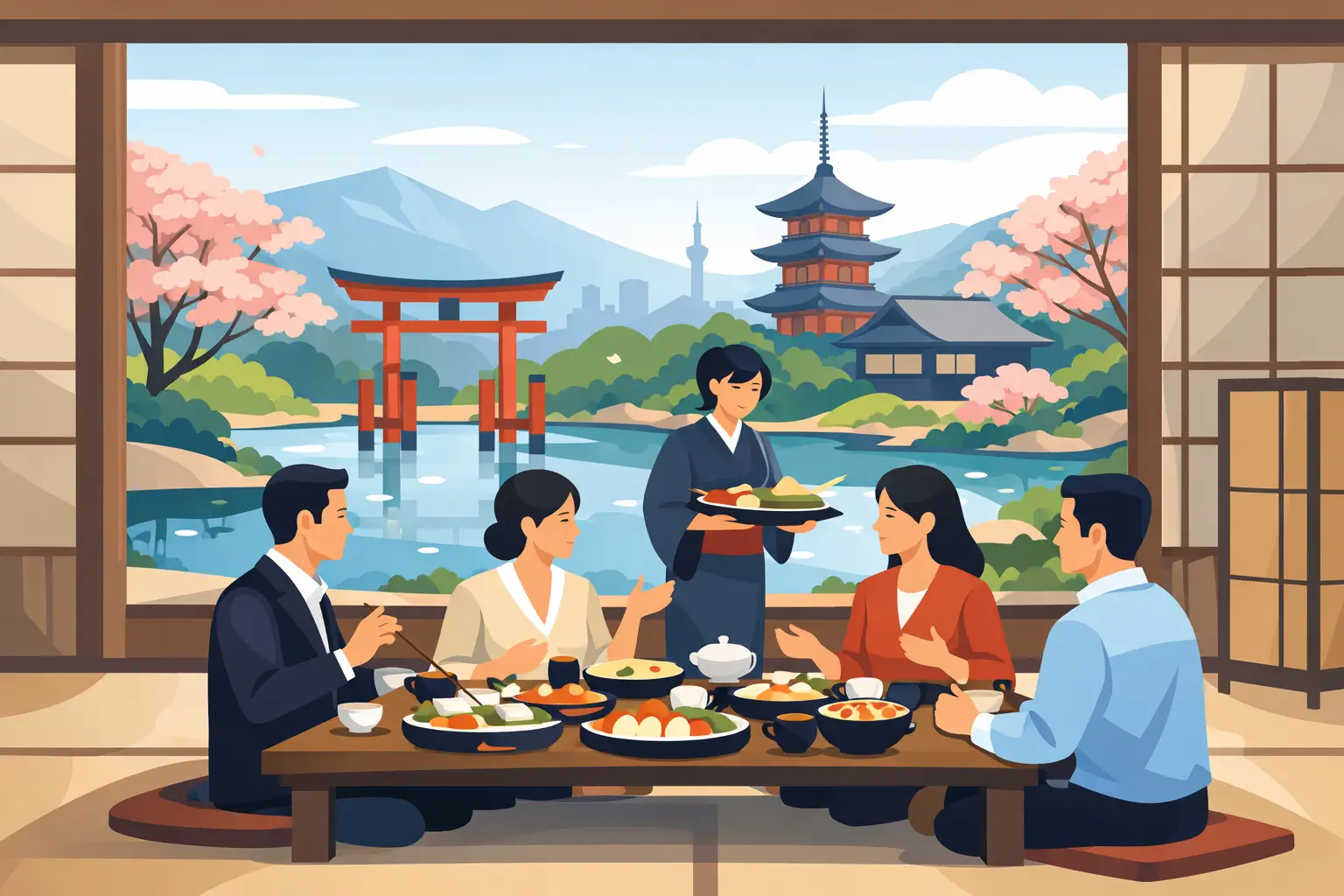
A Kyoto group luncheon can become the defining moment of a private journey, not simply a pause between temple visits. To organize a Kyoto group luncheon well, begin with the feeling you want guests to carry away: the quiet elegance of a traditional dining room, the season expressed on each plate, and the rare pleasure of meeting Kyoto’s geiko and maiko in an intimate setting.
For a family celebration, executive retreat, incentive group, or gathering of close friends, this is an occasion where detail matters. Kyoto’s finest hospitality is often understated. The experience feels effortless to guests because the planning behind it has been thoughtful, respectful, and precise.
目次
Begin With the Purpose of the Gathering
A group luncheon works best when it has a clear role in the itinerary. Perhaps it is the cultural centerpiece of a Kyoto stay, a refined welcome for colleagues, or a celebratory afternoon during a honeymoon trip shared with friends and family. This purpose guides every later decision, from venue style to the pace of entertainment.
Consider the character of your guests as carefully as the group size. A board group may value privacy, polished timing, and English interpretation. A multigenerational family may prefer an approachable introduction to traditional customs, photo opportunities, and entertainment that brings everyone into the room. Friends traveling together may be looking for a vivid, celebratory Kyoto memory rather than a formal lesson in etiquette.
Lunch is especially well suited to groups that want a meaningful cultural experience without giving up the rest of the day. A well-timed gathering can follow a morning visit to a temple or garden and leave room for an unhurried afternoon in Gion, Nishiki Market, or the Arashiyama district. It is also generally more practical than an evening event for guests adjusting to jet lag or maintaining a structured travel schedule.
Choose an Experience, Not Just a Table
Kyoto has no shortage of beautiful restaurants. Yet a beautiful meal alone may not create the sense of occasion your group is seeking. For international visitors, the difference between dining in Kyoto and truly being welcomed into a Kyoto cultural moment is often access.
A curated luncheon centered on authentic geiko or maiko interaction brings together elements that are difficult to arrange independently: traditional Kyoto cuisine, a private setting, dance performance, conversation, customary games, and interpretation for English-speaking guests. This is not a staged sightseeing stop. When presented with care, it offers a warm and personal encounter with one of Kyoto’s most admired living traditions.
The right format depends on your priorities. If your group wants a concise introduction, choose a luncheon with refined cuisine, a traditional dance, and guided interaction. If the occasion calls for a more immersive experience, a higher-tier arrangement that includes live shamisen accompaniment, extended entertainment, professional-style photography, and keepsake souvenirs creates greater depth.
There is a trade-off to consider. A tightly scheduled lunch may suit a large touring party, but a slower pace gives guests time to appreciate the performance, ask questions through an interpreter, and enjoy the meal without watching the clock. For milestone occasions and premium private groups, allowing more time is almost always worthwhile.
Set the Guest Count and Privacy Level Early
In Kyoto, the most memorable settings are often intimate by design. Confirm your anticipated guest count before selecting an experience, and be realistic about whether the group needs a fully private room. Privacy is particularly valuable for executive groups, special celebrations, and guests who wish to relax into conversation without the atmosphere of a public dining room.
Do not plan around the absolute maximum attendance if your guest list is still changing. A slightly smaller, more comfortable room can feel luxurious; an overfilled room can dilute the calm and grace that make Kyoto hospitality distinctive. If you are organizing for a corporate or incentive group, designate one decision-maker who can approve final attendance, menu requirements, and timing promptly.
For groups with couples, solo travelers, and different generations, seating also deserves thought. Traditional low seating may be part of the setting, but chair seating can be preferable for guests with mobility concerns. Share this requirement at the time of inquiry rather than assuming it can be adjusted later.
Build in a Comfortable Arrival
The first ten minutes set the tone. Ask guests to arrive early enough to settle in, visit the restroom, and put away shopping bags or outerwear before the cultural program begins. A rushed entrance can make even the most exquisite room feel hurried.
Arrange transportation with Kyoto traffic in mind, especially during cherry blossom season, autumn foliage season, and major holiday periods. Coaches may not be able to stop directly outside smaller traditional venues. A short walk through a historic lane can be lovely, but guests should know what to expect and should not be navigating it in formal shoes with no guidance.
Plan the Menu With Care and Clarity
Kyoto-style cuisine is deeply seasonal. The menu may feature delicate broths, grilled fish, tofu, vegetables, rice, and artfully composed small dishes that reflect the time of year. This sense of season is one of the pleasures of the meal, and it gives the luncheon a connection to place that a generic international menu cannot match.
At the same time, dietary planning is not a minor administrative detail. Gather allergies, vegetarian preferences, religious restrictions, and aversions well in advance. Explain to guests that traditional Japanese cuisine may use dashi made with fish, even in dishes that appear vegetable-forward. A trusted host can clarify what can be accommodated and advise where flexibility may be limited.
Avoid presenting menu adjustments as an afterthought. When dietary needs are handled early and discreetly, every guest can enjoy the occasion with confidence. It is one of the simplest ways to make premium hospitality feel genuinely personal.
Make Geiko and Maiko Etiquette Easy for Guests
Many visitors arrive with curiosity but little understanding of Kyoto’s geiko and maiko culture. They may worry about saying the wrong thing, taking photos at the wrong moment, or treating the encounter too casually. A thoughtful luncheon removes that uncertainty without making guests feel as though they are attending a formal lecture.
Brief the group beforehand: dress neatly, arrive on time, listen during performances, and follow the host’s guidance on photography. Guests do not need to know every custom. They simply need to be present, considerate, and open to participation.
English interpretation is especially valuable here. It allows the humor and charm of traditional ozashiki games to come through, makes introductions feel natural, and gives guests context for the dances and music they are seeing. Without interpretation, a performance can remain beautiful but distant. With it, the room becomes more connected.
Encourage guests to put their phones away during the performance and use the designated photo time fully. A few carefully composed photographs with geiko or maiko will mean more than a stream of distracted snapshots. If the group includes content creators or corporate guests with privacy requirements, establish expectations before arrival.
Reserve Earlier Than You Think Necessary
The most polished Kyoto experiences cannot be treated as last-minute restaurant bookings. Availability depends on the season, the number of performers requested, private-room capacity, and the schedules of highly skilled professionals. Spring and fall are particularly competitive, but weekends, holidays, and major convention dates can also fill quickly.
For a small private group, several months of advance planning is sensible. For larger groups, executive travel, or a date that cannot move, begin earlier. Provide your preferred date, alternate dates, group size, dietary needs, language requirements, and desired level of entertainment in the initial inquiry. Clear information allows the host to shape a suitable proposal rather than beginning with unnecessary back-and-forth.
GEISHAKYOTO offers a structured, English-accessible way to bring these details together, pairing Kyoto dining with authentic performances and interaction in a format designed for overseas guests. The value is not merely convenience. It is the confidence of knowing that cultural access, hospitality, and practical coordination have been considered as one experience.
Give the Luncheon Room to Breathe
Do not schedule a major transfer, shopping appointment, or timed attraction immediately after the meal. Guests often want a few extra minutes to speak with one another, review photographs, or simply enjoy the atmosphere after the program ends. This breathing room protects the feeling you have invested in creating.
A Kyoto group luncheon is at its best when it feels like a gracious pause in the day: seasonal cuisine, living artistry, and shared conversation held within a setting that could exist nowhere else. Plan for that sense of ease, and your guests will remember not only what they saw, but how rare it felt to be welcomed into it.