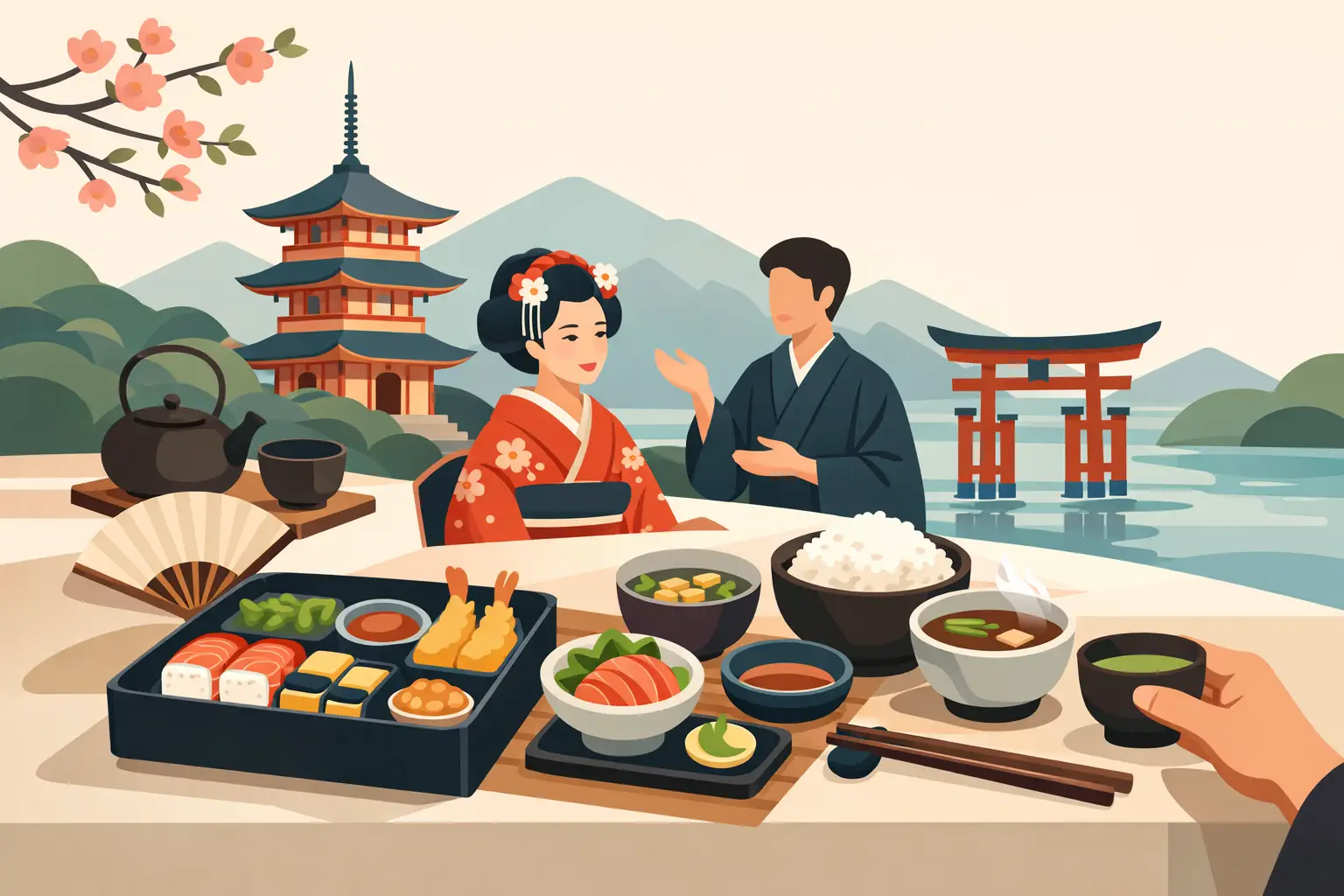
A private dining room, the measured sound of shamisen, and a maiko performing only a few feet away are not experiences most Kyoto visitors can arrange independently. This Kyoto cultural lunch package review looks at what makes a curated geisha lunch compelling for international guests, what the premium price is designed to provide, and when it is the right choice for your itinerary.
This is not simply a restaurant reservation with a performance added on. At its best, a cultural lunch package creates a gracious introduction to Kyoto’s refined hospitality traditions: seasonal cuisine, personal entertainment from real geiko or maiko, clear guidance in English, and the ease of knowing that etiquette and logistics have been thoughtfully handled.
目次
What a Kyoto Cultural Lunch Package Is Really Offering
Kyoto’s geisha districts are deeply rooted communities, not public attractions. The city’s geiko, as geisha are known locally, and maiko, their apprentices, train for years in dance, music, conversation, and the arts of hospitality. Opportunities to spend time with them have traditionally been arranged through personal relationships and established introductions.
That context matters. A premium lunch package offers access to this rare cultural setting in a respectful, organized format. Rather than asking travelers to decipher reservation customs, language expectations, or the difference between a staged tourist show and a genuine ozashiki-style gathering, the experience brings the essential elements together with care.
Guests can expect a Kyoto-style meal served in an elegant setting, followed by intimate entertainment and conversation. Depending on the selected package, the afternoon may include a traditional dance, geisha party games, live shamisen, photographs with the entertainers, a keepsake souvenir, and English-speaking interpretation. The exact sequence and inclusions can vary, but the value lies in the combination. Each element gives the next greater meaning.
Kyoto Cultural Lunch Package Review: The Experience
The meal sets the pace
Lunch is a particularly appealing way to experience Kyoto’s hospitality culture. It feels celebratory without taking an entire evening, leaving time for a temple visit, shopping in Gion, or a relaxed walk along the Kamo River afterward. For travelers balancing a full Kyoto schedule, that timing is a genuine advantage.
The cuisine should feel deliberate rather than incidental. Kyoto dining is known for seasonality, restraint, and visual composition, whether the meal is presented as a multi-course kaiseki-style experience or another carefully prepared local format. A well-curated lunch gives guests time to appreciate the room, the service, and the changing dishes before the entertainment begins.
Those seeking the most elaborate possible meal may prefer a dedicated high-end kaiseki dinner. But for many visitors, the cultural exchange is the center of the occasion. The lunch format makes that exchange feel relaxed, approachable, and still distinctly luxurious.
The performance feels personal, not distant
A dance performance by a geiko or maiko is quiet, detailed, and expressive. It is not designed with the fast pace of a theater production. The beauty is in the movement of a sleeve, the storytelling within the music, and the discipline behind an art form that can take years to learn.
The close setting changes the experience. Guests are not watching from the back of a crowded auditorium. They can observe the artistry, costume, and presence of the performer at an intimate distance, then enjoy the warmth of conversation and traditional games afterward.
For the higher-tier option, live shamisen adds an especially memorable dimension. The instrument’s bright, resonant sound gives the dance its emotional structure and reveals why music is central to Kyoto’s entertainment traditions. This feature will matter most to guests who value the arts and want a richer sense of the performance rather than a brief ceremonial glimpse.
Interaction is where the memory takes shape
Many travelers arrive with a respectful curiosity but little idea of how to speak with geiko or maiko. That is entirely natural. A polished package removes the awkwardness by giving the gathering an easy rhythm: performance, introduction, games, photographs, and conversation.
Traditional drinking games are often lighthearted and engaging, even for guests who do not drink alcohol. They offer a welcome contrast to the formality guests may associate with geisha culture. The atmosphere can be lively, but it should remain gracious and respectful of the performers’ professional role.
English interpretation is one of the most valuable inclusions for overseas visitors. Without it, much of the conversation, humor, and cultural context can remain out of reach. With a knowledgeable interpreter present, guests can ask thoughtful questions, understand the customs being shared, and participate with confidence. It turns a beautiful visual experience into a meaningful human encounter.
Who Will Find It Worth the Investment?
A Kyoto cultural lunch package is best suited to travelers who prioritize access, artistry, and ease over bargain pricing. It is a strong choice for couples celebrating a honeymoon or anniversary, families marking a milestone, executive groups, and friends who want one exceptional shared experience rather than another sightseeing stop.
It also serves first-time visitors particularly well. Kyoto has no shortage of beautiful places, but its most meaningful cultural encounters can be difficult to arrange from abroad. A curated format offers reassurance: the reservation is prepared, the venue is appropriate, the performers are professionals, and the experience is designed for international guests.
For private groups, the value becomes even clearer. The occasion creates a natural centerpiece for a special day in Kyoto, with photographs and a souvenir that preserve the memory long after the meal. It can also feel more personal than a large public performance, especially when the group prefers privacy and time to engage.
That said, it may not be the right fit for every traveler. Visitors whose priority is simply sampling local food can find excellent Kyoto lunches at a lower cost. Travelers looking for a spontaneous, casual activity may find that an advance-reservation experience feels too structured. The package is intended for those who see the combination of cuisine, living tradition, and personal access as the occasion itself.
What to Consider Before Booking
The most satisfying guests arrive with the right expectations. This is refined entertainment, not a costume party or an opportunity to treat Kyoto tradition as a novelty. Geiko and maiko are highly trained artists and professional hosts. Courtesy, attentive listening, and sensitivity around photography are part of the experience’s elegance.
It is also wise to consider your preferred level of immersion. A standard package may be ideal for travelers who want the essential experience: lunch, dance, games, photographs, and interpretation. A higher-tier plan with live shamisen is more suited to guests who want an added artistic layer and are comfortable reserving the afternoon for something truly special.
Dietary requirements should be shared well ahead of time. Japanese dining can involve ingredients and preparation methods unfamiliar to overseas guests, and advance notice gives the host the best opportunity to accommodate needs thoughtfully. Guests should also allow time to arrive calmly. Rushing into a traditional setting diminishes the pleasure of it.
Photography is often a cherished part of the package, but it should feel like a moment of appreciation rather than the entire purpose of the visit. The most lasting images tend to come after guests have put their phones aside, watched the performance closely, and allowed the atmosphere to settle around them.
The Difference Between Watching and Being Hosted
Kyoto offers public dance programs and cultural displays that can be wonderful introductions to traditional arts. They are often more economical and may suit travelers with limited time. Yet they provide a different kind of experience: you observe from an audience seat, then continue on your way.
A curated lunch shifts the relationship from observer to guest. You are welcomed into a setting shaped by hospitality, served a meal, introduced to the performers, and invited to participate. That distinction explains the premium. It is not only about the number of inclusions. It is about the rarity of the setting and the confidence that comes from having it arranged with cultural sensitivity.
GEISHAKYOTO is designed around that distinction, bringing together authentic geisha entertainment, Kyoto dining, interpretation, and thoughtful service in one reservation. For guests who want an elegant entry point into a tradition that is otherwise difficult to access, this clarity is part of the luxury.
The best reason to reserve is not to collect another Kyoto activity. It is to make space for an afternoon that moves at Kyoto’s own pace: considered, beautiful, and personal enough to remain vivid long after the last course is served.