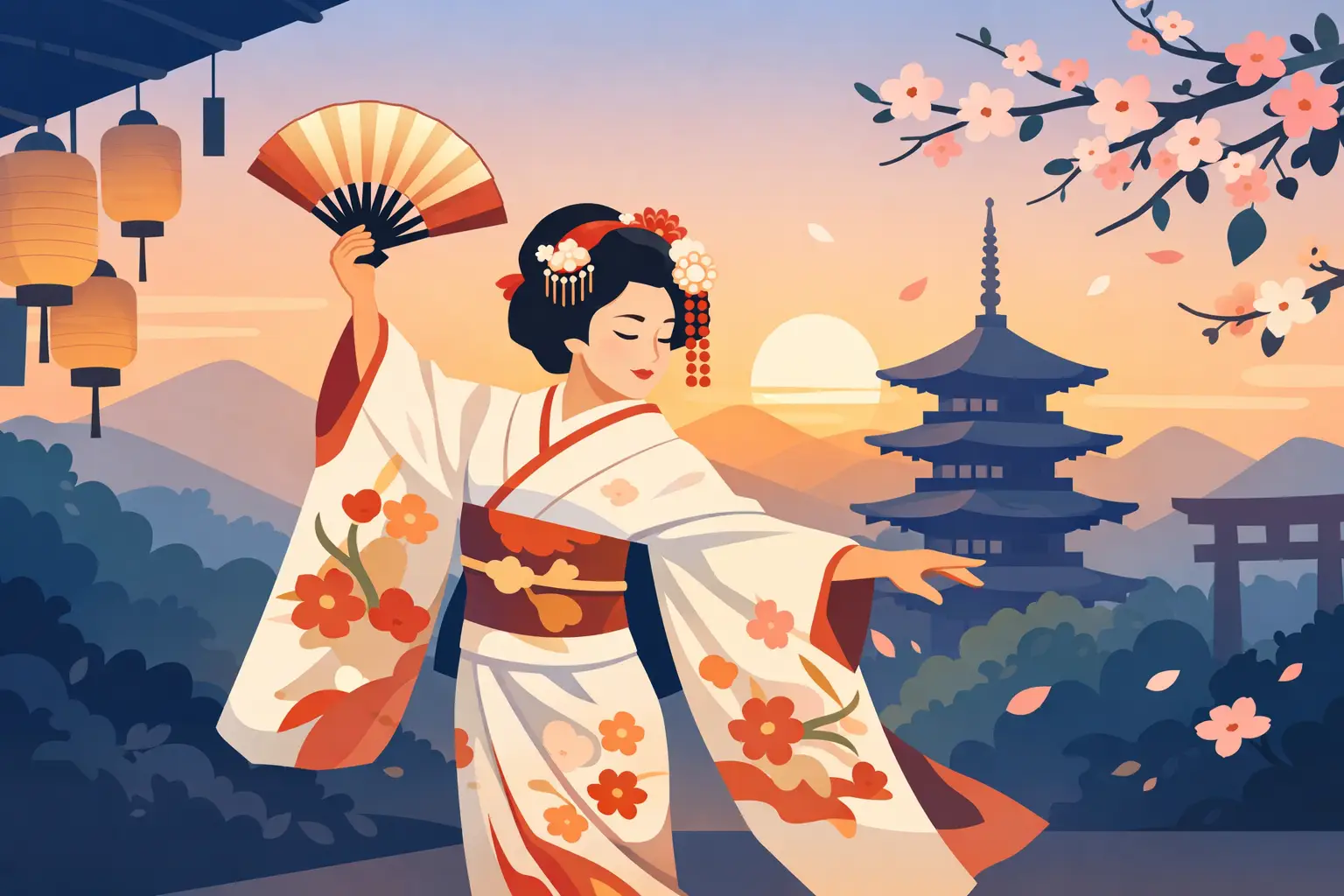
A traditional japanese dance performance kyoto visitors remember is rarely the loudest event on an itinerary. It is often the quietest. A measured turn of the wrist, the pause before a fan opens, the sound of shamisen filling the room – these are the moments that stay with sophisticated travelers long after temple visits and busy shopping streets begin to blur together.
In Kyoto, dance is not simply entertainment placed in front of dinner. It is a refined cultural language shaped by season, locality, discipline, and grace. For guests seeking more than a surface-level glimpse of Japan, this distinction matters. The right performance offers not just beauty, but access to a living tradition that has been carefully preserved and rarely presented with real intimacy.
目次
- What makes a traditional japanese dance performance kyoto so distinctive
- More than a show – what you are actually watching
- Why access matters in Kyoto
- The setting changes everything
- Traditional Japanese dance and the world of geiko and maiko
- What sophisticated travelers should look for
- Why a curated experience often delivers more
- A performance you feel after it ends
What makes a traditional japanese dance performance kyoto so distinctive
Kyoto has long been the cultural heart of Japan, and that legacy can be felt in its approach to performance. Traditional Japanese dance here carries a different atmosphere from stage productions designed for large tourist crowds. The setting is often more intimate, the gestures more restrained, and the meaning more layered.
Much of this tradition is connected to the city’s hanamachi, or geisha districts, where geiko and maiko train in classical arts that include dance, music, etiquette, and conversation. Their dance is not improvised spectacle. It is a disciplined art form built over years of study, where movement communicates mood, season, and story through exquisite control.
That is why Kyoto stands apart. The city does not present dance as a museum artifact. It remains part of a wider cultural world that includes hospitality, cuisine, music, and ceremony. When experienced in the proper setting, a performance feels complete because it belongs to an entire tradition rather than a single act on a schedule.
More than a show – what you are actually watching
For many international visitors, the first surprise is how subtle the performance can be. A traditional Japanese dance is not driven by athleticism in the Western sense. It values precision over speed, understatement over display, and emotional restraint over obvious drama.
A slight tilt of the head can suggest longing. A carefully paced step can evoke a seasonal landscape. The handling of a folding fan may represent wind, snow, flowing water, or a shift in feeling. To an unprepared guest, these details can seem delicate almost to the point of mystery. With light interpretation and context, they become fascinating.
This is one reason curated experiences are so valuable. Without guidance, even a beautiful performance can feel distant if you do not understand what you are seeing. With thoughtful explanation in English, guests are able to appreciate not only the elegance of the movement but the cultural intelligence behind it.
Why access matters in Kyoto
Many travelers arrive in Kyoto hoping for an authentic geisha or maiko experience and quickly find that genuine access is not easy. Private introductions are limited. Traditional venues may not cater to overseas guests. Language barriers, etiquette concerns, and uncertainty about legitimacy can make the process feel opaque.
This is where quality and trust become essential. Not every listing that promises cultural entertainment offers the same level of authenticity, setting, or professionalism. Some experiences are built for volume. Others preserve the atmosphere that makes the occasion feel rare.
For discerning travelers, the difference is significant. A rushed group performance in a generic room may check a box, but it does not deliver the emotional depth of a carefully hosted encounter. A premium format, by contrast, removes friction while preserving dignity. It allows guests to relax, pay attention, and participate with confidence.
The setting changes everything
The same dance can feel entirely different depending on where and how it is presented. In a large public venue, the experience may be visually impressive but emotionally distant. In a more intimate hospitality setting, every gesture becomes legible. The room holds the music differently. The performance feels personal rather than theatrical.
That intimacy is especially important in Kyoto, where cultural experiences are often defined by refinement rather than scale. The finest moments are rarely oversized. They are controlled, polished, and beautifully paced. A well-curated setting honors the performers while also helping guests feel welcomed into a world that might otherwise seem closed.
Dining can deepen this effect when it is handled with care. Kyoto-style cuisine served alongside a dance performance does more than add comfort. It creates continuity between the city’s culinary and artistic traditions, allowing the evening or luncheon to feel cohesive rather than staged.
Traditional Japanese dance and the world of geiko and maiko
When travelers search for a traditional japanese dance performance kyoto often leads them toward the world of geiko and maiko. This is natural, but it is worth understanding what makes that connection meaningful.
Geiko, the Kyoto term often used for geisha, and maiko, their apprentice counterparts, are trained in classical performing arts as part of a rigorous professional path. Dance is central to that education. It is not an optional flourish added for visitors. It is one of the core disciplines through which they embody Kyoto’s artistic heritage.
Watching a maiko or geiko perform is therefore different from attending a generic cultural show. You are seeing an art sustained through daily practice, formal instruction, and a deep relationship to Kyoto’s seasonal and ceremonial life. This gives the experience weight. It also creates a sense of rarity that many visitors seek but only a few truly find.
What sophisticated travelers should look for
Not every guest wants the same kind of cultural experience. Some prefer a focused performance and brief explanation. Others want a fuller occasion with cuisine, live music, photographs, and opportunities for direct interaction. Neither preference is wrong. It depends on whether you value efficiency or immersion.
For most luxury travelers, the most memorable format includes three things: authenticity, clarity, and comfort. Authenticity means real practitioners and a setting that respects the tradition. Clarity means English support and thoughtful interpretation. Comfort means a smooth reservation process, polished hospitality, and freedom from social uncertainty.
These practical details may sound secondary, but they shape the emotional experience. If guests spend the entire event worrying about etiquette or wondering whether the performance is genuine, they cannot fully receive the beauty of the moment. Premium curation solves that problem quietly.
Why a curated experience often delivers more
There is a common assumption that the most authentic cultural experiences are the least structured. In Kyoto, that is not always true. Some of the city’s most meaningful encounters are difficult to access precisely because they are bound by tradition, relationships, and expectations of conduct.
A well-curated experience does not dilute authenticity. At its best, it protects it while making it accessible to international guests. Professional hosting, bilingual interpretation, and a carefully designed flow can create the conditions for genuine appreciation rather than confusion.
This is particularly valuable for special-occasion travelers. Honeymooners, private groups, executives, and guests marking a milestone are not usually looking for improvisation and uncertainty. They want a rare Kyoto moment that feels elegant, trustworthy, and worth the journey. In that context, curation is part of the luxury.
GEISHAKYOTO reflects this approach by presenting authentic cultural access in a polished, reservation-friendly format designed for overseas visitors. The appeal is not only the performance itself, but the confidence that every element has been thoughtfully arranged.
A performance you feel after it ends
The finest traditional dance in Kyoto does not overwhelm. It lingers. You remember the stillness in the room, the discipline behind the movement, and the sense that you were allowed close to something usually kept at a distance.
That is the real value of choosing carefully. A genuine performance is not just another evening activity. It is an encounter with Kyoto at its most composed and expressive – where hospitality, artistry, and cultural memory meet.
If your time in the city allows for only one deeply curated cultural experience, make it one that leaves space for attention. Kyoto rewards travelers who slow down enough to notice what is quietly extraordinary.
AUTHENTIC KYOTO EXPERIENCE