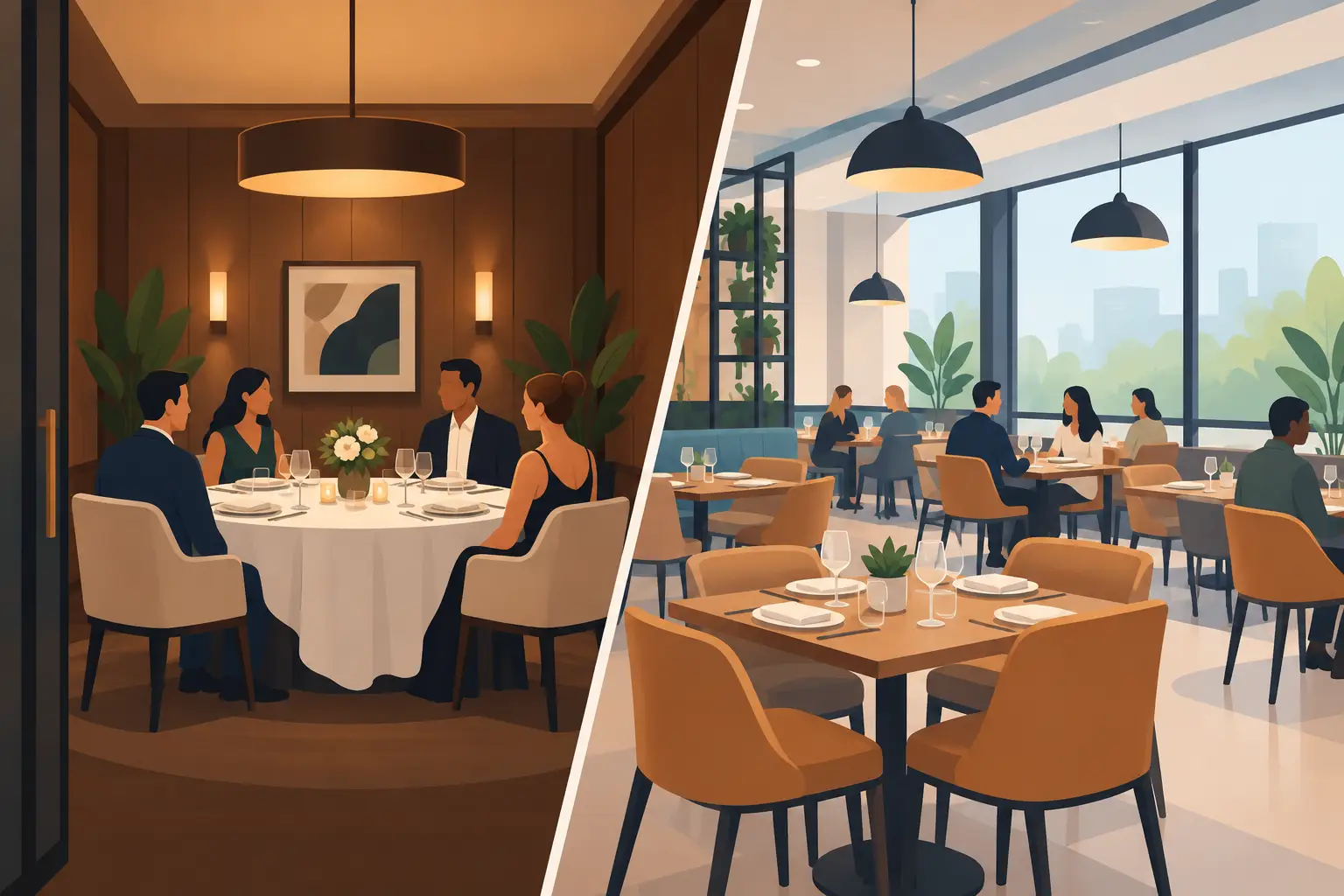
A private dining versus restaurant reservation decision can shape far more than your table in Kyoto. It determines whether the meal is simply one pleasant evening among many, or a rare Kyoto moment built around conversation, artistry, and the traditions that make the city unforgettable.
For travelers planning a honeymoon, milestone birthday, executive gathering, or family celebration, the distinction deserves more attention than it often receives. A restaurant reservation secures access to cuisine. Private dining creates the setting for an experience that can unfold at its own pace, with greater comfort, discretion, and cultural depth.
目次
- What a Restaurant Reservation Usually Provides
- Private Dining Versus Restaurant Reservation: The Essential Difference
- Why Geisha Entertainment Belongs in an Intimate Setting
- When a Standard Reservation Is the Better Choice
- What to Consider Before You Book
- A Few Etiquette Notes for Private Kyoto Dining
What a Restaurant Reservation Usually Provides
A standard restaurant reservation is the right choice when the cuisine itself is the central purpose of the evening. Kyoto offers remarkable dining rooms, from intimate counters to elegant kaiseki establishments, where the chef’s seasonal ingredients and presentation are the focus. For independent travelers who enjoy selecting a restaurant, arriving on time, and experiencing the room as local diners do, this can be a rewarding way to eat.
Yet a reservation is generally just that: a table at a specified time. The atmosphere is shared with other guests, the rhythm follows the restaurant’s service, and interaction beyond the meal may be limited. Even at an exceptional restaurant, staff may have limited English availability, and traditional customs can feel difficult to interpret when you are unfamiliar with the setting.
This is not a shortcoming. It is simply a different kind of occasion. A restaurant reservation is ideal for a beautiful dinner after sightseeing, a business meal where privacy is not essential, or travelers whose priority is discovering a particular chef or cuisine.
Private Dining Versus Restaurant Reservation: The Essential Difference
Private dining places your party in a dedicated setting, often with the privacy and attention that special occasions call for. Rather than joining the wider flow of a restaurant, you are welcomed into an experience designed around your group.
In Kyoto, that distinction becomes especially meaningful when traditional entertainment is involved. A geisha or maiko gathering is not a performance to observe from a distance. It is a living form of hospitality, shaped by gracious conversation, music, dance, games, and the subtle attentiveness of the hosts. A private room gives these moments the quiet and focus they require.
The value is not merely in having a door closed to the rest of the restaurant. It is in having time. There is time to learn the meaning of what you are seeing, to participate without self-consciousness, to take photographs thoughtfully, and to enjoy the meal without feeling rushed between courses. For international guests, English-speaking interpretation can make the difference between admiring a tradition and genuinely understanding it.
A private experience also offers a reassuring degree of clarity. Instead of trying to arrange separate elements – dining, entertainment, interpretation, etiquette, and timing – guests know what is included before they arrive. That certainty is particularly valuable when the occasion matters and your time in Kyoto is limited.
Why Geisha Entertainment Belongs in an Intimate Setting
Kyoto’s geiko and maiko traditions are often misunderstood as something one can casually encounter in a restaurant or on a street corner. In reality, authentic access is carefully structured and rooted in long-standing customs. The most meaningful encounters take place in settings where the artists and guests can engage with respect.
A private dining format supports this naturally. Guests can watch traditional dance with a clear view, hear the texture of live shamisen music, and join ozashiki-style entertainment games in a relaxed atmosphere. These games are lighthearted, but they are also part of the social art of Kyoto hospitality. They invite laughter and connection without requiring guests to know the rules in advance.
For couples, this intimacy creates photographs and memories that feel personal rather than staged. For families and private groups, it allows every guest to participate. For executives, it provides a sophisticated cultural occasion that gives colleagues or clients something far more memorable than another excellent meal.
At GEISHAKYOTO, curated lunch experiences bring these elements together with Kyoto-style cuisine, traditional dance, entertainment games, professional-style photo opportunities, souvenirs, and English support. Higher-tier plans may also include live shamisen. The result is not a restaurant meal with an added performance, but a complete cultural occasion organized with care.
When a Standard Reservation Is the Better Choice
Private dining is not automatically the best answer for every itinerary. If you are traveling alone, have only one open evening, or are eager to try a celebrated restaurant known for a particular dish, a standard reservation may offer exactly what you want. It can also be the more practical choice for a spontaneous meal or a lower-key night after a full day of temples and gardens.
There is also a pleasure in the energy of a fine dining room. Shared surroundings, the hum of service, and the chef’s counter can be part of Kyoto’s appeal. Guests who prefer a culinary-focused evening may find that a private program includes more than they need.
The question is not which option is more prestigious. It is what you hope to remember. If your goal is to taste exceptional food, reserve the restaurant. If your goal is to enter a refined world of Kyoto culture with the people you are traveling with, private dining offers a different level of access.
What to Consider Before You Book
Begin with the purpose of the occasion. A honeymoon dinner, anniversary, multi-generational family trip, and client event each benefit from privacy in different ways. Consider whether you want conversation among your own party, a setting where photographs feel comfortable, and the freedom to enjoy cultural entertainment without competing for attention.
Next, consider language. At a standard restaurant, communication may be perfectly adequate, but it is not always designed as part of the experience. In a curated private program, interpretation helps guests understand the performances, follow games, and navigate etiquette with ease. That support allows you to be present rather than concerned about doing the right thing.
Finally, think about value in complete terms. A restaurant reservation may appear simpler at first, while private dining carries a higher price because it includes dedicated space, performers, coordination, interpretation, and often added keepsakes or photography. For a milestone experience, those inclusions can turn one afternoon or evening into the centerpiece of the trip.
A Few Etiquette Notes for Private Kyoto Dining
Private does not mean informal. Kyoto hospitality is warm, but it is also attentive to courtesy. Arrive on time, dress thoughtfully, and allow the host or interpreter to guide the flow of the occasion. If you are offered a game, participate with good humor. The point is not to perform perfectly, but to meet the spirit of the gathering with openness.
Photography should be handled respectfully. A dedicated photo moment is often the best opportunity to capture the occasion, while allowing the performance itself to remain undisturbed. If you are uncertain, ask first. That small gesture reflects the same consideration that makes traditional hospitality so graceful.
The most rewarding choice is the one that matches the meaning of your visit. Reserve a restaurant when a fine meal is enough. Choose private dining when you want Kyoto to feel personal, composed, and wonderfully difficult to repeat anywhere else.