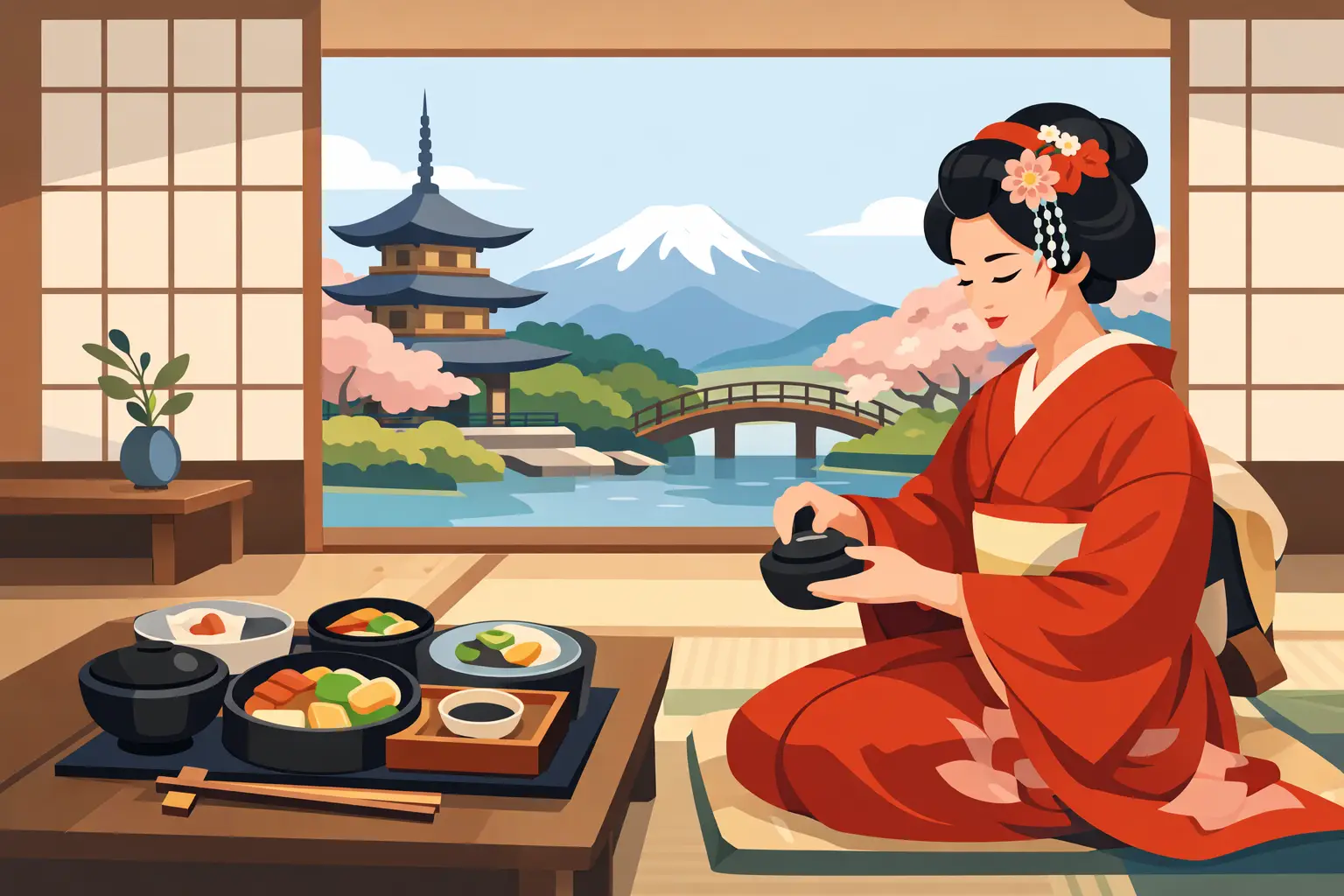
A Kyoto kaiseki lunch experience can be one of the most memorable hours of a Japan journey, but the finest version is never simply about what arrives on the table. It is the rare pleasure of seasonal cuisine, quiet hospitality, and a living artistic tradition sharing the same room. For travelers seeking more than a reservation at a beautiful restaurant, a private-style lunch with geisha or maiko creates a distinctly Kyoto occasion.
Kaiseki rewards attention. A lacquered bowl, a single maple leaf, the order of a course, and the rhythm of the host all carry meaning. Add authentic geisha entertainment and English-speaking support, and what can feel inaccessible becomes warm, graceful, and deeply personal.
目次
What Makes Kaiseki Lunch So Special in Kyoto?
Kaiseki is Japan’s refined multi-course dining tradition, shaped by seasonality, craftsmanship, and balance. In Kyoto, its historic home, the experience is especially elegant. Chefs draw on the delicate flavors of local vegetables, tofu, river fish, seafood, and mountain ingredients, presenting each course with a sense of place and time.
A lunch menu may include a composed appetizer, a clear seasonal soup, sashimi, a grilled dish, a simmered course, rice, and a delicate sweet. The precise progression varies with the season and the chef. Spring might bring bamboo shoots and young greens; autumn can introduce mushrooms, chestnuts, and rich colors that echo the gardens outside.
Lunch is not a lesser version of dinner. It is often a more relaxed way to appreciate kaiseki, particularly for visitors with limited evenings in Kyoto or those who prefer to keep dinner plans flexible. The trade-off is that some restaurants offer a shorter lunch format or fewer courses. A thoughtfully curated cultural lunch, however, replaces that sense of compromise with something more complete: cuisine paired with performance, conversation, and ceremonial hospitality.
A Kyoto Kaiseki Lunch Experience With Geisha
Geisha are highly trained professional entertainers, known in Kyoto as geiko. Maiko are apprentice geiko, recognized by their vivid kimono, elaborate hair ornaments, and youthful style. Their art is not an attraction added casually to a meal. It is a disciplined cultural practice involving traditional dance, music, conversation, and games refined over generations.
During a hosted lunch, guests may watch an elegant dance performed to traditional music, hear the distinctive sound of the shamisen, and take part in lighthearted ozashiki games. These games are designed to bring warmth and laughter to an otherwise formal setting. They offer a lovely contrast to the precision of kaiseki dining and make the atmosphere feel celebratory rather than distant.
The most meaningful experiences preserve respect for both the guests and the performers. There is no expectation that visitors already understand Kyoto customs. A skilled interpreter can explain what is happening, introduce the artists appropriately, and make conversation comfortable without interrupting the natural flow of the gathering.
This matters because access to genuine geisha entertainment is not as simple as walking into a restaurant. Many traditional establishments operate through longstanding relationships, Japanese-language arrangements, and private introductions. A curated occasion offers an inviting and trustworthy path into this world while honoring its standards.
What a Curated Lunch Can Include
A premium cultural lunch should feel considered from the first greeting to the final photograph. While inclusions differ by plan, an elevated experience may bring together seasonal Kyoto-style cuisine, an authentic geiko or maiko performance, traditional party games, and guided interaction in English.
Higher-tier arrangements may include live shamisen accompaniment, allowing guests to hear the musical foundation of Kyoto dance at close range. Professional-style photo opportunities are equally valuable. A photograph beside a geiko or maiko in a refined setting becomes more than a souvenir. It is a record of an occasion that is difficult to recreate independently.
Small gifts or keepsakes can add a final touch, but the real value lies in the ease of the experience. Transportation across Kyoto, unclear etiquette, menu uncertainty, and language differences can turn a special lunch into a logistical project. A well-organized package allows guests to arrive, relax, and be present.
GEISHAKYOTO curates this kind of occasion for international guests who want the reassurance of clear arrangements without sacrificing the sense of rarity that makes the afternoon exceptional.
The Etiquette Is Simpler Than It Appears
First-time guests often worry about making a mistake. Kyoto hospitality is formal in its details, but it is also generous. Courtesy, curiosity, and attention are more valuable than perfect knowledge.
Dress neatly, arrive on time, and follow the lead of your host when entering the room or beginning the meal. If shoes are removed, do so calmly and with care. Avoid placing personal items in a way that crowds the dining space, and keep your phone discreet unless invited to take photographs.
When meeting geiko or maiko, treat them as accomplished artists rather than costumes for a vacation photo. Wait for guidance before requesting pictures or initiating conversation. If you are offered a game, accept with good humor. Winning is not the point. Shared laughter is part of the entertainment.
A few phrases are appreciated but not required. “Arigato gozaimasu” is a warm thank-you. Beyond that, an English-speaking interpreter removes the pressure to perform linguistically and helps guests understand the cultural context behind each moment.
How to Choose the Right Experience
The right lunch depends on the kind of memory you hope to take home. Couples celebrating a honeymoon or anniversary may prefer a more intimate setting with ample time for photographs and conversation. Private groups and families often enjoy plans that include games, since the room becomes lively and communal. Travelers with a serious interest in traditional arts may find live shamisen especially rewarding.
Cuisine should remain central. Look for a menu that reflects Kyoto’s seasonal sensibility rather than a generic Japanese meal, and ask about dietary needs well in advance. Kaiseki can often be adapted for certain restrictions, but not every request is possible at short notice. Guests who do not eat raw fish, for example, should clarify this during booking rather than assume substitutions can be made on the day.
Timing also shapes the experience. A leisurely lunch is ideal after a quiet morning in Gion or before an afternoon in the gardens and temples of eastern Kyoto. Avoid packing too much around it. Kaiseki is best appreciated when there is room to linger, absorb the performance, and let the occasion unfold at its own pace.
Why This Is More Than a Fine Meal
Kyoto offers no shortage of beautiful restaurants. What is rare is a setting where food, artistry, and human connection are carefully brought together for overseas guests. A kaiseki meal introduces the city’s culinary philosophy. Geiko and maiko entertainment brings its cultural traditions into motion. The interpreter makes the details legible, so visitors leave with more than lovely images.
There is also a difference between observing culture and being welcomed into a moment shaped by it. Watching a dance in a theater can be beautiful. Seeing it in the intimate rhythm of a dining room, then sharing a toast or a game with the performers, feels more immediate. It has the warmth of hospitality rather than the distance of a performance viewed from a seat.
For travelers who value craft, privacy, and meaningful access, this is an afternoon worth reserving space for. Let the schedule around it stay light, arrive ready to be curious, and allow Kyoto’s most graceful traditions to set the pace.