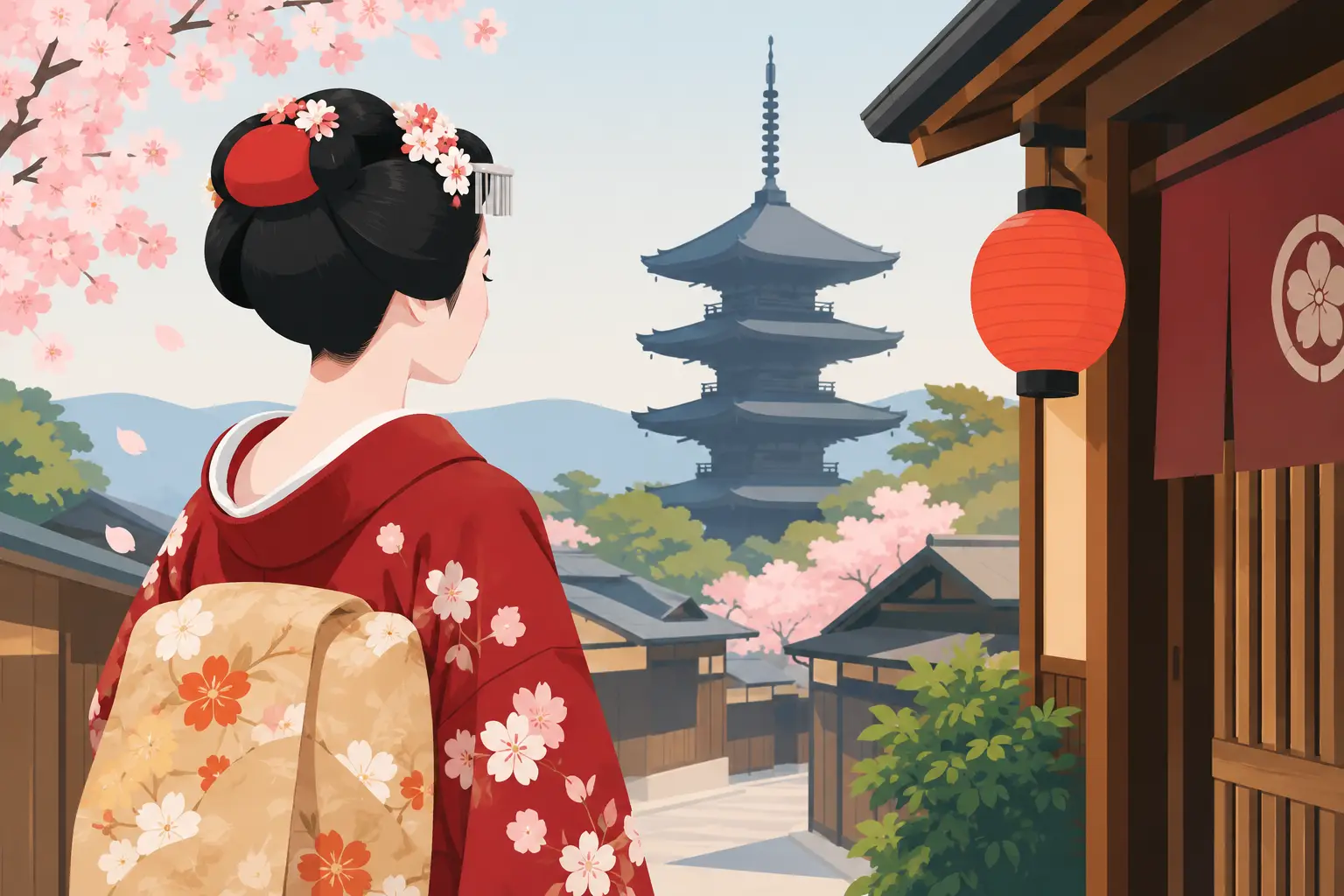
A rare Kyoto moment often begins quietly: the slide of a fusuma door, the first notes of a shamisen, and a room arranged for unhurried conversation. This Kyoto geiko culture guide is designed for travelers who want more than a glimpse of white makeup in Gion. It offers the context to appreciate a living artistic tradition with the respect, ease, and sense of occasion it deserves.
目次
What Does “Geiko” Mean in Kyoto?
In Kyoto, the word geiko is used where many overseas visitors might expect “geisha.” Both refer to professional female entertainers trained in Japan’s traditional performing arts, conversation, hospitality, and games. “Geiko” is Kyoto’s local term, and using it reflects the city’s own cultural language.
A maiko is an apprentice geiko. Maiko are typically recognized by their more elaborate hairstyles, colorful kimono with long sleeves, and ornate hair ornaments. A geiko’s presentation is generally more understated and mature, with refined kimono styling that reflects her advanced training and professional standing.
Neither geiko nor maiko should be understood as historical characters performing a role for tourists. They belong to an active, highly disciplined cultural community centered in Kyoto’s five hanamachi, or geiko districts: Gion Kobu, Gion Higashi, Pontocho, Miyagawacho, and Kamishichiken. Their work preserves artistic forms that have been cultivated over generations, while their hospitality remains deeply personal and responsive to the guests in the room.
Why Geiko Culture Feels So Private
Kyoto’s traditional entertainment world has long been built around trust. Introductions, established relationships, and reservations through trusted contacts were once fundamental to entering an ochaya, or tea house. This is one reason visitors can find the culture difficult to access independently, even when they are willing to invest in a special evening.
That privacy is not intended as a rejection of international guests. It protects the atmosphere in which geiko and maiko work: intimate, composed, and free from the pressures of casual spectatorship. A respectful, professionally arranged experience offers a welcome alternative. It allows overseas guests to enjoy authentic entertainment with clear expectations, thoughtful interpretation, and proper hospitality.
The difference matters. Watching a performer pass on a street is not the same as sharing a room where dance, music, conversation, and games unfold in their intended setting. The latter offers the warmth that photographs alone cannot capture.
The Arts Behind the Appearance
The visual elegance of geiko culture is immediately striking, but it is only the visible surface of years of study. Training can include classical dance, shamisen, singing, tea service, seasonal customs, Kyoto dialect, formal language, and the subtle art of making each guest feel at ease.
Dance: A Story Told in Gesture
Kyoto-style dance is controlled rather than dramatic. A turn of the wrist, a lowered gaze, or the movement of a fan may suggest snowfall, longing, spring blossoms, or a scene from classical literature. Guests do not need to understand every reference to feel the atmosphere, but a brief explanation can make the performance far more resonant.
Shamisen and Song
The shamisen, a three-stringed instrument, gives geiko entertainment much of its distinctive sound. Its crisp, expressive tone supports dance and song while creating an intimate connection between performer and audience. In a smaller gathering, live shamisen is especially memorable because guests can observe the precision and restraint behind what may initially sound effortless.
Ozashiki Hospitality
An ozashiki is a traditional entertainment gathering, often held in a refined dining room or tea-house setting. It may include dance, music, conversation, and lighthearted parlor games. The mood is not solemn. It is polished yet social, shaped by the season, the meal, and the personalities around the table.
For first-time guests, this balance can be surprising. Formality exists, but so does laughter. A geiko or maiko may guide a game with grace and humor, encouraging participation without placing anyone under pressure. The best experiences make guests feel looked after rather than tested.
Kyoto Geiko Culture Guide: Etiquette That Shows Respect
You do not need to memorize a long list of rules to be a considerate guest. Arrive on time, dress thoughtfully, and follow the guidance of your host or interpreter. Smart casual attire is usually appropriate unless a venue specifies otherwise. For a private, premium occasion, many guests choose elegant resort wear or a jacket, but comfort remains important when seated for dining and entertainment.
Photography should always be handled with permission. In a hosted experience, there may be a designated moment for photographs with geiko or maiko, allowing everyone to enjoy the interaction without turning the occasion into a constant photo session. Never assume that street photography is welcome, particularly when geiko and maiko are on their way to work.
Conversation is part of the experience, not an interruption to it. Ask about the arts, the season, Kyoto customs, or a performance you have just seen. Avoid overly personal questions about age, private family life, or income. An English-speaking interpreter is valuable not simply for translation, but for helping cultural nuance travel naturally in both directions.
It is also courteous to avoid touching kimono, hair ornaments, instruments, or fans unless explicitly invited. These are not costumes or props. They are meaningful elements of a professional artistic world.
Choosing an Authentic Experience
The word “authentic” is used generously in travel marketing, so discerning guests should look beyond a beautiful image. A meaningful encounter should be transparent about who is participating, where the experience takes place, what is included, and how cultural guidance is provided.
A structured lunch can be an excellent choice for travelers with a full Kyoto itinerary or those who prefer a relaxed daytime setting. A thoughtfully curated program might pair seasonal Kyoto cuisine with a traditional dance, ozashiki games, professional-style photos, and explanation in English. Higher-tier formats may include live shamisen, a more extended program, or a more intimate guest count.
An evening gathering can feel especially atmospheric, but it is not automatically better. It depends on your schedule, appetite for formality, group size, and the kind of memory you want to take home. A daytime experience can be every bit as elegant when it offers real artists, careful hosting, and enough time for genuine interaction.
For guests seeking a polished introduction, GEISHAKYOTO presents this world in a bookable format designed around refined dining, authentic performances, participation, and English support. The essential standard is simple: the experience should honor the artists while making international guests feel comfortably welcomed.
A Few Misconceptions to Leave Behind
Geiko culture is often flattened into a single image: white makeup, silk kimono, and a lantern-lit Kyoto lane. Those elements are beautiful, but they do not explain the work. Geiko are accomplished professionals whose artistry includes performance and the sophisticated social skill of creating a gracious room.
It is equally misleading to assume that an encounter must be mysterious to be real. The tradition has its private dimensions, yet respectful access can be thoughtfully arranged. Good hospitality does not dilute the culture. When handled with care, it gives guests a clearer appreciation of the discipline, beauty, and humanity within it.
Finally, avoid treating Gion as an open-air stage. Its streets are neighborhoods and workplaces. Walk quietly, respect private property, and resist following performers for a photograph. The most memorable Kyoto experiences are rarely the ones pursued hurriedly.
When you sit down to a seasonal meal and hear the first shamisen phrase, allow yourself to be present. Ask a thoughtful question, join the game if invited, and notice the artistry in the smallest gesture. That attentiveness is not only good etiquette – it is the beginning of a more meaningful Kyoto memory.