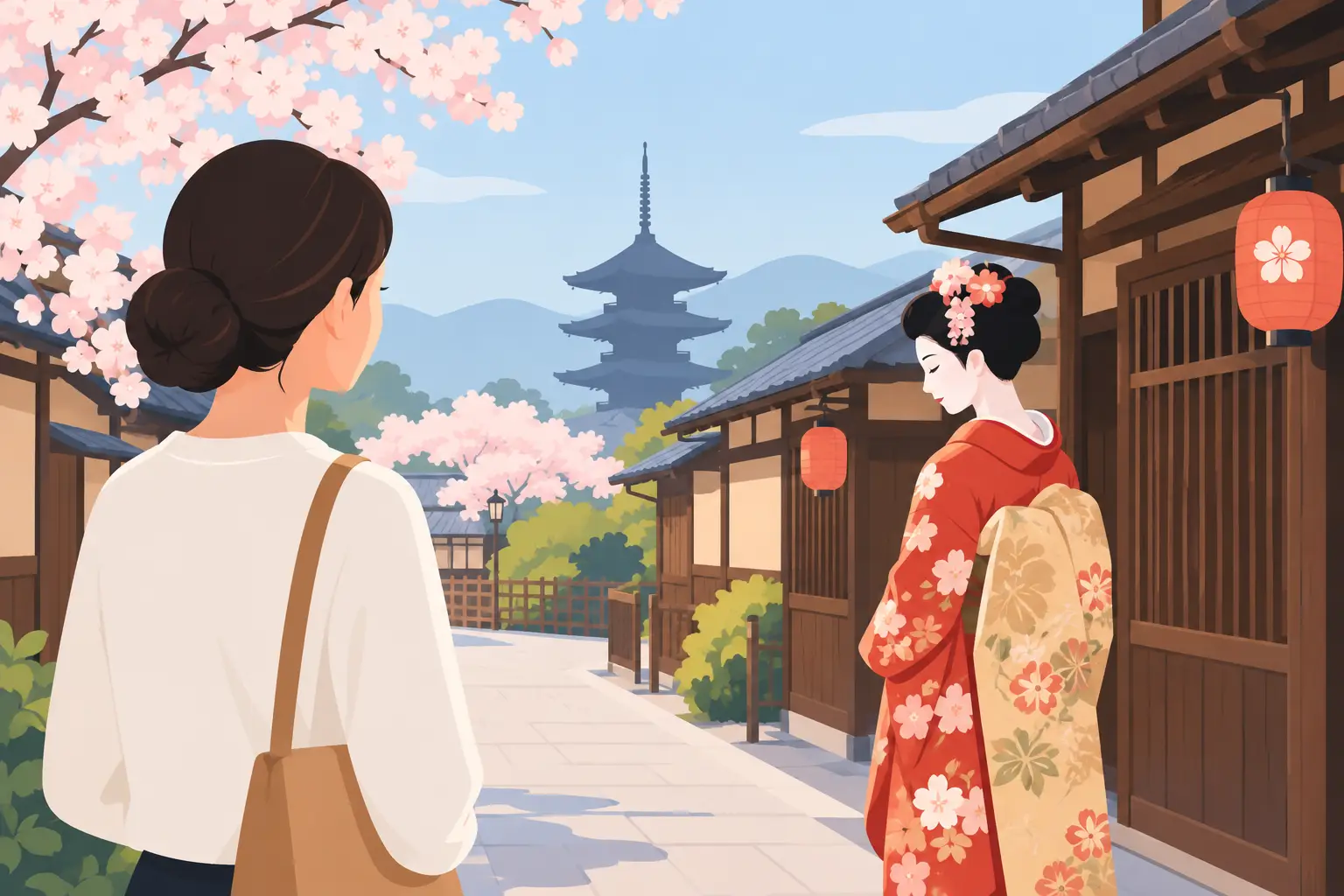
A hanamachi evening is not a performance staged around a visitor’s schedule. It is a living cultural world shaped by apprenticeship, seasonal arts, hospitality, and longstanding relationships. Learning how to enjoy hanamachi culture begins with this distinction: the most memorable experience is not about getting close to a mystery. It is about being welcomed, graciously, into a tradition that Kyoto has carefully preserved.
For many international guests, the difficulty is access. The hanamachi, often translated as “flower town,” can feel private because it is private in meaningful ways. Yet a thoughtfully arranged gathering with geiko and maiko can offer a rare Kyoto moment – one that is warm, personal, and far more rewarding than observing from a distance.
目次
What Hanamachi Culture Actually Means
Kyoto’s hanamachi are traditional entertainment districts where geiko and maiko live, train, and work alongside tea houses, dance schools, kimono specialists, and other craftspeople. Kyoto geiko are often called geisha elsewhere in Japan. Maiko are apprentices, recognized by their distinctive attire, elaborate hairstyle, and intensive training in dance, music, conversation, and hospitality.
Their role is frequently misunderstood. A geiko or maiko is not a costumed host or a tourist attraction. She is a professional artist and hostess whose work may include classical dance, shamisen music, refined conversation, and traditional parlor games. The grace of an evening comes from the combination: the food, the setting, the seasonal details, and the poised human connection.
Kyoto has five principal hanamachi: Gion Kobu, Gion Higashi, Pontocho, Miyagawacho, and Kamishichiken. Each has its own atmosphere and history. There is no need to treat them as boxes to check. For most travelers, one respectful, well-hosted encounter will mean more than several hurried visits to photogenic streets.
How to Enjoy Hanamachi Culture Through a Hosted Experience
Traditionally, entertainment in a Kyoto tea house is arranged through trusted introductions, often between established guests. That system protects privacy and supports the relationships on which the hanamachi depends. It also means that simply arriving at a tea house door and asking to meet a geiko is unlikely to be appropriate or successful.
For visitors, a curated dining experience is the most gracious route. Choose a provider that works directly with professional geiko and maiko, clearly explains what is included, and offers language support without turning the occasion into a spectacle. A quality gathering creates the right conditions for everyone: artists can perform in a suitable setting, guests understand the etiquette, and conversation can unfold naturally.
Look for a format that allows time rather than rushing from one photo to the next. Kyoto-style dining, a dance performance, traditional games, and interpretation each serve a purpose. Dining establishes the atmosphere. Dance reveals the discipline behind the elegance. Games soften formality and invite laughter. An interpreter lets you ask thoughtful questions and understand the stories within the evening.
GEISHAKYOTO’s hosted lunch experiences are designed around this balance, pairing Kyoto cuisine and authentic entertainment with English-speaking support for guests who value both cultural depth and ease.
Reserve With Care
The best experiences tend to require advance reservations, particularly during cherry blossom season, autumn foliage, and major holidays. Book early and share practical details such as dietary restrictions, mobility needs, and whether you are celebrating a honeymoon, anniversary, or family milestone. A considerate host can shape the occasion with greater care when they understand why it matters to you.
Private and small-group formats offer different advantages. A private gathering allows more conversation and a more intimate pace. A small shared experience can be more accessible while still feeling special, especially if the setting remains refined and the group size is limited. The right choice depends on your travel style, budget, and the kind of memory you hope to take home.
Arrive Ready for the Occasion
Dress neatly, arrive early, and treat the venue as you would a fine private dining room. You do not need formal Japanese attire. Polished resort wear, a jacket or elegant dress, and clean, easy-to-remove shoes are usually ideal. Avoid clothing that is overly casual, loud, or difficult to manage when seated on the floor.
Some traditional rooms require guests to remove their shoes. Follow your host’s guidance and be mindful of where you place personal belongings. Keep your phone silent. If you have a large bag, ask where it should go rather than placing it near artwork, instruments, or walkways.
Photography deserves particular attention. A formal photo opportunity may be included, and it can be a beautiful keepsake. Outside of that moment, always ask before taking photographs or recording video. Never photograph geiko, maiko, or local residents in the street without permission. The quiet lanes of Gion and other hanamachi are workplaces and residential neighborhoods, not open-air sets.
Let Conversation Be Part of the Art
Guests sometimes worry that they will not know what to say. In a well-arranged gathering, you do not need to carry the conversation alone. Start with genuine curiosity about the arts: a dance’s seasonal theme, a shamisen piece, the meaning of a fan, or what training involves. These questions honor the artistry at the center of the evening.
Avoid treating a geiko or maiko as a source of gossip about her private life. Questions about age, income, romantic relationships, or whether she can leave her profession can feel intrusive. The same applies to asking someone to remove makeup, pose repeatedly, or perform on demand beyond the agreed program.
A few simple phrases are welcome, though fluency is not expected. “Arigato gozaimasu” expresses thanks. “Konnichiwa” is a polite greeting. More important than perfect pronunciation is your manner: listen closely, accept guidance with good humor, and allow the interpreter to keep conversation comfortable for everyone.
Enjoy the Games, Even If You Lose
Ozashiki games are a treasured part of traditional entertainment. They are lighthearted, rhythmic, and designed to make a room feel relaxed. You may be invited to play a game that involves hand movements, a song, or a simple contest. Join in when invited. A willingness to laugh at yourself is often the fastest path past formality.
The aim is not to demonstrate expertise. It is to share a moment. If you lose, accept it cheerfully. If you win, avoid making the victory too serious. In this setting, good spirits are a form of etiquette.
Notice the Details That Make Kyoto Distinct
The most lasting impressions often arrive quietly: the sound of shamisen strings, the movement of a sleeve in a dance, the placement of a seasonal flower, or the progression of a meal served in beautiful ceramics. Hanamachi culture is built on such details. Paying attention is not passive. It is a way of participating.
Kyoto cuisine also carries this sense of season and place. A meal may emphasize delicate broths, tofu, river fish, mountain vegetables, or ingredients selected for the time of year. If an unfamiliar dish is placed before you, try it with an open mind. Your host can explain how to enjoy it, and asking about the ingredients is an excellent conversation starter.
Alcohol may be part of the experience, but it is not required to appreciate it. If you drink, pace yourself. Being present, respectful, and able to follow the rhythm of the room is far more elegant than overindulgence.
Carry the Respect Beyond the Dining Room
A memorable evening should deepen your regard for the communities that make it possible. When walking through a hanamachi, keep voices low, do not block narrow streets, and avoid pursuing anyone you recognize in traditional dress. A maiko hurrying to an appointment is going to work, not offering an invitation to be followed.
Support the culture by choosing legitimate experiences, respecting rules around photography, and speaking about your visit with care. Share the beauty of what you learned, but resist turning private moments into content. Luxury in Kyoto is often defined by restraint: knowing that not every meaningful experience needs to be captured, posted, or explained.
When you enter a hanamachi with patience and genuine appreciation, the evening becomes more than an exceptional meal or a beautiful photograph. It becomes a fleeting, human connection to Kyoto’s living arts – and the kind of memory that grows more valuable with time.