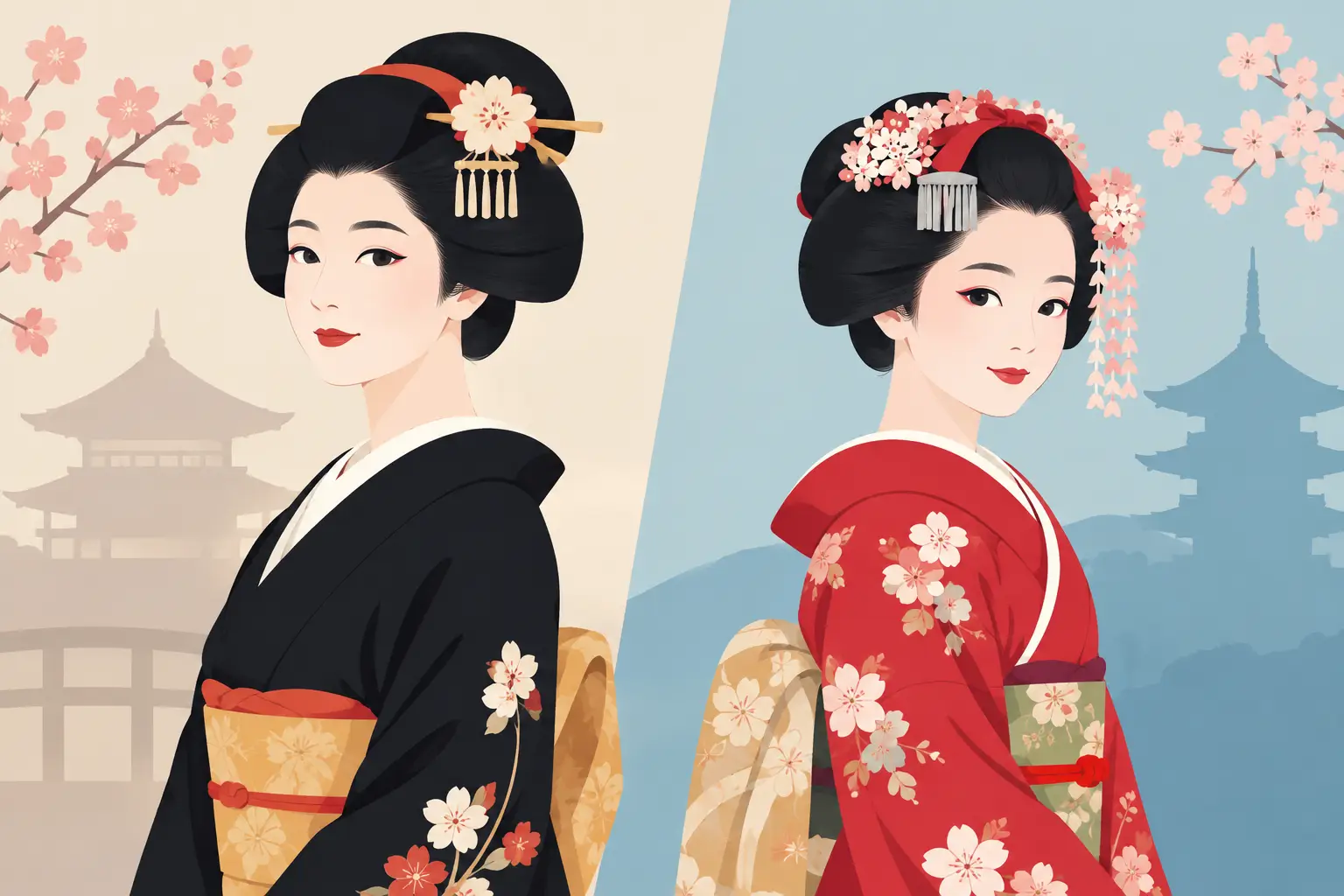
A glimpse of white makeup, a silk kimono, and the soft sound of traditional sandals can make a Kyoto evening feel almost cinematic. Yet the figures visitors often call “geisha” may be at very different points in their artistic lives. Understanding geiko versus maiko differences adds depth to the encounter – and helps guests appreciate the years of study, discipline, and artistry behind every dance, song, and gracious exchange.
In Kyoto, these traditions are preserved within the city’s historic hanamachi, or flower districts. They are living professional arts, not costumes or relics of the past. A maiko is an apprentice entertainer; a geiko is an accomplished professional. Both represent Kyoto hospitality at its most refined, but their appearance, training, and role in an evening are distinct.
目次
Geiko Versus Maiko Differences at a Glance
The simplest distinction is experience. A maiko is a young woman in formal training, developing the skills required for a career in Kyoto’s traditional entertainment world. Her apprenticeship is highly visible in her elaborate dress and styling. A geiko, by contrast, has completed this initial training and works as an independent professional artist.
Outside Kyoto, the broader term geisha is commonly used for female traditional entertainers. Kyoto uses the word geiko, meaning “woman of the arts,” and it is the more respectful local term when referring to a fully qualified professional. Neither geiko nor maiko should be confused with a hostess, performer for hire in the casual sense, or a character from popular fiction. Their work centers on the cultivated arts of music, dance, conversation, games, and hospitality.
The difference is not simply seniority. It reflects a progression from intensive apprenticeship to artistic maturity. A maiko learns by observing and performing alongside established professionals, while a geiko brings her own developed repertoire and presence to an occasion.
The Art of Becoming a Maiko
Before becoming a maiko, a trainee begins a period known as shikomi. She lives within an okiya, or geiko house, and learns the routines, etiquette, dialect, and discipline of the profession. This stage can involve years of daily study, including traditional dance, shamisen, singing, tea ceremony, and the subtle social skills that shape Kyoto hospitality.
Once she debuts as a maiko, the apprentice continues formal lessons while appearing at ozashiki, intimate entertainment gatherings traditionally held in teahouses and restaurants. She is guided by senior geiko and by the proprietors and staff who uphold the customs of her district.
A maiko’s training is demanding because the goal is not merely technical competence. She is learning timing, poise, listening, graceful movement, and how to make guests feel at ease without ever making the effort appear calculated. For international visitors, this is often the most moving aspect of an authentic encounter: the realization that the warmth of the occasion rests on exceptional preparation.
Dress and Makeup: The Most Visible Differences
For many guests, attire offers the clearest way to recognize geiko versus maiko differences. A maiko typically wears a furisode-style kimono with long, flowing sleeves and a richly patterned design. Her obi, the wide sash at the back, is long and hangs dramatically. She wears elevated wooden sandals called okobo, and her ornate hair ornaments, or kanzashi, often reflect the season.
Her hairstyle is usually created with her own hair, arranged in traditional styles that change as she advances through her apprenticeship. This is one reason a maiko may sleep on a raised pillow rather than an ordinary cushion – preserving the hairstyle requires care.
A geiko’s appearance is more understated, although never less elegant. Her kimono generally has shorter sleeves, quieter patterns, and a more restrained color palette. Her obi is worn in a neat, formal style rather than trailing at the back. Geiko commonly wear wigs styled in the traditional manner, which allows a consistent, polished appearance while reducing the physical demands of maintaining elaborate hair every day.
Makeup also offers clues. A newly debuted maiko may leave a small area of skin unpainted at the nape of the neck, a traditional detail associated with youth. Her lip color is often applied only to the lower lip early in training. As she progresses, the look changes. Geiko usually wear fuller lip color and a more composed presentation. These conventions can vary by district, season, performance, and career stage, so they are guides rather than rules to test guests on.
Performance and Presence
Both geiko and maiko are trained entertainers, and both may perform traditional dance, play shamisen, sing, and take part in ozashiki games. At a carefully arranged luncheon or evening, a guest might see a poised dance accompanied by live music, enjoy a lighthearted traditional game, and share conversation through an interpreter.
The distinction lies largely in depth of repertoire and professional responsibility. A geiko has reached the point where she leads with confidence built over years. Her performance may feel measured, subtle, and deeply assured. She can carry conversation with seasoned guests, respond to the atmosphere of the room, and guide an occasion with quiet authority.
A maiko brings a different kind of appeal: the freshness and brilliance of an artist still in the visible process of becoming. Her presentation is especially elaborate, and guests may notice her close relationship with senior geiko who continue to mentor her. Neither presence is “better.” A geiko encounter may offer the calm assurance of mastery, while a maiko encounter offers a rare view of Kyoto’s apprenticeship tradition in motion.
Why Kyoto Uses Both Traditions
Kyoto’s hanamachi culture depends on continuity. Maiko ensure that artistic traditions are passed forward, while geiko sustain those traditions at the highest professional level. The relationship between them is therefore one of guidance and succession, not competition.
This is also why access should be approached with care. The districts of Gion, Pontocho, Miyagawacho, Kamishichiken, and Gion Higashi are working cultural communities as well as cherished parts of Kyoto. Seeing a geiko or maiko walking to an appointment does not make her a street attraction. Following, blocking paths, calling out, or taking close photographs without permission can disrupt her work and the neighborhood.
A hosted experience offers a more respectful alternative. In an appropriate setting, guests can enjoy performance and conversation as they were intended: with time, context, and mutual courtesy. Rather than rushing after a fleeting sight on a narrow lane, visitors can sit down to Kyoto cuisine, witness the artistry at close range, and learn the meaning behind what they see.
How to Be a Considerate Guest
Guests do not need to memorize every custom before meeting a geiko or maiko. A little attentiveness goes a long way. Arrive on time, dress neatly, follow the lead of your host, and ask before taking photographs. If an interpreter is present, use the opportunity to ask thoughtful questions about the arts, seasonal traditions, or daily training.
Avoid questions that reduce a geiko or maiko to romantic stereotypes or ask for private details. Their work is highly personal in its elegance, but it is still professional. Respectful curiosity is welcomed; intrusive curiosity is not.
For a memorable photograph, wait for the moment offered by the host or performer. A posed image in a proper setting is far more meaningful than a hurried image taken in the street. The same principle applies to conversation: a relaxed, well-hosted exchange allows personality and artistry to come through naturally.
Choosing the Experience That Feels Right
If your visit to Kyoto is brief, a meeting with either a geiko or a maiko can become one of the defining moments of your journey. The right setting matters more than trying to choose one solely by appearance. A program featuring a geiko may appeal to guests who value seasoned performance, live shamisen, and the assurance of a deeply established artist. A program with a maiko can be especially captivating for those drawn to the vivid dress, seasonal ornamentation, and visible story of apprenticeship.
Some premium cultural dining occasions may include both, offering a particularly rich perspective on Kyoto’s artistic lineage. What matters is that the gathering is arranged with respect for the performers and gives guests enough time to understand what they are seeing. This is the difference between observing tradition from a distance and being welcomed into its atmosphere.
The next time you see the precise sweep of a sleeve, hear the bright notes of shamisen, or share a toast across a Kyoto dining table, look beyond the makeup and silk. You may be witnessing not one image of old Kyoto, but two stages of a demanding artistic life – each graceful, each deeply human, and each deserving of your full attention.