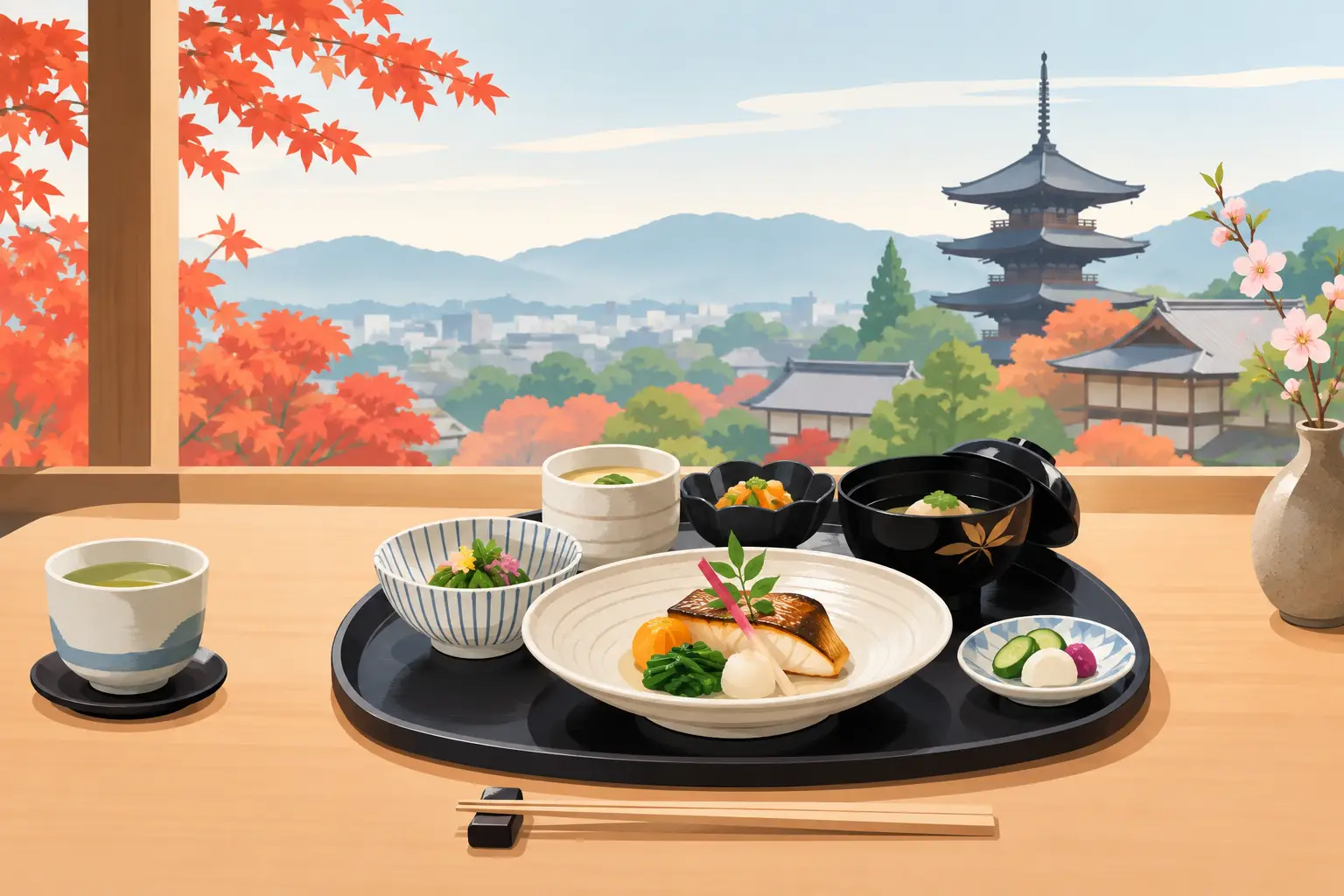
The most memorable Kyoto lunches do not begin with a menu. They begin with the hush of a private room, a beautifully arranged place setting, and the feeling that you have stepped beyond the city’s busy streets into a more considered rhythm. This seasonal Kyoto lunch course review looks at what makes a refined cultural lunch more than an excellent meal – and why it can become one of the defining moments of a visit to Japan.
For international guests, the appeal is not simply access to Kyoto cuisine. It is the rare chance to enjoy it in the presence of geiko and maiko, with the customs, artistry, and hospitality of Kyoto’s traditional entertainment districts made welcoming and understandable in English.
目次
- What a Seasonal Kyoto Lunch Course Should Feel Like
- Seasonal Kyoto Lunch Course Review: Beyond the Cuisine
- The Social Side of a Traditional Entertainment Lunch
- What Makes the Experience Worth the Investment
- Photography, Keepsakes, and the Memory After Lunch
- Practical Considerations for International Guests
What a Seasonal Kyoto Lunch Course Should Feel Like
Kyoto cuisine is shaped by restraint, seasonality, and presentation. Rather than relying on large portions or dramatic flavors, a well-composed lunch course gives each ingredient a distinct role. A delicate broth may arrive first, followed by carefully prepared fish, seasonal vegetables, rice, and a sweet course that reflects the time of year.
The pleasure lies in the progression. Spring may bring tender bamboo shoots and mountain vegetables; summer often favors cooling textures and lighter preparations; autumn welcomes mushrooms, chestnuts, and richly colored garnishes; winter offers warming dishes with deeper, more comforting character. The exact menu naturally changes with availability, which is part of the experience rather than a limitation. A seasonal course should feel connected to the day you are dining, not copied from a fixed script.
This approach may differ from what some visitors expect from a luxury meal. The flavors are often subtle, and the beauty of the presentation carries genuine meaning. A leaf, a ceramic vessel, or the color of a small confection can quietly reference the season. Guests who arrive ready to slow down and notice those details tend to enjoy the meal most fully.
Seasonal Kyoto Lunch Course Review: Beyond the Cuisine
A private Kyoto lunch becomes exceptional when the food is paired with living cultural arts. At GEISHAKYOTO, the lunch is designed as a complete cultural occasion, with authentic interaction rather than a brief photo opportunity or a distant stage performance.
The arrival of a maiko or geiko immediately changes the atmosphere of the room. Their kimono, hairstyle, and manner reflect years of discipline and tradition, but the encounter itself need not feel formal or intimidating. With English-speaking interpretation, guests can follow the conversation, understand the customs involved, and ask thoughtful questions with confidence.
A traditional dance performance is often the emotional center of the occasion. The movements may appear graceful and effortless, yet each gesture is carefully controlled. Unlike a large theater production, an intimate lunch setting allows guests to appreciate details that are easily missed from a distant seat: the movement of a fan, the expression held through a quiet pause, and the relationship between music and gesture.
Higher-tier experiences may include live shamisen accompaniment, adding another layer of depth. The instrument’s clear, percussive tone gives the performance an immediacy that recordings cannot replicate. It is a particularly meaningful inclusion for travelers who value the difference between observing a tradition and encountering it as a live art.
The Social Side of a Traditional Entertainment Lunch
One of the most charming parts of the experience comes after the formal performance. Traditional ozashiki games bring a lighter, more social energy to the room. These games are playful, elegant, and often surprisingly competitive, creating an easy connection among couples, families, friends, or private groups.
For many overseas guests, this is where the experience feels especially personal. A geiko or maiko is not a museum exhibit, and a well-hosted lunch does not treat her as one. Conversation, games, and shared laughter reveal the warmth behind an art form that is sometimes misunderstood abroad.
Etiquette is handled with care. Guests do not need prior knowledge of Japanese customs or fluency in the language. Clear guidance makes it easy to participate respectfully, from when to take photographs to how to engage during a game. That reassurance matters, particularly for travelers who want an authentic encounter but are concerned about making an unintentional mistake.
What Makes the Experience Worth the Investment
A cultural lunch with geiko or maiko is a premium experience, and it should be judged by more than the number of courses served. Its value comes from the combination of skilled cuisine, private hospitality, live performance, interpretation, and the rarity of meaningful access to Kyoto’s traditional arts.
Trying to arrange these elements independently can be difficult. Many traditional venues work through established introductions, operate primarily in Japanese, or do not offer a clear path for first-time international visitors. Even when a traveler finds a restaurant serving kaiseki-style cuisine, that does not guarantee the intimate cultural exchange that makes this kind of afternoon distinctive.
A curated format removes that uncertainty. The setting, timing, artists, meal, and communication support are organized in advance, allowing guests to be present rather than spending the lunch deciphering etiquette or logistics. For honeymooners, milestone travelers, executive groups, and families celebrating a special trip, that sense of ease is part of the luxury.
There is a trade-off to consider. This is not the right choice for someone seeking a quick, inexpensive lunch between temple visits. It is best approached as a dedicated occasion, with enough space in the day to savor the meal and the moments around it. Guests looking only for a restaurant review may find the cultural component more extensive than expected. Those seeking a rare Kyoto memory, however, will likely see that depth as the point.
Photography, Keepsakes, and the Memory After Lunch
A polished cultural experience should leave guests with more than a pleasant recollection. Professional-style photo opportunities provide a chance to capture the occasion with the geiko or maiko in a respectful, composed setting. This is especially valuable for couples and groups, who may otherwise have few photographs together from a significant trip.
A thoughtful souvenir adds another note of hospitality. It need not be extravagant to be meaningful. The best keepsakes feel connected to the afternoon and bring back the texture of the experience long after the journey ends.
Photography should remain secondary to presence. The most affecting moments are often the ones that cannot be fully captured: a quiet exchange through an interpreter, the first notes of the shamisen, or the room’s laughter during a traditional game. Taking a few beautiful photographs is worthwhile. Spending the rest of the time engaged is better.
Practical Considerations for International Guests
Advance reservation is essential, especially during Kyoto’s peak spring foliage, autumn color, and holiday travel periods. Because the experience involves performers, a private dining arrangement, and carefully timed hospitality, it cannot always be arranged casually at the last minute.
Dietary requirements should be communicated as early as possible. Kyoto cuisine often includes fish, dashi, soy, sesame, and other ingredients that can be difficult to replace without changing the character of a dish. Many needs can be considered with advance notice, but not every request can be accommodated in every setting. Clear expectations lead to a better experience for everyone.
Guests should also plan their schedule thoughtfully. A cultural lunch deserves more than a narrow gap between sightseeing appointments. Arrive on time, dress neatly but comfortably, and allow the afternoon to unfold without rushing toward the next reservation. The atmosphere rewards unhurried attention.
A seasonal Kyoto lunch course is at its finest when it gives you something that no itinerary can fully promise: a genuine sense of having been welcomed into a living tradition. Leave room in your Kyoto plans for that kind of afternoon, and let the season set the tone.