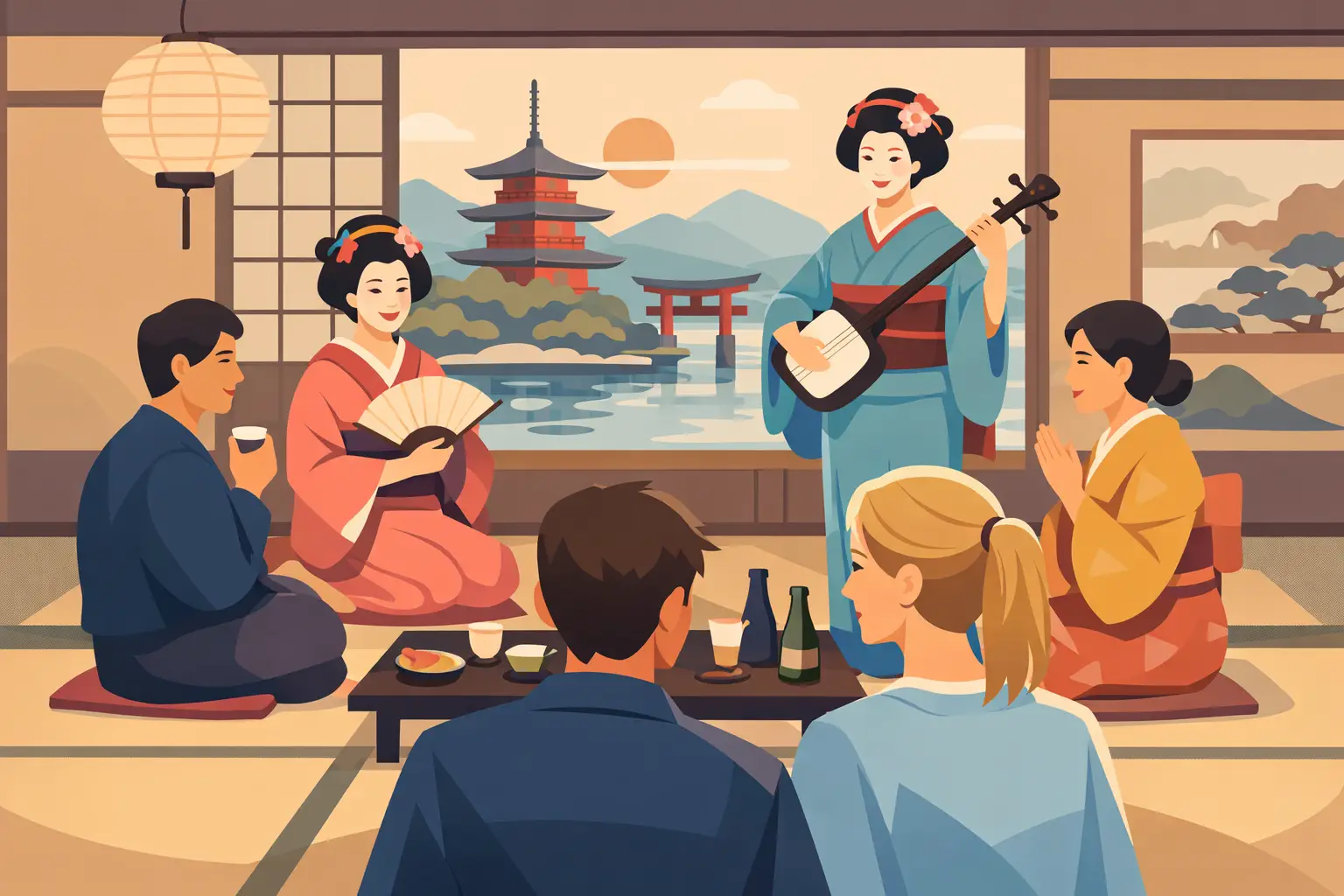
A raised hand, a quick change of rhythm, and a room full of laughter: ozashiki games are often the moment when Kyoto’s most formal-looking evening becomes unexpectedly personal. So, can foreigners join ozashiki games? Yes, when they are guests in a properly arranged ozashiki experience and are invited to take part.
These lighthearted games are not a performance to observe from a distance. They are a traditional form of geisha entertainment designed to bring guests, geiko, maiko, music, and hospitality together. For international visitors, joining them can become one of the rarest and most memorable moments of a Kyoto visit – provided the occasion is approached with the right setting and etiquette.
目次
Can Foreigners Join Ozashiki Games Comfortably?
Foreign guests are welcome to participate in ozashiki games when the experience has been arranged through a reputable host or cultural hospitality provider. In traditional Kyoto circles, an ozashiki is a private, invitation-based banquet, usually held in an ochaya, ryotei, or another refined dining venue. It is not typically something a visitor can enter casually from the street.
That private nature is part of what makes the experience special. The host coordinates the setting, cuisine, entertainers, timing, and guest care. For overseas visitors, an English-speaking interpreter or host makes an enormous difference. You can understand the instructions, respond naturally to the atmosphere, and enjoy the humor without worrying that you have missed an unspoken rule.
At a thoughtfully curated gathering, nobody expects you to arrive knowing the games. A geiko or maiko will demonstrate, encourage participants, and keep the room moving with warmth and grace. Your role is simply to be present, willing to participate, and respectful of the people sharing this tradition with you.
Geisha, Geiko, and Maiko: A Kyoto Distinction
In Kyoto, geisha are commonly called geiko. A maiko is an apprentice geiko, recognized by her distinctive hairstyle, kimono styling, and youthful appearance. Both may entertain at an ozashiki, though the exact combination depends on the arrangement.
Their work includes traditional dance, music, conversation, and games. The games should never be mistaken for an informal party activity. They are part of a polished entertainment tradition, supported by years of training in movement, timing, music, and guest hospitality.
What Happens During an Ozashiki Game?
The atmosphere often begins with elegant formality. Guests may enjoy Kyoto-style cuisine, seasonal presentation, sake or tea, and a dance performance accompanied by traditional music. As the gathering relaxes, the entertainers may introduce a game that brings guests into the occasion.
One well-known example is Konpira Funefune. Two players sit opposite one another and move their hands in rhythm, changing between a boat-rowing motion and a quick gesture over an imaginary sake cup. It sounds simple until the tempo increases. The amusement lies in concentration, timing, and the good-natured mistakes that follow.
Another classic is Tora Tora, a game played to music in which participants quickly strike theatrical poses. It has a playful, almost stage-like quality, and it rewards those who are willing to laugh at themselves. The point is not to win with perfect technique. It is to share a lively moment within a setting otherwise defined by extraordinary poise.
Some games involve small props, clapping patterns, or drinking traditions. What is included varies by venue, group size, season, and the entertainers’ preferred flow for the event. A premium, well-hosted experience will choose games that suit the guests rather than placing anyone under uncomfortable pressure.
The Etiquette That Makes You a Welcome Guest
Ozashiki games are welcoming, but they are also rooted in relationships and respect. The most graceful approach is to let your host lead. Wait to be invited into a game, listen to the explanation, and follow the pace set by the geiko or maiko.
You do not need to be quiet or overly serious. Warm laughter and genuine enthusiasm are entirely appropriate. What matters is that your attention stays with the people in the room. Avoid treating the entertainers as props for social media, interrupting performances, or demanding repeated poses and photos outside the planned photo opportunity.
If alcohol is served, enjoy it with discretion. Traditional games may include a playful drinking element, but participation should always remain comfortable. A considerate host can accommodate guests who prefer tea, soft drinks, or a non-drinking role in the game.
Dress should reflect the setting. Smart, polished attire is a safe choice for an elegant lunch or evening gathering. You do not need to wear kimono to participate, and in many cases, comfortable Western formalwear is ideal. The aim is not costume, but respect for the occasion.
Why Booking Matters More Than Knowing the Rules
Many visitors imagine they can find an authentic geisha gathering after arriving in Gion. In reality, access to traditional ozashiki is limited, relationship-based, and often conducted in Japanese. A restaurant advertising a “geisha show” may offer entertainment, but that does not always mean it provides the intimate interaction, conversation, games, and cultural context of an ozashiki-style gathering.
Booking through a trusted specialist changes the experience. It confirms that the entertainers are properly engaged, the venue is suitable, the schedule is clear, and language support is available. It also removes a common anxiety for international guests: not knowing what they are permitted to do or say.
For couples, families, executive groups, and special celebrations, a structured format is especially valuable. You can enjoy the beauty of a private Kyoto meal and traditional performance while knowing that participation has been designed to feel natural, not intimidating. At GEISHAKYOTO, curated dining experiences may include traditional dance, ozashiki games, professional-style photo opportunities, and English interpretation, allowing overseas guests to take part with confidence.
Is an Ozashiki Game Right for Every Traveler?
It depends on what you hope to take home from Kyoto. If you prefer a quiet, observational cultural program, a dance performance or museum visit may be a better match. Ozashiki games are interactive. They ask you to put down your phone, follow a rhythm, make a few mistakes, and meet tradition with a sense of play.
For many travelers, that is exactly the appeal. The refined surface of Kyoto culture can sometimes feel distant to outsiders. These games create a bridge. They reveal that formal hospitality and humor can belong in the same room, and that a tradition maintained with great care can still feel spontaneous when shared well.
They are also particularly well suited to milestone travel. A honeymoon lunch, anniversary celebration, private family gathering, or executive visit gains a deeper sense of occasion when the experience includes genuine personal interaction rather than a standard sightseeing stop.
A Few Practical Questions Before You Reserve
Ask whether the program includes active guest participation or only a performance. Confirm whether interpretation is provided, especially if no one in your party speaks Japanese. It is also wise to ask about the duration, dining inclusions, photography policy, and whether the experience is private or shared with other guests.
If you have mobility considerations, dietary requirements, or a preference not to consume alcohol, mention them during booking. A high-quality host will plan around these details with care. This is not an occasion where improvising at the last minute adds authenticity. Good preparation protects the ease and elegance of the experience.
The most rewarding ozashiki moments are rarely the perfectly posed ones. They are the small, unscripted details: the sound of shamisen, a maiko’s encouraging smile as you try to match the rhythm, and the laughter that follows when the game moves faster than expected. Arrive as a respectful guest, and Kyoto’s living hospitality can feel wonderfully close.