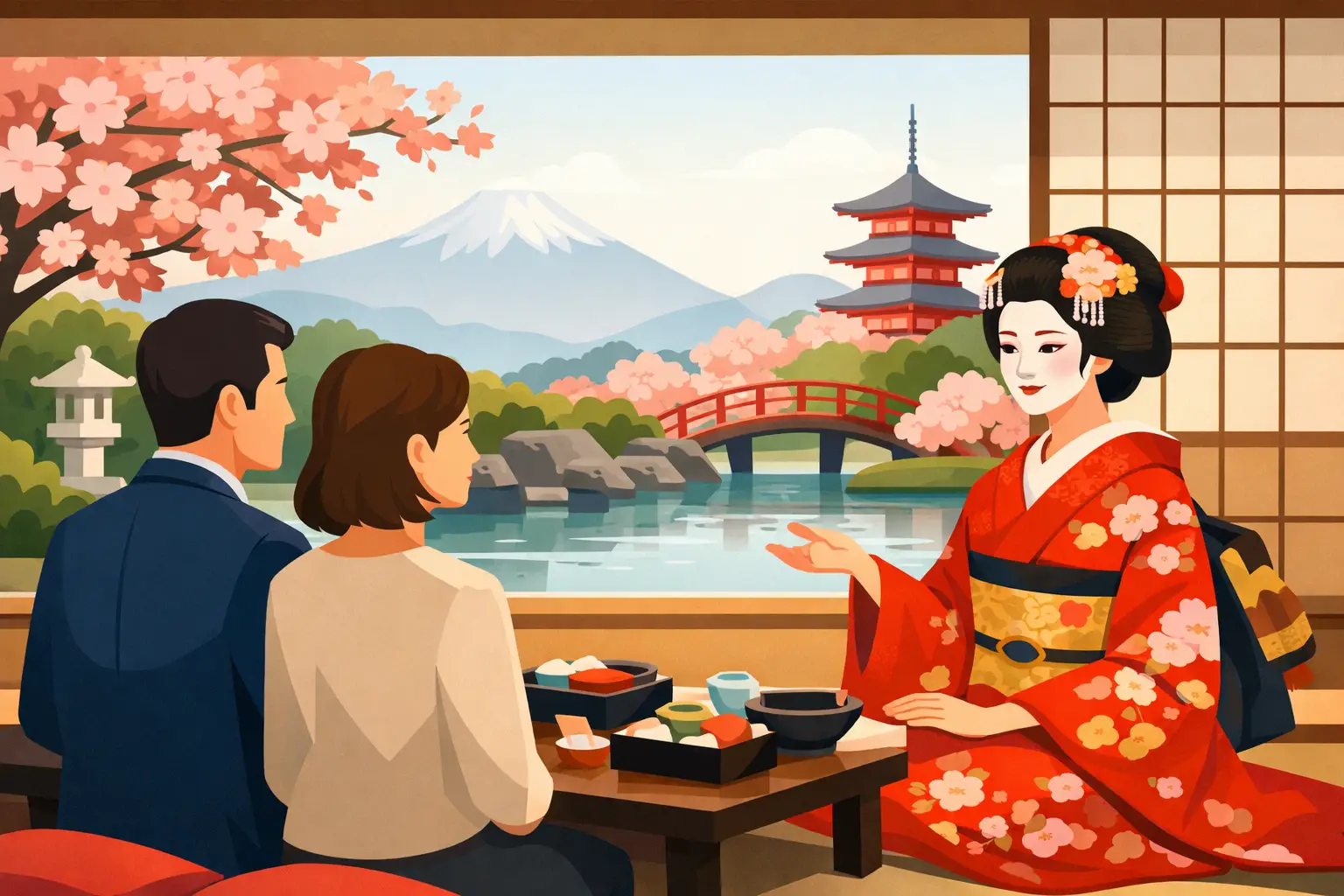
A geisha lunch is not a costume party, nor is it an occasion for formal eveningwear. It is a rare Kyoto moment: an elegant meal, traditional performance, conversation, and photographs shared in an intimate cultural setting. If you are deciding what to wear to geisha lunch, the most graceful answer is polished, comfortable attire that lets the artistry of the occasion remain at the center.
You do not need to wear a kimono to be respectful. In fact, unless you have arranged a professional kimono dressing experience, well-chosen contemporary clothing is often the most comfortable and appropriate choice. Think of the standard as refined smart casual: the level of dress you might choose for lunch at an exceptional restaurant or a special daytime celebration.
目次
What to Wear to a Geisha Lunch: The Ideal Standard
Aim for clean lines, quality fabrics, and a considered finish. A tailored dress, elegant blouse with trousers or a midi skirt, or a refined jumpsuit are all excellent choices for women. For men, a collared shirt with tailored trousers and a light jacket or blazer creates an easy, sophisticated look. A tie is welcome but rarely necessary for a daytime lunch unless your personal style calls for it.
The goal is not to imitate traditional Japanese dress. Geiko and maiko have spent years training in highly specialized arts, and their formal kimono, hair, and accessories carry meaning shaped by Kyoto custom. Guests honor that tradition best by arriving neat, composed, and genuinely themselves.
Color is a matter of personal taste, though subdued shades tend to photograph beautifully beside the rich textiles and seasonal details of a traditional Kyoto setting. Navy, cream, soft gray, forest green, muted pink, and deep burgundy are especially graceful choices. A bright color can also work beautifully when it feels intentional rather than overly casual.
Avoid clothing that is distressed, excessively revealing, or emblazoned with large logos. Beachwear, athletic clothing, flip-flops, and graphic T-shirts can feel out of step with the setting, even if the lunch itself is warm and welcoming. The distinction is simple: choose clothing that shows care without becoming fussy.
For women
A midi dress with comfortable low heels or elegant flats is a reliable choice. So is a silk-like blouse paired with wide-leg trousers and a structured handbag. Kyoto venues may involve stairs, garden paths, or seating that asks you to move with a little care, so a hem that is easy to manage and shoes you can walk in comfortably will serve you well.
If you prefer a sleeveless dress or top during warmer months, bring a light layer. A fine cardigan, tailored jacket, or wrap is useful in air-conditioned rooms and adds polish for photographs. Choose undergarments that are comfortable and discreet, particularly if you expect to sit on cushions or move between spaces.
For men
A long-sleeve collared shirt, chinos or wool trousers, and leather loafers or clean dress shoes strike the right balance. In warmer weather, a breathable linen or cotton shirt is perfectly suitable, provided it is pressed and well fitted. A blazer adds a more elevated finish, but it is not essential when temperatures are high.
Shorts, tank tops, athletic sneakers, and casual sandals are best saved for sightseeing. Kyoto is a walking city, so it can be tempting to dress purely for comfort. A smart pair of trousers and supportive loafers or understated sneakers will usually make the transition from temple visit to lunch much easier.
Dress for Kyoto’s Seasons, Not Just the Occasion
Kyoto’s seasons are vivid, and your wardrobe should respond to the weather as thoughtfully as it responds to the setting.
Spring is beautiful but changeable. A dress with a light coat, or trousers with a jacket you can remove, is practical for cool mornings and mild afternoons. During the humid summer, prioritize breathable natural fabrics. Linen, cotton, and lightweight blends are more comfortable than heavy synthetics, but choose pieces that retain their shape rather than looking overly relaxed.
Autumn brings crisp air and some of Kyoto’s most memorable colors. A blazer, knit layer, or elegant long-sleeve dress feels especially fitting. Winter can be genuinely cold, particularly when moving between destinations. Wear a proper coat for travel, then arrive in a polished inner layer that remains appropriate once you are seated. A beautiful scarf is practical outdoors, though it is best removed before dining or during a performance.
Rain deserves its own consideration. Compact umbrellas are easy to carry, and water-resistant shoes with a refined appearance are a sensible alternative to delicate suede. Avoid arriving with dripping outerwear if possible; a little preparation preserves the calm, immaculate feeling of the experience.
Shoes, Bags, and the Details Guests Often Forget
Shoes deserve more attention than they usually receive on a travel itinerary. Some traditional spaces ask guests to remove footwear, and even modern dining rooms may have a threshold or entry area where this is customary. Choose shoes that are clean, easy to take on and off, and comfortable enough for walking before and after lunch.
If you may be seated on tatami or cushions, avoid footwear that is difficult to manage and clothing that restricts bending or sitting. You may be offered chair seating, but it depends on the venue and arrangement. Comfort supports good posture, relaxed conversation, and a more natural experience.
Keep your bag compact. A small shoulder bag, elegant crossbody, or slim tote is easier to place beside your seat than a large sightseeing backpack. Bring only what you need: phone, camera if desired, wallet, tissues, lip color, and a light layer. Large bags, shopping parcels, and bulky outerwear can distract from the room and make movement less effortless.
Jewelry should feel intentional but restrained. A pair of earrings, a watch, or a delicate necklace can complete an outfit. Very large accessories may interfere with dining or feel visually busy in photographs beside the exquisite detail of a geiko or maiko’s attire.
Fragrance and Grooming: A Quiet Form of Courtesy
A geisha lunch is close-range hospitality. You may be seated near performers, enjoy conversation through an interpreter, and participate in traditional games. For that reason, wear little or no fragrance. Heavy perfume, strongly scented body products, and scented hair sprays can overwhelm a dining room and interfere with the aromas of Kyoto cuisine.
Arrive freshly groomed, with hair arranged so that you feel comfortable in photographs. There is no need for dramatic styling. A clean, considered appearance is more aligned with Kyoto refinement than anything overly elaborate.
For makeup, choose what makes you feel confident. Soft, camera-ready makeup often works well, especially for guests who want to preserve the moment in portraits. The professional artistry worn by geiko and maiko needs no competition; your role is simply to look like the best version of yourself.
Should You Wear a Kimono?
You certainly may, but it is optional and best approached thoughtfully. A professionally dressed kimono can make the day feel especially ceremonial and can be a lovely choice for a honeymoon, anniversary, or private celebration. It also requires time, coordination, and a willingness to move and sit differently than you would in everyday clothing.
Do not buy an inexpensive costume-style garment solely for the lunch. It may be uncomfortable, difficult to wear correctly, and can read as less respectful than refined contemporary clothing. If traditional dress is part of your Kyoto wish list, arrange it with a reputable specialist and allow enough time before your reservation.
At GEISHAKYOTO, guests arrive from around the world, and elegant personal style is always welcome. The shared standard is consideration for the occasion, the performers, and fellow guests.
Dress for the Memory You Want to Keep
There is one practical test that simplifies every decision: would you feel at ease meeting an artist, sitting for a cherished photograph, and enjoying a beautiful multi-course lunch in this outfit? If the answer is yes, you are likely dressed perfectly.
Choose the clothes that allow you to be present. When you are comfortable, composed, and respectful of the setting, you can give your attention to the shamisen, the dance, the seasonal cuisine, and the unmistakable pleasure of being welcomed into a refined corner of Kyoto tradition.
AUTHENTIC KYOTO EXPERIENCE