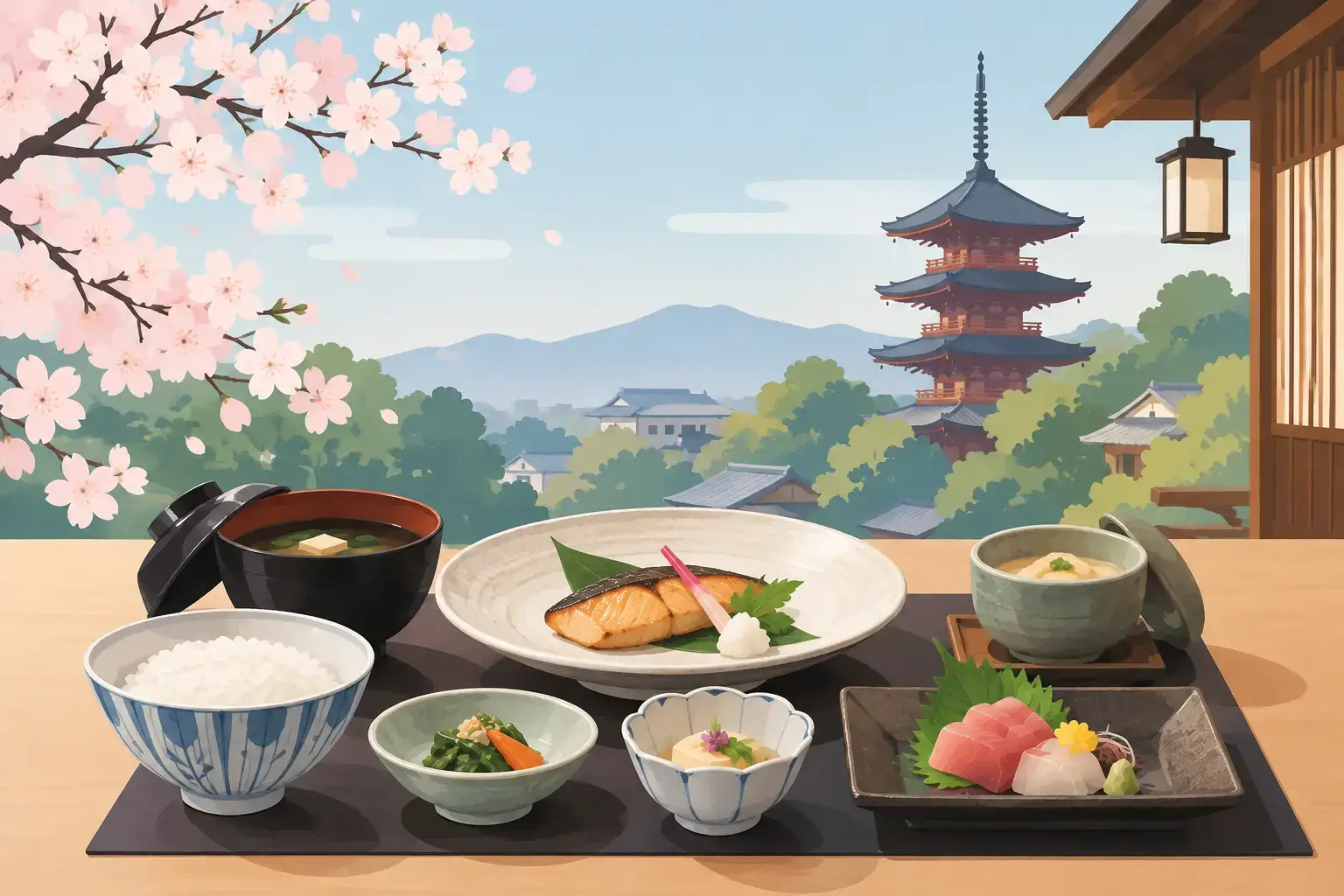
A Kyoto lunch can be far more than a pause between temple visits. Japanese lunch course types reveal different expressions of hospitality – from a quick, satisfying set meal to a carefully paced procession of seasonal dishes served in a private room. For travelers seeking a rare Kyoto moment, knowing the difference makes it easier to reserve an experience that feels as memorable as the city itself.
Lunch is often the most accessible time to enjoy fine Japanese cuisine. Restaurants may offer a more approachable daytime version of an evening menu, while preserving the same attention to ingredients, presentation, and service. Yet a lunch course is not automatically formal, and a high price does not always mean a more personal cultural experience. The right choice depends on how much time you have, the atmosphere you want, and whether food alone is the focus of your afternoon.
目次
Japanese Lunch Course Types at a Glance
In Japan, the word for a course meal, course ryori, can describe several styles of dining. Some are structured around a main dish and rice, while others follow a traditional sequence of small seasonal plates. The most useful distinction is between everyday set meals, restaurant tasting menus, and formal Kyoto cuisine.
Teishoku: the classic set meal
A teishoku is a complete, balanced set meal, usually arranged on a tray. It commonly includes a main dish such as grilled fish, tempura, or pork cutlet, alongside rice, miso soup, pickles, and one or two small side dishes.
This is an excellent choice for a relaxed lunch with a distinctly Japanese rhythm. It is filling, efficient, and widely available. A teishoku is not usually intended as a ceremonial experience, however. Service is straightforward, and dishes tend to arrive together rather than in a deliberate sequence.
Donburi, noodles, and casual lunch specialties
Rice bowls, soba, udon, ramen, sushi lunches, and curry rice occupy another important category. These meals are often centered on one specialty and work well when you want something local, delicious, and unhurried but not lengthy.
They are ideal on a tightly planned sightseeing day, particularly if you have a temple appointment, a train to catch, or an afternoon activity. The trade-off is that they offer less of the seasonal storytelling and visual ceremony associated with Kyoto’s refined dining traditions.
Bento: composed and portable elegance
A bento is a boxed meal composed of multiple small items, often including rice, grilled fish or meat, vegetables, tamagoyaki, pickles, and seasonal accompaniments. In Kyoto, a beautifully prepared bento can feel remarkably sophisticated, even when served in a relatively casual setting.
Bento is especially appealing for guests who enjoy variety. Rather than committing to one central dish, you can taste several textures and flavors at once. It may be served at restaurants, during travel, or as part of a cultural event. Still, its format is generally more compact than a full multi-course meal.
Sushi and tempura courses
Specialty restaurants frequently offer lunch courses built around sushi or tempura. A sushi course may progress from delicate appetizers to a chef-selected sequence of nigiri, soup, and perhaps dessert. A tempura course often presents each piece freshly fried, allowing guests to appreciate changing textures and seasonal ingredients.
These menus reward travelers who want to concentrate on a particular craft. They can be highly refined, but the experience is focused rather than expansive. If your idea of a special Kyoto lunch includes several cooking methods, ceramics, seasonal garnishes, and a sense of occasion, kaiseki may be a better fit.
Kaiseki: Kyoto’s seasonal course tradition
Kaiseki is the Japanese lunch course type most closely associated with formal Japanese dining. It is not simply a tasting menu. A traditional kaiseki meal reflects seasonality, balance, presentation, and the host’s consideration for the guest. Courses may include an appetizer, a clear soup, sashimi, a grilled dish, a simmered dish, rice, and a seasonal sweet, though the exact sequence varies.
In Kyoto, kaiseki often highlights ingredients and techniques linked to the region: delicate dashi, tofu, vegetables, river fish, yuba, and carefully selected seafood. The tableware matters as much as the menu. A bowl, plate, or covered dish may be chosen to echo the season, creating a quiet visual dialogue between food and setting.
A proper kaiseki lunch takes time. Expect a measured pace, often around 90 minutes to two hours or more, depending on the menu and setting. It is suited to travelers who value detail and are willing to give the meal their full attention.
What Makes Kyoto Lunch Courses Distinct
Kyoto cuisine, often called Kyo-ryori, is known for restraint rather than excess. Its character comes through in clarity of flavor, exquisite knife work, fine dashi, and respect for ingredients at their seasonal peak. The experience can feel subtle to guests accustomed to richer or more heavily seasoned food, but that restraint is intentional.
Seasonality is central. Spring menus may feature bamboo shoots and young mountain vegetables; summer brings cooling presentations and lighter flavors; autumn celebrates mushrooms, chestnuts, and persimmon; winter favors warming broths and root vegetables. Even a single leaf or flower garnish can signal the time of year.
This is also why menus may be less fixed than international travelers expect. A restaurant may not be able to promise every dish weeks in advance because the chef is responding to what is best at market. For guests with dietary restrictions, advance communication is essential. Vegetarian, vegan, gluten-free, halal, and allergy-friendly requests may be possible, but traditional stocks and sauces can contain fish, shellfish, soy, wheat, or other ingredients that are not immediately visible.
Choosing the Right Lunch for Your Kyoto Itinerary
For a quick but authentic midday meal, choose teishoku, noodles, a rice bowl, or a casual sushi lunch. These options leave ample room for temples, gardens, shopping, and neighborhood walks.
For a culinary highlight without committing an entire afternoon, a sushi, tempura, or bento-style course offers polish and focus. It is a particularly strong choice for travelers who want chef-led quality but prefer a more concise format.
For a milestone trip, honeymoon, private celebration, or first visit to Kyoto, a kaiseki lunch offers a more complete sense of place. Reserve enough time to enjoy it without watching the clock. The most meaningful meals are rarely the ones squeezed between attractions.
There is another consideration for guests drawn to Kyoto’s living arts. A refined meal provides one layer of cultural understanding, but a dining experience with authentic maiko or geisha entertainment adds another: conversation, dance, music, games, and the gracious rituals of hospitality that cannot be captured by cuisine alone. At GEISHAKYOTO, this creates an approachable, English-supported setting in which a Kyoto-style lunch becomes part of a deeper cultural encounter rather than a meal observed from a distance.
Etiquette That Helps You Feel at Ease
Japanese fine dining is formal in spirit but not designed to make guests anxious. Arrive on time, follow the lead of your host or staff, and allow the meal to unfold at its intended pace. If dishes are presented one at a time, wait until everyone has been served when appropriate, then enjoy each course while it is at its best.
Chopstick etiquette is worth remembering. Do not stand chopsticks upright in rice, point with them, or pass food directly from one pair of chopsticks to another. When you are finished, place them on the rest provided. A sincere expression of appreciation is always welcome, and staff will understand that international guests are learning.
Photography varies by restaurant. Many guests want to preserve the artistry of a course, but some dining rooms restrict photos to protect privacy or maintain the atmosphere. Ask before photographing the room, staff, or other guests. When a performance or cultural presentation is involved, the host will usually explain the appropriate moments for photographs.
Reserve for the Experience You Want
The best Japanese lunch is not necessarily the most elaborate one. A humble bowl of noodles can be perfect on a rainy afternoon near a temple, while a formal kaiseki meal can become the centerpiece of a once-in-a-lifetime Kyoto visit. Choose according to the memory you hope to take home: convenience, culinary craft, seasonal beauty, or a gracious encounter with Kyoto tradition.
When you give lunch the space it deserves, Kyoto has a way of revealing itself course by course.