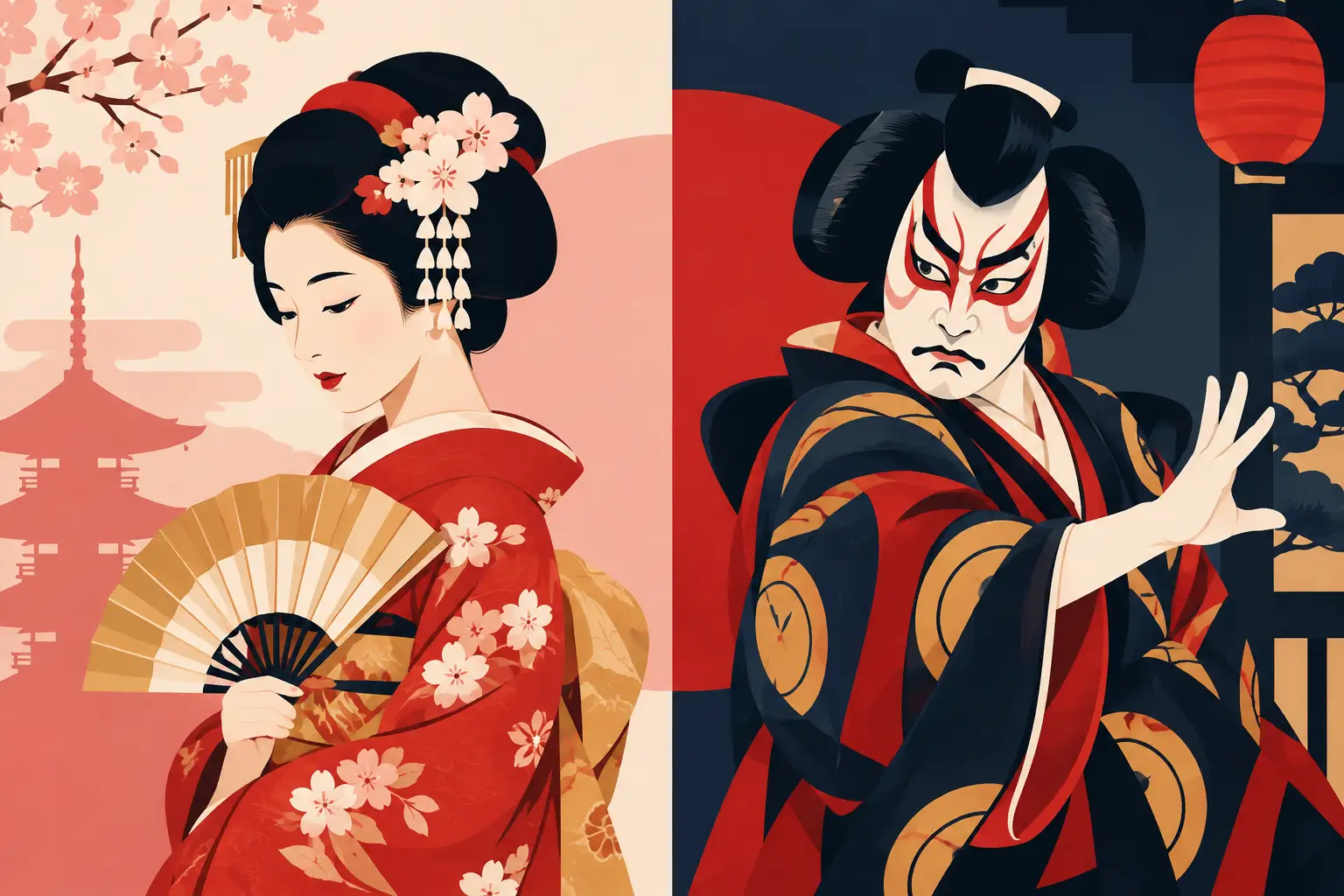
A geisha entertainment versus kabuki show decision is not simply a choice between two Japanese performances. One offers an intimate afternoon or evening of hospitality, conversation, music, dance, and shared ritual. The other places you in the audience for a grand theatrical tradition shaped by dramatic storytelling, elaborate makeup, and centuries of stagecraft. Both can be extraordinary, but they create entirely different memories of Japan.
For travelers planning a meaningful time in Kyoto, the distinction matters. A Kabuki performance is designed to be watched. An authentic geisha gathering is designed to be shared.
目次
Geisha Entertainment Versus Kabuki Show: The Essential Difference
Kabuki is formal theater. It is performed by professional actors on a purpose-built stage before an audience, often in a large theater. Productions use stylized movement, heightened vocal delivery, music, painted faces, richly layered costumes, and stories drawn from history, folklore, and domestic drama. Even when a visitor does not understand every word, the visual world is commanding.
Geisha entertainment, by contrast, belongs to the world of refined hospitality. In Kyoto, geisha are known as geiko, while their apprentices are called maiko. They are highly trained artists and hosts whose work may include traditional dance, shamisen music, singing, conversation, drinking games, and gracious attention to guests. The setting is usually a private dining room, tea house, or carefully arranged cultural venue rather than a theater auditorium.
The difference is one of distance. Kabuki preserves a clear boundary between performer and spectator. A geiko or maiko experience brings guests closer to the artistry itself, while still respecting the traditions and professional boundaries of the performers.
What a Kabuki Show Feels Like
Kabuki is ideal for travelers who want to see a major Japanese performing art in its theatrical form. A performance can be visually magnificent: a hero may strike a frozen pose known as mie, a villain may enter with a burst of energy, or an actor may appear unexpectedly along a walkway that cuts through the audience. Costumes, wigs, lighting, percussion, and the sound of shamisen combine to create a world that feels both ceremonial and vividly alive.
The trade-off is that Kabuki can be less immediately accessible for first-time visitors. The stories may be long, the language is stylized, and the symbolism is not always self-explanatory. Some theaters offer English materials or translation support, but the experience remains largely observational. You are there to appreciate a finished work of theater, not to participate in it.
This distance is part of Kabuki’s appeal. For guests who love opera, ballet, classical theater, or costume design, a Kabuki show can be a memorable cultural occasion. It rewards attention, patience, and an appreciation for spectacle.
What Geisha Entertainment Feels Like
An authentic geiko or maiko experience is quieter in scale but often more personal in impact. Guests may arrive for a Kyoto-style meal and find that the performance is only one part of the occasion. A dancer may perform a graceful seasonal piece. A shamisen player may accompany the room with live music. Then the atmosphere may shift from performance to conversation, photographs, and traditional party games.
These games are not casual entertainment in the modern sense. They are part of ozashiki culture, the formal yet warm social world in which geiko and maiko entertain. A skilled interpreter can make the experience inviting for international guests, explaining what is happening without turning the moment into a lecture. That support is especially valuable for visitors who want to participate respectfully but are unsure of the customs.
The artistry is no less serious than it is in theater. A maiko’s dance, for example, reflects years of disciplined study, control, and attention to gesture. Yet the feeling is more intimate because you see the expressions, hear the instruments at close range, and take part in the social rhythm of the room.
For many guests, this is the rare Kyoto moment they remember most clearly: not only seeing a beautiful performance, but exchanging a smile, joining a game, and leaving with a sense of genuine welcome.
Access and Authenticity in Kyoto
Kabuki is generally straightforward to access through public ticketing. It is a public art form, and attending a show requires little more than selecting a date, seat, and program that suit your schedule. Kyoto visitors may also encounter Kabuki-related performances or special presentations, though major Kabuki theaters are more strongly associated with other Japanese cities.
Traditional geiko and maiko entertainment is more difficult to arrange independently. Kyoto’s hanamachi, or geisha districts, are living professional communities, not open-air attractions. Private tea house gatherings have historically depended on trusted introductions and long-standing relationships. For overseas travelers, language barriers and uncertainty around etiquette can make authentic access feel out of reach.
This is where a curated experience has real value. A reputable, reservation-based program can offer a respectful setting, confirmed attendance by real performers, clear inclusions, and English-speaking support. Rather than trying to navigate a private cultural world alone, guests can enjoy it with confidence and proper context.
At GEISHAKYOTO, this approach may include Kyoto cuisine, traditional dance, geisha entertainment games, professional-style photo opportunities, souvenirs, and English interpretation, with live shamisen included in selected plans. The experience is structured for comfort, but the cultural atmosphere remains rooted in the traditions of Kyoto hospitality.
The Role of Dining
Dining is another meaningful distinction. At a Kabuki show, food may be available at the theater, but it is separate from the performance itself. You may enjoy a bento during an interval or plan a meal before or after the curtain, much as you would for a concert or play.
With geisha entertainment, dining is often part of the cultural setting. The pacing of the meal, the seasonal presentation of Kyoto cuisine, the conversation, and the performance all belong to the same occasion. This makes the experience especially suited to honeymooners, private groups, milestone celebrations, and travelers who prefer one polished, immersive event over a sequence of separate reservations.
That said, it depends on what you want from the evening. If your priority is dramatic theater and a large-scale cultural production, Kabuki is the stronger choice. If your priority is human connection, refined dining, and a more personal encounter with Kyoto’s living arts, geisha entertainment is likely to feel more rewarding.
Etiquette: Audience Rules and Guest Participation
At Kabuki, the etiquette is familiar to most theatergoers. Arrive on time, silence your phone, follow the theater’s photography rules, and remain attentive during the performance. There may be enthusiastic calls from experienced audience members at particular moments, but visitors are not expected to participate in them.
A geiko or maiko gathering calls for a slightly different kind of awareness. Guests should arrive neatly dressed, be present rather than absorbed by their phones, and allow the host or interpreter to guide the timing of photographs and conversation. You do not need to know Japanese customs perfectly. What matters is curiosity, courtesy, and a willingness to follow the room’s lead.
Respect also means understanding what you are not purchasing. You are not gaining access to a private life or a costume spectacle. You are being welcomed into a professional cultural experience led by trained artists. That distinction is central to authentic geisha entertainment and makes the encounter more meaningful.
Which Experience Should You Choose?
Choose a Kabuki show if you are drawn to theatrical grandeur, visual storytelling, and the pleasure of witnessing a historic performance tradition from the audience. It is an excellent choice for travelers who enjoy the arts and are comfortable letting the mystery of the story be part of the experience.
Choose geisha entertainment if you want a more intimate Kyoto occasion with live traditional arts, dining, photographs, and guided participation. It is particularly compelling if you have limited time in Kyoto and want one elegant experience that brings together cuisine, music, dance, hospitality, and cultural context.
There is no need to treat the two as rivals. Kabuki reveals the scale and drama of Japanese theater. Geiko and maiko entertainment reveals the precision, warmth, and social grace of Kyoto hospitality. If your itinerary allows for both, each will deepen your appreciation of the other.
When choosing only one, consider the kind of story you want to bring home. A Kabuki show gives you the image of a magnificent stage. A geisha gathering gives you the memory of having been welcomed into the room.