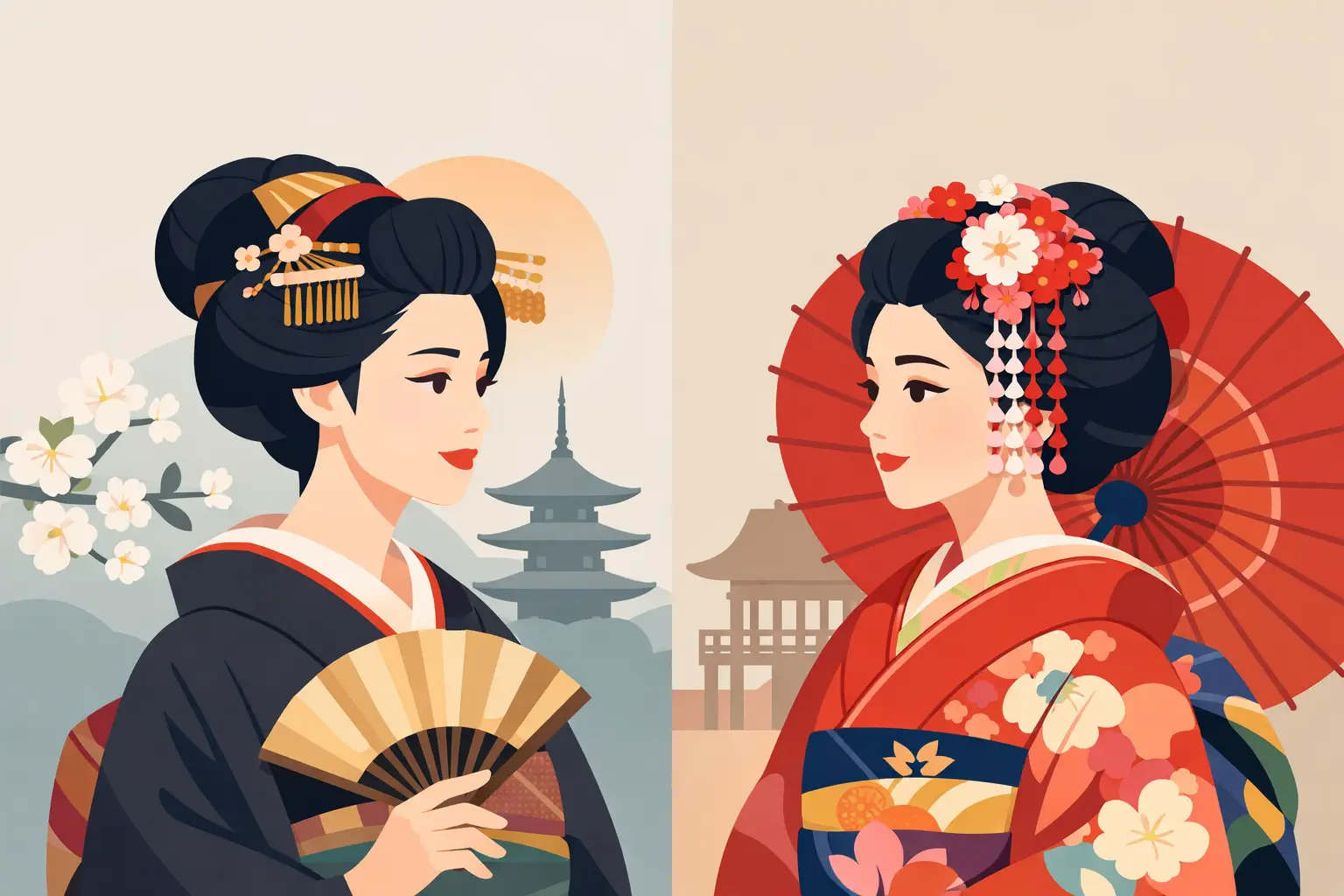
A glimpse of white makeup, silk sleeves, and jeweled hair ornaments can make the difference between geisha and maiko seem difficult to see at first. Yet in Kyoto’s refined hanamachi, or geisha districts, that difference carries real meaning. It reflects years of training, distinct roles, and a living tradition shaped by discipline, artistry, and hospitality.
For visitors, understanding the distinction adds depth to a rare Kyoto moment. It also helps you appreciate why an evening or lunch in the company of a geiko or maiko is far more than a photograph in an elegant setting.
目次
The difference between geisha and maiko starts with experience
A maiko is an apprentice entertainer. She is in the formal training stage of becoming a professional, developing the arts and social grace required to work in Kyoto’s traditional entertainment world. A geisha is a fully established professional. In Kyoto, the preferred local term is geiko, meaning a woman of art.
The word geisha is widely understood internationally, and it is not incorrect. But when speaking specifically about Kyoto, geiko is a thoughtful and respectful term. A maiko is not a lesser version of a geiko. She is a practitioner in an intensive, highly visible apprenticeship, with her own celebrated style and responsibilities.
Traditionally, a young woman begins with foundational preparation before entering public life as a maiko. She studies dance, music, singing, tea service, Kyoto dialect, seasonal customs, and the subtle art of conversation. Her daily schedule may include lessons, rehearsals, and engagements at tea houses, known as ochaya.
After several years, when her teachers and house determine she is ready, a maiko may make the transition to geiko. This formal change is called erikae, or “turning of the collar.” Not every apprentice follows precisely the same timeline, and a person’s path is shaped by her artistic development and the customs of her district.
Their appearance tells a story
The most visible difference is dress. A maiko’s appearance is designed to convey youth, apprenticeship, and the seasonal beauty of Kyoto. Her kimono often has long, flowing sleeves and richly detailed patterns. She wears a long, trailing darari obi, a distinctive sash that falls down her back, along with high wooden okobo sandals.
Her hairstyle is equally recognizable. Maiko traditionally style their own hair into elaborate arrangements, decorated with seasonal kanzashi ornaments. In spring, these may feature delicate blossoms; in autumn, they may reflect the colors and forms of the season. These ornaments are not random decoration. They are part of a visual language connected to the Kyoto calendar.
A geiko’s style is generally more restrained. Her kimono tends to have shorter sleeves and a more understated elegance, while her obi is tied in a different, more compact style. Geiko commonly wear a wig for formal engagements rather than styling their own hair in the elaborate maiko manner. Their makeup and hair ornaments are usually quieter as well.
These distinctions are useful guidelines, not a costume checklist. Dress can vary according to the occasion, season, performance, and individual district. The artistry lies in the details, and those details have been refined over generations.
Both are accomplished artists and hosts
It is easy to focus on clothing, but the heart of geiko and maiko culture is performance and hospitality. Both entertain guests through traditional Japanese arts, including classical dance, song, shamisen music, and graceful games played during ozashiki gatherings.
A geiko often brings the assurance of long experience. She may be an accomplished musician, dancer, singer, or conversationalist, with a poised ability to set the tone for a room. Her work involves not only artistic presentation but also attentiveness: knowing when to encourage a guest, when to explain a custom, and when to let a beautiful moment speak for itself.
A maiko participates in these occasions while continuing her training. She may perform dance, join in games, serve sake, and engage guests with the warmth and energy of an emerging artist. Watching a maiko perform can be especially moving because her presence expresses both the discipline of tradition and the promise of what she is still becoming.
Neither role should be understood as a tourist attraction in the ordinary sense. Geiko and maiko are professional cultural practitioners, and their appearances are arranged through established relationships and proper venues. Their work preserves traditions that require years of study and a deep commitment to their communities.
What visitors may see in Kyoto
In districts such as Gion Kobu, Pontocho, Miyagawacho, Kamishichiken, and Gion Higashi, visitors may occasionally see geiko or maiko walking to an appointment. These are working professionals moving between engagements, not performers waiting for public interaction.
A respectful encounter means giving them space, avoiding blocking narrow streets, and asking before taking a close photograph. Following, touching, calling out, or treating their commute as a spectacle takes away from the dignity of the setting. Kyoto’s historic lanes are at their most beautiful when visitors approach them with the same care they would offer a private gallery or place of worship.
There is also a practical reason to choose a trusted, arranged cultural experience rather than relying on a chance street sighting. A genuine engagement offers context. You can see a performance as it is meant to be presented, understand the etiquette of the room, and enjoy conversation without uncertainty. For international guests, English interpretation can make the artistry, humor, and customs far more accessible.
At GEISHAKYOTO, curated dining occasions are designed around this kind of meaningful access: Kyoto cuisine, traditional entertainment, professional photo opportunities, and a welcoming setting in which guests can appreciate the performers with confidence and respect.
How the experience feels different
If you are deciding whether to meet a geiko or maiko, there is no universal “better” choice. It depends on the kind of memory you hope to create.
A maiko gathering often feels especially vivid and visually distinctive. The ornate kimono, seasonal hair ornaments, and youthful elegance create the Kyoto image many first-time visitors imagine. It can be a wonderful choice for honeymooners, families celebrating a milestone, or travelers seeking a beautifully photogenic cultural occasion.
A geiko experience may feel more intimate, polished, and artistically mature. Guests who are interested in music, classical dance, refined conversation, or the quiet confidence that comes with years of practice may be drawn to a geiko’s presence. A higher-tier program that includes live shamisen, for example, gives guests a closer appreciation of the musical foundation behind the performance.
The most rewarding experiences do not ask guests to judge one against the other. They create the conditions to recognize the distinctive beauty of each stage: the maiko’s dedication to learning and the geiko’s command of a lifelong art.
A few words that show respect
Using the right language is a gracious beginning. In Kyoto, “maiko” refers to an apprentice and “geiko” to a professional. “Geisha” remains a broadly accepted English-language term, particularly when discussing the tradition across Japan, but geiko is more specific to Kyoto.
Avoid assumptions based on films, costumes, or popular myths. Geiko and maiko are not defined by romance, nor are they simply symbols from another era. They are contemporary women practicing demanding traditional arts within a professional world that values discretion, skill, and trust.
When you have the opportunity to meet one, arrive on time, follow the guidance of your host or interpreter, and allow the occasion to unfold at its own pace. A sincere question about dance, music, seasonal design, or training is often far more meaningful than trying to recreate a scene from a travel brochure.
The finest way to remember the difference is not by counting hair ornaments or studying kimono details. It is by noticing the devotion behind each gesture, then giving that artistry the attention it deserves.
AUTHENTIC KYOTO EXPERIENCE