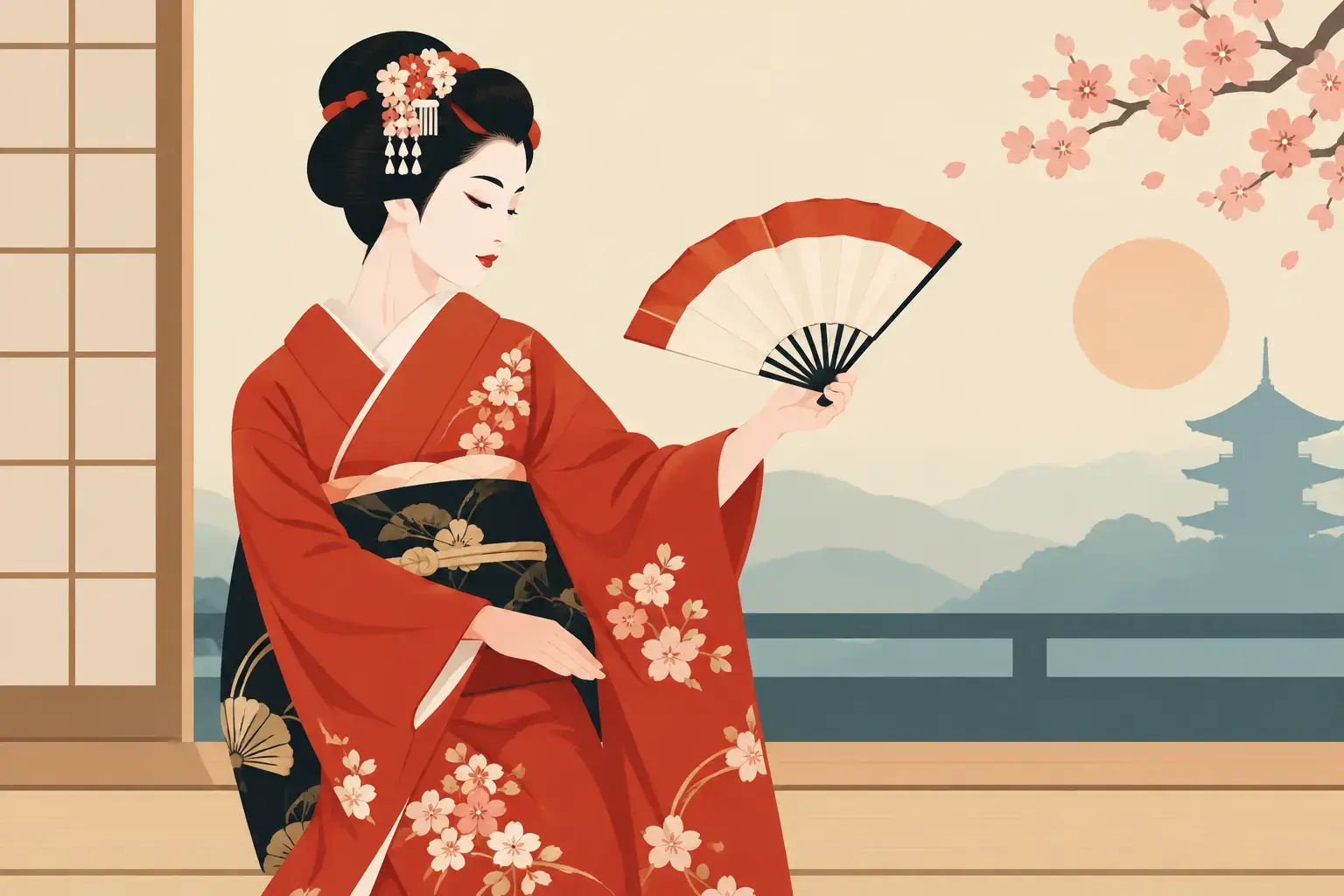
When the shamisen begins and a maiko enters the room, the atmosphere changes at once. This is not a staged attraction to consume quickly between sightseeing stops. To respect geisha performance customs is to recognize the years of artistic discipline, hospitality training, and cultural knowledge present in that moment.
For international guests, a refined Kyoto entertainment experience can feel wonderfully unfamiliar. The most gracious response is not to worry about knowing every rule. It is to arrive with curiosity, follow the guidance of your host, and give the performers the attention their art deserves. A few thoughtful habits allow you to relax and enjoy a rare Kyoto moment with confidence.
目次
Respect Geisha Performance Customs Before You Arrive
In Kyoto, the term geiko is commonly used for an accomplished entertainer known elsewhere as a geisha. A maiko is an apprentice performer, recognized for her distinctive dress, hairstyle, and early stage of training. Both are professional artists and hosts, not costumes, characters, or public curiosities.
This distinction shapes the tone of the occasion. A private lunch or dinner with geiko or maiko may include seasonal dance, shamisen music, conversation, traditional games, photographs, and exceptional Kyoto cuisine. Yet each element has its own rhythm. The performers are there to create an elegant gathering, and guests are invited to participate with warmth and consideration.
Reservations are especially valuable because they establish expectations before the event begins. A well-curated experience provides a clear schedule, appropriate interpretation, and guidance on when photographs or conversation are welcome. This structure does not make the occasion less authentic. It gives guests the ease to be present rather than uncertain.
Arrive punctually. In a setting where food, music, and performance are carefully timed, late arrivals can disrupt the flow for everyone. If you are attending with a private group, encourage your companions to put phones away before the performance begins and to treat the occasion as a shared cultural event rather than a photo stop.
Dress for the setting, not for a costume
There is no need to wear traditional Japanese clothing unless it has been arranged as part of your experience. Elegant smart casual attire is usually an excellent choice. Choose clothing that feels polished and comfortable for seated dining, and avoid anything likely to create noise or distraction during a quiet dance.
Some venues may ask guests to remove shoes or may have specific seating arrangements. Your host will explain what is expected. If you are unsure, simply ask. Quiet confidence is always more fitting than trying to imitate customs you have not been invited to follow.
During a Dance or Shamisen Performance
A geiko or maiko dance can appear effortless, but its precision is the result of intense practice. The gestures, fan work, costume, music, and facial expression may draw on seasonal imagery, classical literature, or the traditions of a particular Kyoto district. You do not need to understand every reference to appreciate the artistry. Your full attention is already a meaningful form of respect.
Avoid speaking, moving around the room, or raising a phone during the dance unless your host has specifically invited photography. Even a quiet conversation can break the concentration of the room. If photographs are permitted, take them discreetly and without flash. Never step into the performance space or block another guest’s view in search of a closer angle.
Applause is welcome at the end of a performance. Follow the room if you are uncertain about timing. In intimate settings, a sincere “thank you” after the applause can feel more natural than an exaggerated response. The goal is appreciation, not spectacle.
Live shamisen deserves the same attentiveness. The instrument’s sound can be delicate, rhythmic, and surprisingly expressive. It may accompany dance, storytelling, or singing, and the pauses are part of the performance. Let silence do its work.
Photography is an invitation, not an assumption
Photographs with geiko or maiko are often a treasured part of a premium Kyoto experience. When a photo opportunity is offered, follow the organizer’s direction on where to stand, how many images to take, and whether group or individual photographs are possible.
Ask before sharing a close-up image on social media if guidance has not already been provided. Never touch a performer, adjust her kimono, hair ornaments, or makeup for a photograph. The attire is highly detailed and can be delicate. Respecting physical space is one of the clearest ways to show good manners.
Outside the venue, the same principle matters even more. Do not follow, approach, or photograph geiko and maiko on the street without permission. They may be traveling to work or attending to private responsibilities. An authentic encounter is one arranged with consent and care, not pursued in public.
Conversation, Games, and Hospitality
Conversation is often one of the most memorable parts of an evening. Geiko and maiko are skilled in creating a welcoming atmosphere, but they are not expected to answer intrusive questions about their private lives, income, relationships, or exact schedules. Treat them as you would any accomplished professional host: with interest, courtesy, and appropriate boundaries.
Good conversation can begin with the performance, Kyoto’s seasons, favorite foods, music, crafts, or what you have enjoyed during your visit. If an English-speaking interpreter is present, allow time for translation rather than speaking over it. A short, thoughtful question often leads to a better exchange than a rapid series of personal ones.
Traditional entertainment games may also be part of the gathering. These are lighthearted, social, and sometimes competitive, but the point is shared enjoyment rather than winning. Join when invited, laugh at your own mistakes, and follow the rules as explained. If alcohol is served, participation should always remain comfortable. It is perfectly acceptable to decline a drink politely or choose a nonalcoholic alternative.
Tipping customs can differ from what many American travelers expect. In formal Japanese hospitality, direct cash tips may be awkward or inappropriate, particularly if service is included in a curated package. Unless your host clearly advises otherwise, a sincere thank-you is the most elegant gesture.
Respect Is Also About Choosing the Right Setting
Not every geisha-related activity offers the same level of access, context, or care. A rushed encounter may leave guests unsure of what they have witnessed and performers without the respectful environment their work merits. For travelers who value authenticity, the setting matters as much as the performance itself.
Look for an experience that identifies what is included, explains the role of interpretation, and gives guests enough time to enjoy dining, artistry, and conversation without pressure. A small, hosted occasion is often better suited to first-time visitors than an unstructured search for a chance encounter in Gion.
At GEISHAKYOTO, curated dining experiences are designed to make this world approachable for overseas guests while preserving its sense of occasion. Clear guidance, English support, traditional entertainment, and dedicated photo opportunities help guests participate naturally, without turning a refined cultural exchange into a guessing game.
The Grace of Being Fully Present
The finest etiquette is not a performance of your own. It is a willingness to notice what is being offered: the quiet before the music begins, the precision of a sleeve movement, the hospitality behind a shared game, and the care taken to welcome you into a tradition that is both living and deeply rooted.
Bring your attention, your patience, and your gratitude. In return, a geiko or maiko performance can become more than a beautiful memory from Kyoto. It can be a moment of genuine connection, experienced with the grace it deserves.