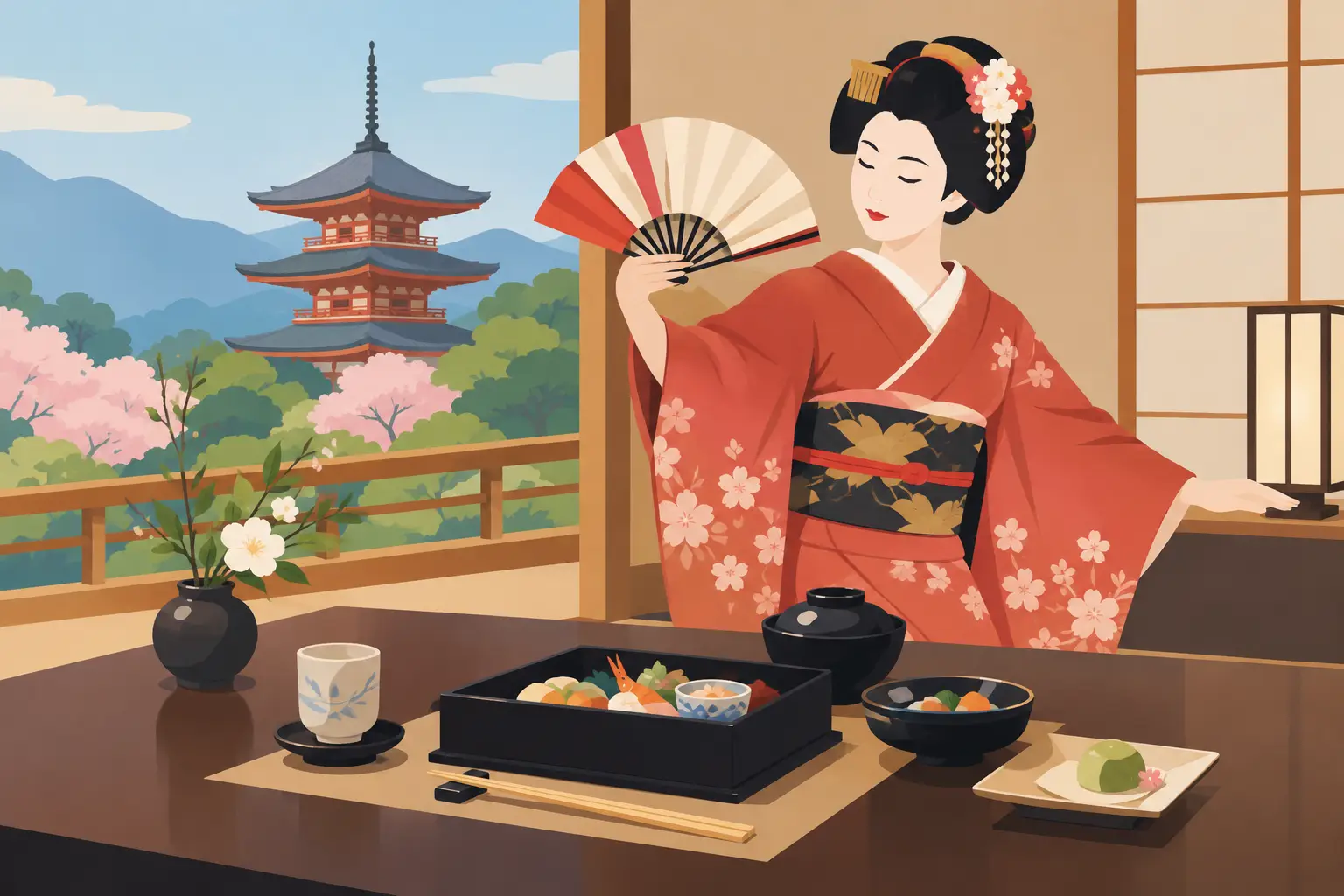
A traditional entertainment lunch Kyoto offers is not simply a meal with a performance added between courses. At its best, it is a rare Kyoto moment: seasonal cuisine, poised conversation, music, dance, and hospitality arranged with the care that this city has long reserved for meaningful occasions. For visitors who want more than a glimpse of geisha culture from the street, lunch provides an elegant and approachable introduction.
The appeal is especially strong for travelers with limited evening availability, families celebrating together, honeymooners, and private groups who prefer to experience Kyoto’s refined traditions in daylight. The setting may feel intimate and exclusive, yet the experience should also feel comfortable. With thoughtful English support and gentle guidance, guests can focus on the pleasure of the occasion rather than worry over unfamiliar customs.
目次
Why a Traditional Entertainment Lunch in Kyoto Is Different
Kyoto’s entertainment districts are closely associated with geiko and maiko, the local terms often grouped under the word geisha. A geiko is an accomplished professional entertainer, while a maiko is an apprentice whose training includes dance, music, conversation, and the etiquette of traditional hospitality. Their artistry is the result of years of disciplined study, not a costume or a sightseeing spectacle.
That distinction matters. An authentic cultural lunch should present these artists with respect, allowing guests to appreciate their performance and presence without treating the occasion as a staged novelty. The atmosphere is graceful but not stiff. Guests are welcomed into a world that can otherwise feel difficult to approach, with the structure, interpretation, and reassurance that international visitors need.
Lunch also has a character of its own. Evening ozashiki-style entertainment can be deeply atmospheric, but it often requires more time, more formal arrangements, and greater familiarity with Kyoto’s dining culture. A daytime experience offers a polished alternative. You can enjoy a memorable cultural occasion and still have time for a temple visit, a garden walk, or a relaxed afternoon in Gion.
What to Expect at a Traditional Entertainment Lunch Kyoto Experience
The finest experiences are carefully paced. Rather than rushing guests from one highlight to the next, they allow the meal, artistic presentation, and personal interaction to unfold naturally. Exact inclusions vary by package, but several elements create the feeling of a complete occasion.
Kyoto cuisine with a sense of season
The meal is an essential part of the experience, not background to the entertainment. Kyoto-style cuisine is often shaped by seasonality, visual balance, and delicate flavors. Expect thoughtfully arranged dishes that reflect the city’s culinary restraint, whether presented as a multi-course meal or an elegant lunch set.
For many overseas guests, this is a welcome alternative to navigating an unfamiliar fine-dining menu alone. A curated lunch makes the experience feel considered from the first course onward. If you have dietary restrictions, communicate them when reserving. Premium hospitality can often accommodate requests, but advance notice is essential and not every traditional preparation can be altered without compromise.
Dance, shamisen, and living artistry
A traditional dance performance is often the emotional center of the afternoon. The movements may appear effortless, yet each gesture is precise, shaped by music, story, and season. A dance about spring rain or autumn longing communicates through expression and rhythm as much as through narrative, so no prior knowledge is required to be moved by it.
In higher-tier arrangements, live shamisen adds another dimension. Its clear, percussive sound changes the room immediately, carrying both energy and intimacy. Watching the relationship between dance and live music is a privilege that photographs cannot fully capture.
Games and conversation that break the ice
Traditional parlor games bring a lighter spirit to the occasion. They are not about winning with perfect technique. They create a shared moment of laughter, especially when guests are invited to join with clear explanation and encouragement.
This is where interpretation becomes invaluable. Conversation with a geiko or maiko can be warm and engaging, but language should never be a barrier between guests and the experience. English-speaking support gives context to the customs, helps guests participate naturally, and allows questions to be answered with appropriate care.
Photographs that feel considered
A professional-style photo opportunity is often one of the most cherished elements of a cultural lunch. It gives guests a beautiful record of an exceptional afternoon without interrupting the performance or asking artists to pose repeatedly during private moments.
Follow the host’s direction on when photos are welcome. In a well-organized experience, there will be a suitable time for them. That small measure of structure protects the dignity of the occasion while ensuring you leave with a meaningful keepsake.
Choosing the Right Lunch Experience
Not every guest wants the same pace or level of access. A couple celebrating an anniversary may value a more intimate setting, live shamisen, and time for photographs. A multigenerational family may prioritize a lively performance, approachable games, and a schedule that fits comfortably around sightseeing. Corporate or private groups may need dependable timing, clear communication, and a setting that feels suitably distinguished.
Look closely at what the package includes. Duration, cuisine, number of performers, entertainment elements, interpretation, photographs, and souvenirs all affect the character of the day. A lower-tier plan can be an elegant introduction, while a more elevated plan may offer a fuller artistic program and a stronger sense of occasion.
There is also a practical trade-off between privacy and availability. The most exclusive formats may have limited dates, while shared experiences can offer a more social and accessible way to participate. Neither is automatically better. The right choice depends on whether you want a private celebration or are happy to share the pleasure of the afternoon with fellow travelers.
GEISHAKYOTO presents this kind of cultural hospitality in a refined, bookable format designed to make the experience clear and welcoming for international guests. The most important consideration is to choose a provider that is transparent about what is included and respectful in how it presents Kyoto’s living traditions.
Etiquette That Lets You Relax
Good etiquette is less complicated than many visitors fear. Arrive on time, dress neatly, and follow the guidance of your host. You do not need formal Japanese attire or a detailed knowledge of ritual to be a gracious guest. Curiosity, attentiveness, and respect matter far more.
Avoid touching a performer’s hair, kimono, or accessories. These garments are highly detailed and require careful handling. If you wish to ask about a dance, an instrument, or a tradition, do so through the interpreter or during a natural pause in the program. Polite questions are usually welcome when offered with genuine interest.
A small toast, a shared laugh during a game, and a sincere expression of thanks are all entirely appropriate. You are not expected to perform perfection. Traditional hospitality is designed to put guests at ease, and the best hosts make that generosity feel effortless.
Make It a Highlight, Not an Interruption
Reserve early if your Kyoto visit falls during cherry blossom season, autumn foliage, major holidays, or peak spring and fall travel periods. Build a little breathing room around the lunch rather than scheduling it between tightly timed attractions. Arriving unhurried allows you to notice the details: the table setting, the sound of shamisen strings, the movement of a sleeve during dance, and the quiet confidence of Kyoto hospitality.
Choose an experience that feels worthy of the memory you want to take home. A thoughtfully arranged afternoon can offer something increasingly rare in a crowded travel itinerary: time to sit down, be welcomed, and encounter Kyoto tradition with the attention it deserves.