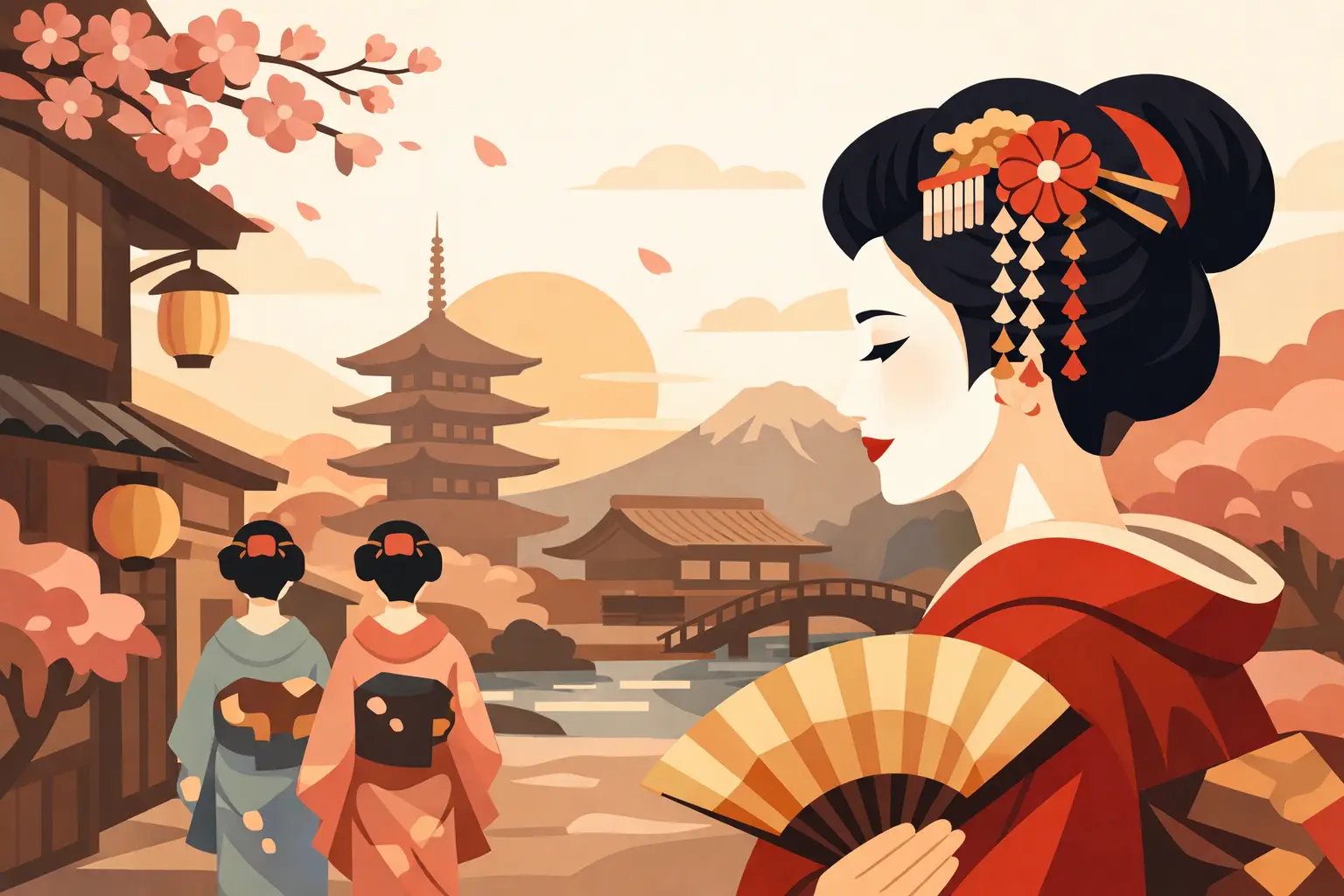
A private Kyoto gathering becomes far more memorable when you understand the grace behind it. Geisha customs are not a collection of rigid rules designed to make visitors anxious. They are expressions of consideration: for the performers, the host, the setting, and the shared moment at the table.
For international guests, the most reassuring fact is simple: you are not expected to arrive already fluent in Kyoto etiquette. A thoughtfully hosted experience provides guidance, interpretation, and a welcoming setting. What matters most is curiosity, restraint, and a sincere appreciation for the artistry in front of you.
目次
What “Geisha” Means in Kyoto
In Kyoto, the term geiko is commonly used for an established professional artist, while maiko refers to an apprentice. Outside Japan, “geisha” is the term most travelers recognize, and it is widely used in English. Both geiko and maiko train in traditional Japanese arts that may include dance, shamisen, singing, refined conversation, and the social customs of formal entertainment.
Their role is often misunderstood. A geiko or maiko is not a costume, a sightseeing attraction, or a performer available on demand in public streets. She is a highly trained cultural professional working within a tradition shaped by Kyoto’s historic hanamachi, or geisha districts.
That distinction changes the tone of a visit. The privilege is not simply seeing formal dress and elaborate hair ornaments. It is being welcomed into a living artistic tradition with the proper setting, host, and rhythm.
Geisha Customs Begin With Respectful Presence
The finest etiquette is often quiet. Arrive on time, follow the guidance of your host, and keep your attention on the gathering rather than treating every moment as content to capture. In an intimate setting, this creates the relaxed atmosphere in which conversation, music, and hospitality can unfold naturally.
A modest bow is an appropriate greeting. Your host or interpreter can introduce you and explain how to address the geiko or maiko. Guests do not need to imitate Japanese phrases perfectly. A warm greeting, patient listening, and a genuine “thank you” are more meaningful than rehearsed formality.
There is also no need to be overly solemn. Kyoto entertainment has a lighthearted side. Traditional party games may invite laughter and friendly competition, while conversation can be playful and personal. The balance is to participate warmly without becoming overly familiar. Let the artists and host set the pace.
Conversation: Curious, Not Intrusive
Thoughtful questions about music, dance, seasonal traditions, Kyoto, or an artist’s training are generally welcome when the setting allows. Questions that demand private details, speculate about personal relationships, or reduce an artist to an exotic image are best avoided.
It also helps to remember that the evening or lunch is not an interview. A skilled interpreter makes conversation accessible, but pauses are part of the experience too. Watch a dance. Listen to the shamisen. Notice the precision of a gesture, the seasonal design of a kimono, or the careful presentation of a dish. These details carry meaning without needing to be explained at every turn.
Dining Etiquette at a Kyoto Gathering
A curated meal is often central to a geiko or maiko experience. Kyoto-style cuisine is prized for seasonality, composition, and quiet precision. The respectful response is uncomplicated: appreciate the food, follow your host’s lead, and avoid rushing.
If you are unsure how to use chopsticks, ask discreetly or use the provided utensils if available. Do not point with chopsticks, leave them standing upright in rice, or pass food directly from one pair of chopsticks to another. These are simple customs, and no considerate host expects perfection from a first-time guest.
When drinks are served, the host may guide the flow of a toast. Wait briefly before beginning, particularly in a formal setting. If you do not drink alcohol, that is entirely manageable – simply let the team know in advance where possible. Premium hospitality should accommodate dietary needs and preferences without compromising the occasion.
The greatest courtesy is being present for the meal. Put phones away between photographs, avoid loud calls, and allow the table to remain a place of conversation and shared enjoyment.
Photography: Ask First, Then Enjoy the Moment
Photographs are often among the most cherished keepsakes of a Kyoto cultural experience. Yet photography is one area where geisha customs and the specific rules of the venue matter greatly.
At a professionally arranged gathering, there may be a designated time for photographs with a geiko or maiko. This is ideal: the images are composed gracefully, the artist is prepared, and every guest can enjoy the interaction without interrupting a performance or meal. Follow the photographer’s and host’s direction on where to stand, when to take pictures, and whether video is permitted.
Never assume that every moment is available for recording. During a dance or shamisen performance, guests may be asked to refrain from photography. This is not a barrier to enjoyment. It preserves the concentration of the performance and encourages a deeper memory than a screen can provide.
The same principle applies beyond the venue. Do not stop, chase, touch, or photograph geiko and maiko on Kyoto streets without permission. They may be traveling to work, attending to private obligations, or simply moving through their neighborhood. Respect in public is as meaningful as good manners at a formal event.
Dress and Personal Presentation
For a refined lunch or evening gathering, smart casual attire is usually a comfortable choice. Clean, polished clothing signals respect without requiring guests to dress formally. Consider shoes that are easy to remove if the venue uses tatami rooms, and avoid overly strong fragrance in an intimate dining space.
A kimono rental can be a beautiful addition to a Kyoto visit, but it is not necessary for a geiko or maiko encounter. In fact, choosing clothing that lets you sit comfortably, dine easily, and engage naturally is often the wiser choice. The purpose is not to perform Kyoto culture for the camera. It is to receive it with appreciation.
The Meaning Behind the Performance
A traditional dance may appear delicate, but it is built on years of disciplined training. The controlled pace, small movements of the hands, angle of the fan, and direction of the gaze are intentional. Seasonal imagery is frequently woven into the performance: spring blossoms, summer rivers, autumn moonlight, or winter snow.
Live shamisen adds another dimension. Its clear, percussive sound can feel both intimate and dramatic, particularly in a small room. Rather than applauding at random, watch your host for cues. At the close of a piece, sincere applause is warmly appropriate.
This is where a hosted experience offers real value. With thoughtful English interpretation, the artistry becomes more accessible without turning it into a lecture. You can understand enough to recognize the care in what you are seeing, while still allowing the performance to remain elegant and immediate.
Why a Curated Setting Matters
Historically, access to Kyoto’s traditional entertainment world has depended on introductions, established relationships, and a clear understanding of local customs. That privacy protects both the artists and the integrity of the occasion. It can also make authentic access feel difficult for overseas visitors.
A trusted, reservation-based experience changes that. It creates a setting where guests can meet real geiko or maiko with confidence, enjoy Kyoto dining, participate in traditional entertainment, and receive practical guidance in English. The experience is more approachable, but the cultural standards remain intact.
At GEISHAKYOTO, this balance is designed into the occasion: a polished Kyoto meal, authentic artistic encounters, clear interpretation, and room to enjoy a rare Kyoto moment without uncertainty over etiquette.
The most elegant way to honor geisha customs is not to memorize every gesture. Arrive with respect, follow the room’s rhythm, and let the artistry turn a special meal into a memory that stays with you long after Kyoto.
AUTHENTIC KYOTO EXPERIENCE