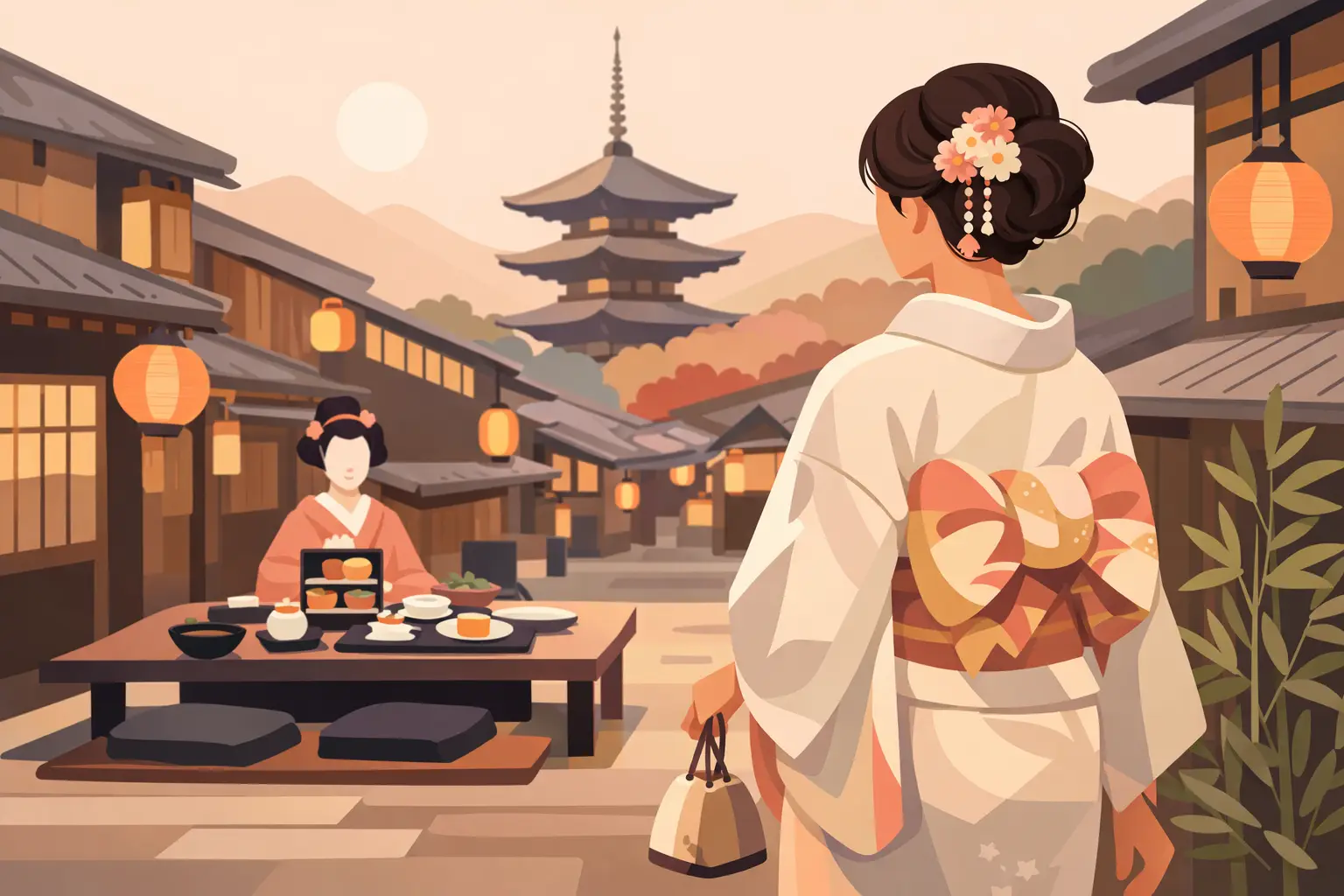
Gion is most revealing at lunchtime. Before evening lanterns glow along Hanamikoji Street and dinner reservations fill the city’s most discreet rooms, the district offers a quieter, more gracious rhythm. To plan a Gion lunch well is to choose more than a place to eat. It is an opportunity to enjoy Kyoto cuisine, seasonal beauty, and, in the right setting, an authentic encounter with the traditions of geiko and maiko.
For international visitors, this can also be one of Kyoto’s more difficult experiences to arrange. The most memorable venues may not feel visible from the street, reservations can be limited, and the etiquette of a traditional entertainment setting is not always obvious. A considered plan turns those uncertainties into a relaxed, luxurious afternoon.
目次
Decide what you want your Gion lunch to be
A Gion lunch can mean very different things. You may simply want an exceptional Japanese meal in an atmospheric neighborhood. Or you may be looking for a cultural occasion: a refined meal accompanied by traditional dance, music, conversation, and the rare pleasure of spending time with geiko or maiko.
Neither choice is more correct, but they create different memories. A standalone lunch allows more freedom to wander before and after your meal. A hosted cultural lunch offers structure, context, and access that individual travelers often cannot arrange on their own. For a honeymoon, anniversary, family celebration, or first visit to Kyoto, the latter can become the centerpiece of the day rather than a pause between sightseeing stops.
It also helps to set expectations around terminology. In Kyoto, the term geiko is used for what international visitors commonly call geisha. Maiko are apprentices, recognized by their elaborate hairstyles, colorful kimono, and youthful style of makeup. Their arts are highly disciplined traditions, not a costumed performance created for tourists. A respectful experience should make that distinction clear while welcoming guests who are new to the culture.
Choose the right time and pace
Lunch is ideal for travelers who want a significant cultural experience without committing an entire evening. It leaves time for a morning visit to Kiyomizu-dera or the gardens of Kodai-ji, then a gentle walk through Gion afterward. It is also a practical choice for guests managing jet lag, families with older children, or anyone who prefers daylight for photographs.
Allow more time than the meal itself. A formal Kyoto lunch is intentionally unhurried. Courses may arrive one by one, each reflecting the season through ingredients, colors, ceramics, and arrangement. If your experience includes entertainment, conversation, photographs, or games, plan for a full afternoon rather than trying to fit in another timed attraction immediately afterward.
Spring and autumn are especially popular, but beauty in Kyoto is not limited to peak foliage or cherry blossom weeks. Early summer brings fresh green gardens and delicate seasonal dishes. Winter can feel particularly intimate, with warm interiors, quieter streets, and cuisine shaped by comforting ingredients. Whenever you visit, reserve early if your lunch involves geiko or maiko, as their schedules are carefully coordinated.
Consider a hosted cultural lunch
A structured lunch experience removes many of the barriers that make traditional entertainment difficult to access. Rather than wondering whether a venue can accommodate English speakers, whether photography is appropriate, or how to request a reservation, you arrive knowing the occasion has been designed for international guests.
At GEISHAKYOTO, curated lunch packages combine Kyoto-style cuisine with an authentic geiko or maiko encounter in a polished, welcoming format. Depending on the selected plan, guests may enjoy traditional dance, ozashiki games, professional-style photo opportunities, souvenirs, English-speaking interpretation, and live shamisen performance. The result is not a rushed sightseeing demonstration. It is a rare Kyoto moment with enough guidance to feel comfortable and enough intimacy to feel personal.
The value of this format is not only convenience. Interpretation helps guests understand what they are seeing and participate naturally in conversation. Cultural context gives a dance, a game, or the sound of the shamisen deeper meaning. For travelers who value authenticity but do not have private local connections, this kind of access can be the most thoughtful way to experience Gion.
What to wear and how to arrive gracefully
Gion does not require formal eveningwear at lunch, but smart, polished clothing suits the setting. Think elegant resort attire rather than sightseeing clothes. A collared shirt, tailored trousers, dress, blouse, or refined knitwear will feel appropriate in most upscale restaurants and cultural venues. Comfortable shoes matter, particularly if you plan to walk the stone lanes before or after lunch.
Avoid treating the neighborhood as a film set. Gion is a living community of homes, businesses, and working teahouses. Keep voices low on narrow streets, do not block entrances, and never pursue or photograph geiko and maiko you happen to see in public. A planned experience offers a far more respectful and meaningful opportunity for photographs than hoping to encounter someone on the way to an appointment.
Arrive 10 to 15 minutes early. Kyoto hospitality often begins before the first course is served, and punctuality shows consideration for the staff, entertainers, and other guests. If you are traveling by taxi, have the venue name and address readily available in Japanese if possible. If you are walking, leave extra time: Gion’s quiet lanes are easy to linger in and surprisingly easy to misjudge on a map.
Understand the meal before you reserve
Kyoto cuisine is often subtle rather than dramatic. The pleasure lies in pristine ingredients, finely calibrated seasonings, and details that reward attention. A kaiseki-style lunch may include a sequence of small courses rather than one large entrée, while other venues may offer a more focused set meal. Both can be excellent, so choose based on the kind of pace and occasion you prefer.
Dietary requirements deserve attention well in advance. Vegetarian, vegan, gluten-free, halal, and allergy-friendly meals may be possible, but traditional Japanese cooking frequently uses dashi, a stock commonly made with bonito. A request that sounds straightforward in English can involve several ingredients and preparation methods. Give clear, specific information at booking rather than assuming last-minute changes will be easy.
Alcohol is optional, not expected. Sake can be a beautiful accompaniment to seasonal Kyoto dishes, but tea is equally appropriate. If you are joining an entertainment lunch, moderation is wise. The aim is to be present for the performance, conversation, and small rituals that make the occasion memorable.
Plan a Gion lunch around the details that matter
The best reservations are made with a few practical questions in mind. Confirm the start and end time, the exact meeting point, what is included, and whether interpretation is provided. Ask about dress expectations and photography before arriving, especially if you are booking a private room or a geiko and maiko experience.
If you are celebrating, mention it in advance. A birthday, engagement, milestone anniversary, or multigenerational family visit may influence the best package, seating arrangement, or timing. Premium hospitality is most effective when it has room to anticipate your needs.
Think, too, about group size. A private cultural lunch can be wonderful for couples and small groups because the atmosphere feels more conversational. Larger parties may benefit from a clearly organized program that gives everyone a chance to see the performance, participate in games, and take photographs without the event feeling crowded.
Finally, treat the reservation as an anchor, not an item to squeeze between crowded plans. Do not schedule your Gion lunch immediately after a long cross-city transfer or before a train departure. Give the experience a generous margin on both sides. The most refined afternoons in Kyoto are rarely the ones with the fullest itinerary.
Make room for a quieter Gion afterward
After lunch, resist the urge to rush toward the next famous sight. Walk slowly through the preserved streets near Shirakawa, pause beside the canal, or visit a nearby temple garden if time allows. The mood of Gion often settles in after the formal occasion has ended, when you can notice the latticework facades, stone paths, and seasonal arrangements outside shopfronts.
A beautiful lunch in Gion is not defined by how much of the neighborhood you manage to cover. It is defined by the feeling that, for a few hours, Kyoto made space for you to experience its traditions with care. Reserve thoughtfully, arrive with curiosity, and let the afternoon unfold at its own elegant pace.