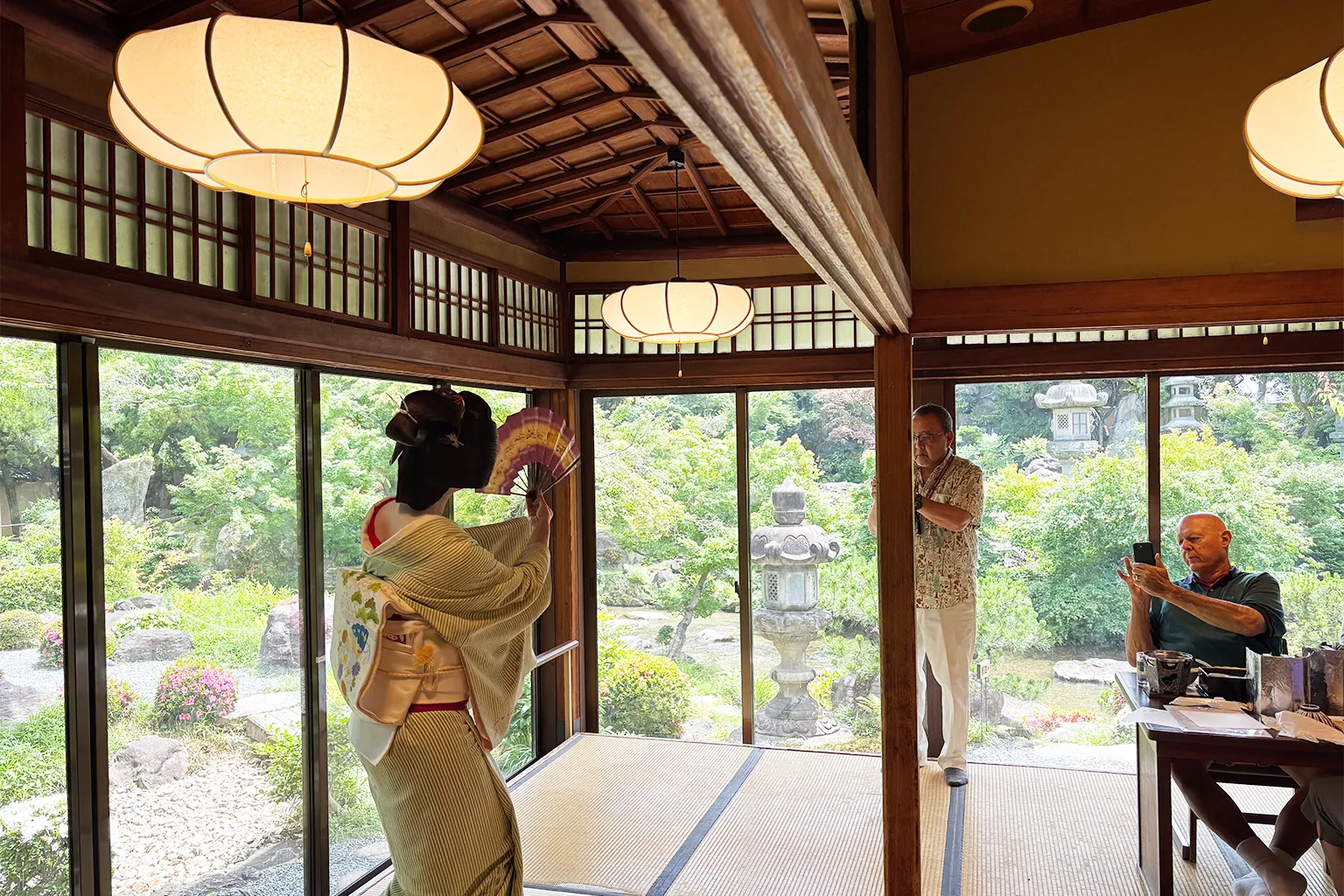
A glimpse of a maiko in a painted white collar and brilliant kimono can feel like the defining image of Kyoto. Yet the most elegant photograph is never the one taken at any cost. Visitors often ask, “do geisha accept photographs?” The answer is sometimes, but only when the setting, timing, and consent are right.
In Kyoto, a photograph can be a beautiful keepsake of a rare cultural encounter. It can also interrupt a working artist, intrude on a private moment, or contribute to the pressure felt by women traveling through the city’s historic geisha districts. Knowing the difference is part of traveling with grace.
目次
Do Geisha Accept Photographs in Kyoto?
Geisha may accept photographs when they have agreed to them, particularly during a hosted cultural experience, a private event, or an arranged portrait session. In Kyoto, geisha are more commonly called geiko, while apprentices are known as maiko. Both are highly trained artists and professional entertainers, not street performers or tourist attractions.
A geiko or maiko walking through Gion may be on her way to an engagement, rehearsal, or a personal appointment. Even if she appears composed and unhurried, stopping her for a photo can make her late and place her in an uncomfortable position. A quick image taken without asking may seem harmless, but it removes her choice from the moment.
The practical rule is simple: do not treat an unexpected street sighting as an invitation. If you hope for a photograph, choose an occasion where photography has been explicitly included or respectfully approved.
Why Kyoto Takes Photograph Etiquette Seriously
The hanamachi, or geisha districts, are living neighborhoods. Their narrow lanes, wooden teahouses, and stone paths are extraordinarily photogenic, but they are also places of work and home. Gion in particular has experienced years of crowding, visitors blocking pathways, and photographers following maiko too closely.
Some private roads and lanes have introduced restrictions and penalties for unauthorized photography. Signs should always be taken seriously, even when other visitors are ignoring them. Avoid photographing through gates, into entrances, or toward private premises. A quiet lane is not a film set, and the presence of a beautifully dressed artist does not change that.
Respectful behavior preserves more than a pleasant atmosphere. It helps protect the privacy and dignity that make Kyoto’s traditional arts possible. For discerning travelers, that restraint is not a limitation. It is what separates a meaningful memory from a rushed souvenir.
The Difference Between Public Sightings and Hosted Encounters
A spontaneous sighting offers no guarantee of access, conversation, or a photograph. You may see only a fleeting moment, and the appropriate response is often simply to let it pass.
A hosted encounter is entirely different. At a properly arranged luncheon or evening event, the geiko or maiko has accepted the engagement, the hosts understand the schedule, and guests are given clear guidance. There may be a designated time for photographs after dance, music, conversation, or traditional games. The result feels relaxed because it is designed with mutual courtesy in mind.
This is also why a planned experience is more rewarding than pursuing a chance encounter in Gion. Rather than trying to capture a stranger in motion, you can meet an artist in a setting that honors her work, hear traditional music, and receive a portrait you will be proud to share.
How to Ask for a Photograph Respectfully
If you meet a geiko or maiko in a setting where interaction is clearly welcomed, ask before lifting your camera. A gentle gesture toward your phone or camera, paired with a polite question, is usually enough. If there is an interpreter or host, let them guide the exchange.
Accept the answer immediately, whether it is yes or no. Do not ask repeatedly, follow behind her, or request additional poses after a brief photo. If permission is granted, keep the moment short and be aware of your surroundings. Do not block a doorway, obstruct a narrow street, or step into traffic for a better angle.
Flash is best avoided unless a host specifically says otherwise. It can be distracting during performances and harsh on the delicate details of makeup, hair ornaments, and silk. A respectful portrait is usually made with soft available light, a calm posture, and a little patience.
When taking a group photo, wait until the geiko or maiko is ready and follow any direction about where to stand. In a formal setting, the host may arrange the photo order so every guest has a chance without delaying the program. This small structure creates a more polished experience for everyone.
Photograph Etiquette During a Geisha Performance
Photography rules during a performance depend on the event. Some hosts welcome guests to take photographs at selected moments. Others request that cameras remain away so the audience can give full attention to the dance, shamisen, singing, and gestures that carry the story.
Follow the instruction given at the beginning of the program. If photography is permitted, silence your phone, turn off flash, and avoid moving around the room. Refrain from holding a camera above other guests’ heads or recording long videos that distract from the performance.
The same principle applies to sharing afterward. A portrait from a hosted event is a lovely reminder of an exceptional Kyoto occasion. Share it thoughtfully, without revealing private locations, misidentifying the artist, or presenting a respectful professional encounter as an unplanned street encounter.
A Few Moments When the Answer Is No
There are situations where photography should not be attempted at all: when signs prohibit it, when an artist is clearly traveling to an appointment, when a performance has not allowed it, or when a private gathering is taking place. Never photograph someone who has asked not to be photographed.
It is also wise to avoid assuming that anyone in kimono is a geiko or maiko. Kyoto residents, visitors, and kimono rental guests may all be dressed beautifully. Speculation, close-up photography, and intrusive questions can quickly become uncomfortable.
The Best Way to Bring Home an Authentic Kyoto Portrait
For travelers who value both access and discretion, a reserved cultural experience offers the most satisfying answer. You are not left guessing what is appropriate, and the artist is not placed in the position of managing an unplanned request. Instead, photography becomes one considered part of a refined occasion.
At GEISHAKYOTO, guests can enjoy an arranged Kyoto dining experience with authentic geiko or maiko entertainment, English-speaking support, and professional-style photo opportunities within the program. The setting allows guests to appreciate performance and hospitality first, then capture a meaningful image at the appropriate time.
There is a meaningful trade-off here. A chance street photograph may feel spontaneous, but it often offers little context and can come at someone else’s expense. A hosted portrait takes planning, yet it gives you something far more lasting: a gracious encounter, a clear understanding of the tradition, and a photograph connected to a real moment of welcome.
A Better Kind of Kyoto Memory
The finest Kyoto photographs hold more than color and costume. They reflect the care with which the moment was approached. When you ask permission, respect boundaries, and choose settings designed for cultural exchange, your image becomes part of the memory rather than the reason for it.
Let the city’s quieter lessons guide you: pause, observe, and allow beauty to unfold on its own terms. That is how a photograph of a geiko or maiko can become not merely impressive, but genuinely personal.
AUTHENTIC KYOTO EXPERIENCE