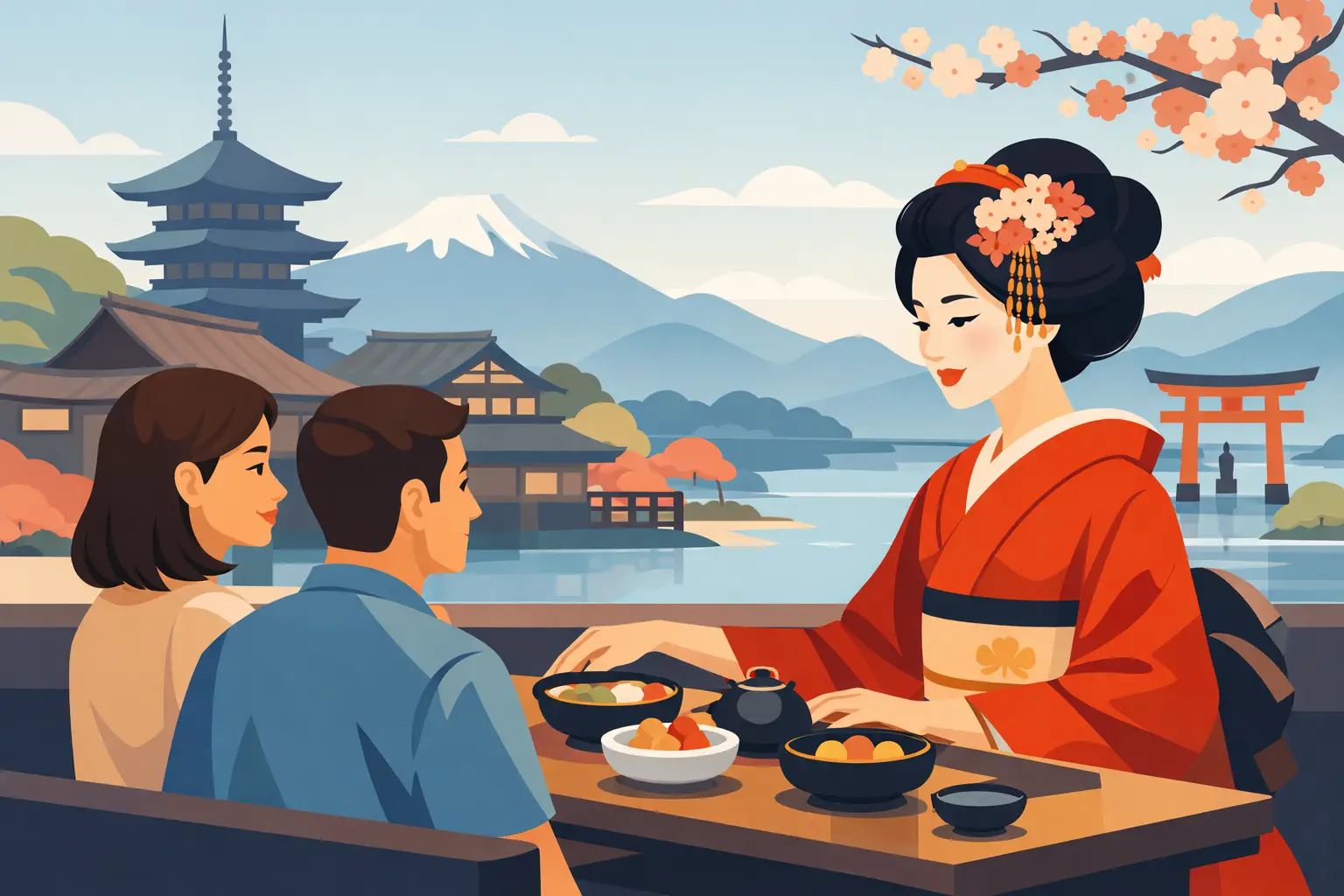
A private room, seasonal Kyoto cuisine, the first notes of shamisen, and a maiko entering in formal dress: this is far removed from a quick lunch between temple visits. So, is a geisha lunch worth it? For travelers seeking a rare Kyoto moment rather than another sightseeing stop, it can be one of the most memorable ways to spend an afternoon.
The value is not simply in the meal. It lies in being welcomed into a world that is usually difficult for overseas visitors to access: the refined hospitality, performance, conversation, and playful traditions of Kyoto’s hanamachi, or geisha districts. The right experience makes this world approachable without reducing it to a spectacle.
目次
What You Are Really Paying For at a Geisha Lunch
A geisha lunch is best understood as a hosted cultural occasion. In Kyoto, geisha are more commonly called geiko, while apprentices are known as maiko. They are professional entertainers trained in traditional dance, music, conversation, and the etiquette of hosting. A lunch with a geiko or maiko is not an opportunity to observe a person at work from a distance. It is an invitation to share a carefully structured gathering shaped by centuries of Kyoto hospitality.
The meal itself is typically a Kyoto-style course, prepared with close attention to seasonality, presentation, and balance. Yet the dining is only one element. Depending on the plan, guests may enjoy a classical dance performance, traditional ozashiki games, shamisen music, photo opportunities, a keepsake, and English interpretation.
That combination matters. Without interpretation, the subtle humor of a game or the meaning behind a performance can be difficult to follow. Without a thoughtfully managed setting, guests may feel unsure of what to say, when to take photographs, or how to participate. A premium lunch removes those uncertainties while preserving the elegance of the occasion.
Is a Geisha Lunch Worth It for Your Kyoto Trip?
For many travelers, the answer depends on what they want their time in Kyoto to feel like. If your priority is seeing as many famous temples, gardens, and neighborhoods as possible, a dedicated lunch may feel like a substantial commitment. It can take several hours and carries a higher price than conventional dining or museum admission.
But if your itinerary has room for one intimate, distinctly Kyoto experience, the value becomes clearer. A geisha lunch offers something architecture and street wandering cannot: direct human connection with a living cultural tradition. You are not simply looking at the outer edges of the geisha world in Gion. You are being received within a formal setting designed for entertainment and hospitality.
It is especially worthwhile for honeymooners, multigenerational families, private groups, and travelers celebrating a milestone. These guests often find that the photographs, shared laughter, and personal atmosphere stay with them long after the details of a particular shrine visit have faded. For executives or hosts traveling with colleagues, it can also become an exceptionally polished way to share Kyoto with guests.
A geisha lunch may be less suitable for visitors who primarily want an inexpensive meal, an unstructured encounter, or a nightlife-focused experience. Authentic traditional entertainment is not casual street theater, and it should not be approached as a chance to intrude on working artists. Guests who arrive with curiosity and respect tend to receive the most from the afternoon.
Lunch Has Advantages Over an Evening Engagement
Evening ozashiki entertainment has an undeniable allure, but lunch is often the more comfortable choice for international visitors. It allows you to experience formal Kyoto hospitality in daylight, then continue with an evening stroll, a reservation at another restaurant, or a quiet return to your hotel.
Lunch also suits travelers managing jet lag, families with older children or teens, and anyone who prefers a less demanding schedule. The setting remains elegant, but the atmosphere can feel more relaxed and accessible. You do not need to understand every rule in advance when your host and interpreter can guide the flow of the gathering.
There is a practical benefit as well: traditional geiko and maiko entertainment is not something most visitors can arrange independently. Established relationships, careful scheduling, and language support are often required. A curated lunch turns an otherwise opaque process into a clear reservation with defined inclusions.
What Makes a Geisha Lunch Feel Authentic
Authenticity is not measured by how mysterious or difficult an experience is to book. A well-organized occasion can be both authentic and welcoming. The essential question is whether the geiko or maiko is a real professional performer and whether the gathering honors the customs of Kyoto entertainment rather than imitating them.
Look for an experience that is transparent about what is included. Guests should know the approximate duration, dining style, whether a dance performance is part of the plan, whether shamisen will be played live, and how English interpretation is handled. Clear details are a sign that the event has been designed with care, not assembled as a vague tourist attraction.
The atmosphere matters, too. A proper setting gives the performers space to present their art, while guests are invited to engage naturally. Traditional games are often a highlight because they replace the anxiety of formal small talk with easy participation. You may not win, but you will understand why these gatherings are remembered for both grace and laughter.
At GEISHAKYOTO, this balance is central: curated Kyoto dining is paired with authentic geiko and maiko entertainment, clear English support, and the practical reassurance overseas guests need to relax into the moment.
The Difference Between Watching and Participating
A public stage performance can be beautiful, particularly for travelers with limited time. It may also cost less. However, it is fundamentally a viewing experience. You sit among an audience, watch the program, and leave.
A geisha lunch is more personal. You share a table, observe the detail of the performance at close range, take part in games, and have the chance to ask questions through an interpreter. The experience is still respectful and professionally hosted, but it becomes a memory with a human dimension.
That distinction explains much of the price difference. You are paying for expert performers’ time, a private or limited-capacity setting, a formal meal, coordination, interpretation, and the privilege of access. For travelers who value meaningful encounters over collecting attractions, this can be a far better use of their Kyoto budget than several smaller activities.
How to Make the Experience Worth Every Moment
Reserve early, especially if your visit falls during cherry blossom season, autumn foliage, year-end holidays, or a major festival period. Availability is shaped by the performers’ professional schedules, and the most desirable dates are limited.
Choose a plan based on the kind of memory you want. A shorter lunch with dance and games can be ideal for a first encounter with Kyoto culture. A higher-tier experience with live shamisen, a more elaborate meal, and dedicated photography may be the better choice for a honeymoon, anniversary, or once-in-a-lifetime family trip.
Dress thoughtfully, but do not overthink it. Smart casual attire is generally appropriate unless your host provides more specific guidance. Arrive on time, listen when etiquette is explained, and ask before photographing. A sincere interest in the music, dance, and traditions will always be more appreciated than trying to perform expertise.
Most of all, protect the time around the reservation. Do not schedule it between two rushed sightseeing appointments. Leave space before and after to arrive composed, enjoy the meal without checking the clock, and let the details settle in. Kyoto rewards unhurried attention.
A geisha lunch is not meant to be an everyday lunch. It is a considered splurge, best chosen by travelers who want to sit close to Kyoto’s living traditions rather than merely pass through them. If that is the kind of journey you are planning, reserve the afternoon and allow it to become the story you tell first when you return home.
AUTHENTIC KYOTO EXPERIENCE