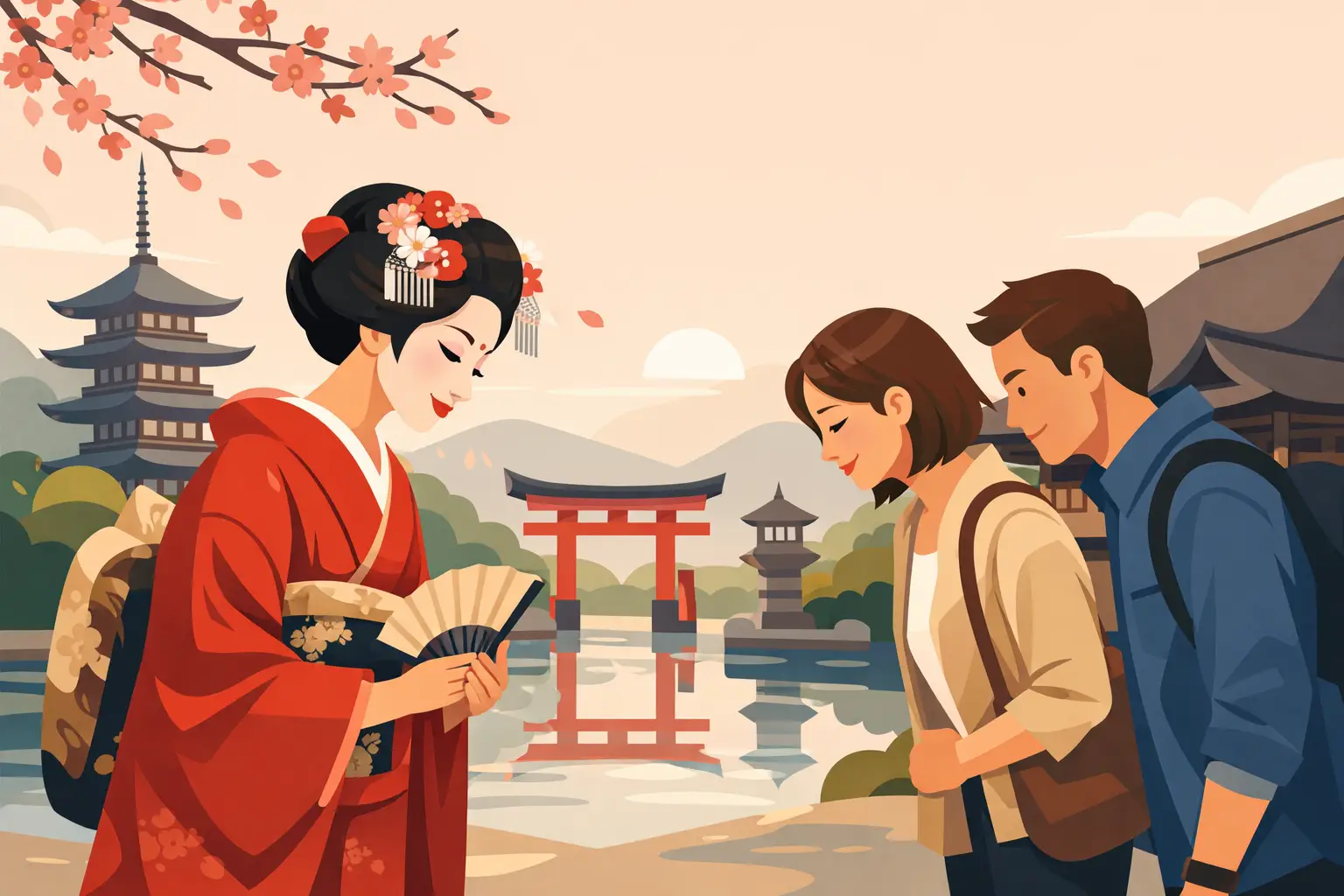
A quiet room in Kyoto can feel more formal than a grand ballroom elsewhere. The details matter – how you enter, where you look, when you speak, and how carefully you listen. That is why geisha etiquette for tourists is not about memorizing stiff rules. It is about showing respect for a living tradition and allowing the experience to unfold with grace.
For many international visitors, the uncertainty is part of the appeal and part of the anxiety. A geisha or maiko experience can feel rare, beautiful, and slightly mysterious. The good news is that good etiquette is less about perfection and more about composure, attentiveness, and willingness to follow the host’s lead.
目次
- Why geisha etiquette for tourists matters
- Before the experience begins
- Entering the room with confidence
- Conversation and conduct during a geisha experience
- Photo etiquette: what respectful guests do differently
- Dining manners in a geisha setting
- What not to ask or assume
- The role of your host or interpreter
- Small gestures that leave the best impression
Why geisha etiquette for tourists matters
Geisha and maiko are not tourist props, street performers, or characters from a costume drama. They are highly trained professionals in Kyoto’s traditional arts, conversation, and hospitality. When guests understand that from the beginning, the atmosphere changes. The interaction becomes less about getting a dramatic photo and more about appreciating skill, refinement, and presence.
This matters especially in Kyoto, where concerns about intrusive tourism are real. Visitors who behave thoughtfully help protect the dignity of the culture they came to admire. They also tend to have a better experience. Respect opens doors that entitlement never will.
Before the experience begins
The first piece of etiquette often happens before you even arrive. Book through a reputable, structured provider or an invited setting rather than trying to approach geisha or maiko on the street. Many travelers do not realize this distinction at first. Seeing a maiko moving quickly between appointments in Gion is not an invitation to stop her, photograph her, or ask for conversation.
Arriving on time is another simple but meaningful courtesy. Traditional hospitality is carefully paced. If your experience includes dining, performance, or interpretation, lateness affects the rhythm for everyone in the room.
Dress should be polished rather than theatrical. You do not need to wear kimono unless your event specifically calls for it. In many cases, elegant, understated clothing is the best choice. Think of the occasion as refined cultural hospitality rather than casual sightseeing.
Entering the room with confidence
The most elegant guests are rarely the most flamboyant ones. They are the ones who pay attention.
When you enter, follow the guidance of your host on where to stand, sit, or place your belongings. If shoes must be removed, do so neatly and without fuss. Keep bags compact and phones out of sight unless the host has indicated that photography is welcome.
A slight bow is always appropriate. It does not need to be deep or exaggerated. Visitors sometimes overcorrect because they worry about doing too little, but theatrical gestures can feel awkward. A calm greeting, a small bow, and a warm expression are enough.
If you are introduced, use respectful language and let the host guide the exchange. You are not expected to know Japanese formalities in detail. What matters more is tone – gentle, attentive, and appreciative.
Conversation and conduct during a geisha experience
One of the most common misunderstandings is assuming the room should be treated like a performance stage only. In reality, many geisha experiences combine artistry with hospitality. That means the atmosphere may shift naturally between dance, music, conversation, and traditional games.
Follow the lead of the geisha, maiko, and interpreter or host. If conversation is invited, keep it thoughtful and light. Questions about training, arts, seasonal traditions, and Kyoto culture are usually more appropriate than intrusive questions about private life, income, relationships, or personal schedules.
This is also where volume matters. In intimate settings, loud reactions can break the mood. Enthusiasm is welcome. Dominating the room is not.
Alcohol, if served, should be enjoyed with restraint. A celebratory lunch or evening can feel relaxed, but excessive drinking quickly becomes disrespectful in a setting built on poise and mutual courtesy.
Photo etiquette: what respectful guests do differently
Photography is often the area where geisha etiquette for tourists matters most. Visitors naturally want a keepsake from a rare Kyoto moment, but not every moment should be captured, and not every setting allows casual photography.
Always wait for permission. If your host says photos are welcome, follow any instructions about timing, distance, and pose. Some experiences include dedicated photo moments, which are far more elegant than interrupting the flow to snap pictures constantly.
Flash is usually best avoided unless you are explicitly told otherwise. Continuous shooting, stepping too close, or treating the guest room like a photo set can quickly make the atmosphere feel transactional.
Just as important, never chase geisha or maiko outdoors for pictures. This has become one of Kyoto’s most visible tourism problems. If you encounter one on the street, the respectful choice is usually to give space and let her continue on her way.
Dining manners in a geisha setting
If your experience includes Kyoto cuisine, the meal is part of the cultural event, not a pause between attractions. Pace yourself and observe the flow of the table. Wait for cues before beginning, especially in a more formal arrangement.
You do not need expert knowledge of kaiseki or traditional dining rules to make a good impression. Basic care goes a long way: handle tableware gently, avoid pointing with chopsticks, and keep your attention on the people and performances around you rather than disappearing into your phone.
If you are unsure how to eat or drink something, pause and watch or quietly ask your host. That is far better than forcing confidence and getting flustered. In premium cultural hospitality, calm curiosity is always more elegant than pretending to know everything.
What not to ask or assume
Respectful curiosity is welcome. Sensational curiosity is not.
Avoid questions that reduce geisha and maiko to stereotypes. Asking whether they are courtesans, questioning their personal lives in a prying way, or treating the tradition as exotic entertainment rather than disciplined artistry can sour an otherwise lovely encounter.
It is also wise not to compare the experience aloud to movies, memoirs, or internet myths as though those versions are definitive. Some guests arrive with romanticized expectations; others arrive with misconceptions. Both can get in the way of genuinely seeing what is in front of them.
A more gracious approach is to ask about the art form itself – dance, music, seasonal customs, apprenticeship, or the history of Kyoto’s hanamachi districts. Those questions tend to lead to richer conversation and a more memorable experience.
The role of your host or interpreter
For international guests, a well-structured experience makes all the difference. A quality host or English-speaking interpreter does more than translate words. They create ease, explain context, and quietly guide etiquette so guests can relax without worrying about every small detail.
This is one reason curated experiences feel so valuable. Rather than guessing what is acceptable, you can focus on enjoying the moment while knowing the setting has been thoughtfully arranged. GEISHAKYOTO, for example, presents this rare Kyoto tradition in a polished, welcoming format that helps overseas guests engage respectfully and comfortably.
Small gestures that leave the best impression
The most memorable guests are not the ones who know every rule. They are the ones who bring sincerity to the room.
Listen closely during performances. Express appreciation without overperforming your own excitement. Accept guidance gracefully. If invited to join a traditional game, participate with good humor rather than self-consciousness. If a souvenir or photo opportunity is included, receive it with gratitude rather than a collector’s mentality.
And if you make a minor mistake, do not panic. A brief apology and a composed adjustment are enough. Traditional hospitality has room for gracious visitors who are learning.
Kyoto rewards a certain kind of attention. When you approach a geisha or maiko experience with humility, elegance, and genuine interest, the occasion becomes more than a luxury activity. It becomes the kind of cultural memory that stays vivid long after the trip itself has ended.
AUTHENTIC KYOTO EXPERIENCE