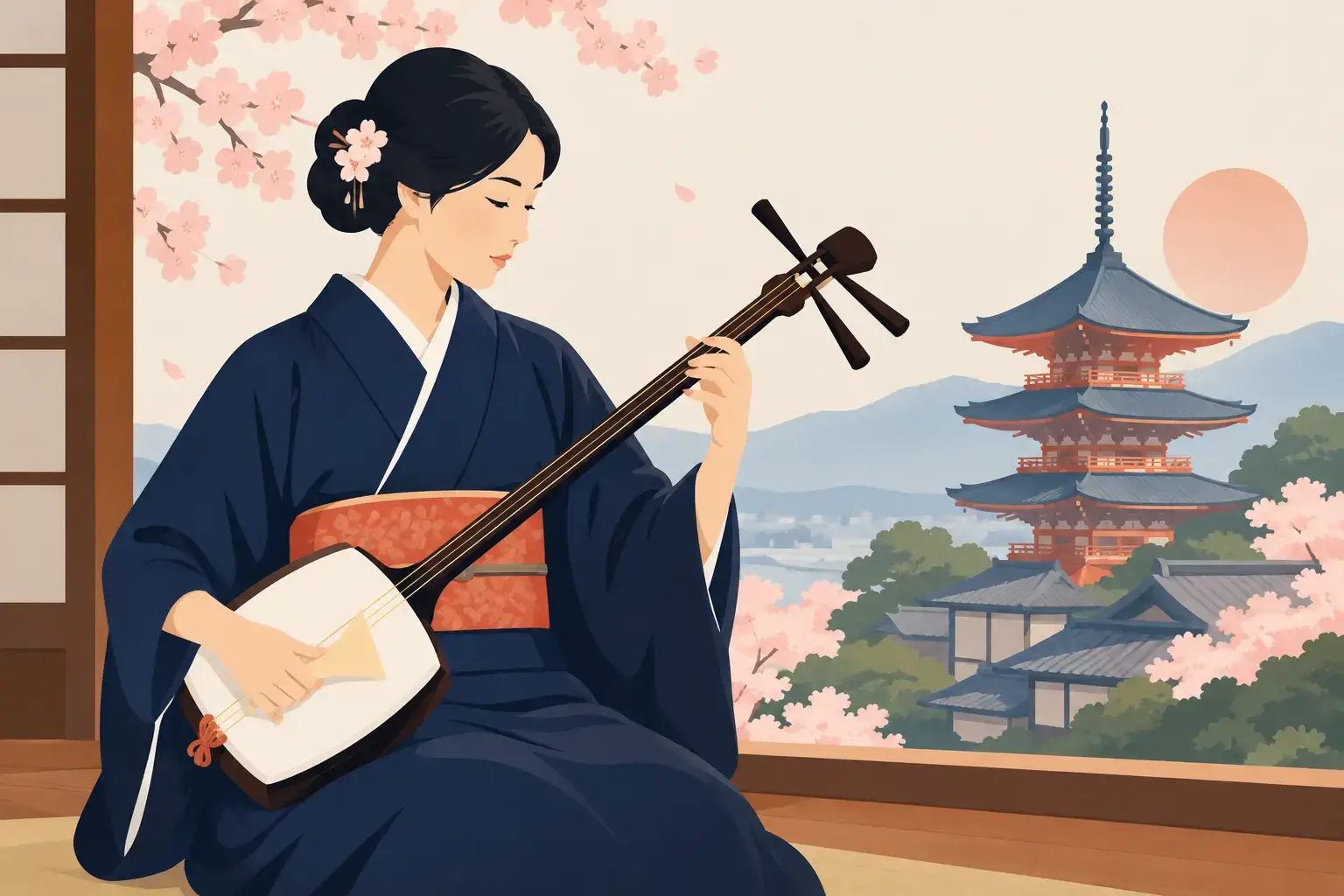
The first strike of a shamisen is not designed to fade into the background. Its crisp, percussive voice can fill an intimate Kyoto room with startling clarity, then give way to a phrase of extraordinary delicacy. This Japanese shamisen performance guide is designed for travelers who want to do more than hear a beautiful instrument. It offers a way to recognize the artistry, atmosphere, and etiquette behind one of Japan’s most captivating live traditions.
For guests who have planned a special lunch, private gathering, or refined evening in Kyoto, a live shamisen performance can become the moment that stays with them longest. You do not need musical training to appreciate it. A little context simply allows you to listen more closely.
目次
What Is the Shamisen?
The shamisen is a three-stringed Japanese instrument with a long neck, square body, and a resonant skin-covered soundbox. It is played with a large plectrum called a bachi, which produces both melody and rhythmic accents. The instrument may look restrained beside a Western violin or guitar, yet its range is remarkably expressive: bright and playful, spare and reflective, or dramatic enough to suggest thunder, waves, and emotional conflict.
Its sound is inseparable from Japanese performance culture. The shamisen appears in narrative theater, folk music, classical ensembles, and the refined arts of Kyoto’s hanamachi, or geisha districts. In a geisha or maiko entertainment setting, it often accompanies song and dance, creating a conversation between musician, vocalist, and performer.
A shamisen performance is therefore not simply a recital. It is part of a larger artistic language shaped by rhythm, gesture, costume, poetry, and the quiet attention of the room.
Why Shamisen Matters in Kyoto’s Geisha Arts
Kyoto is closely associated with the enduring traditions of geiko and maiko. Geiko is Kyoto’s term for geisha, while maiko are apprentices who undergo years of disciplined training in dance, music, conversation, tea service, and formal etiquette. Shamisen is among the classical arts that may be studied and presented within this world.
When you hear shamisen during an authentic Kyoto cultural experience, you may be listening to music that supports a seasonal dance or song. The performance can carry references that are not immediately obvious to overseas guests: cherry blossoms in spring, cooling river breezes in summer, moon viewing in autumn, or snow in winter. Kyoto aesthetics often favor suggestion over explanation. A few musical gestures, a fan, and a turn of the sleeve can evoke an entire scene.
This is one reason a live performance feels so different from recorded music. The musicians and dancers respond to the pace and mood of the gathering. In an intimate setting, every plucked note and measured pause has presence.
How to Listen During a Japanese Shamisen Performance
The most rewarding approach is to let go of the expectation that music must build toward a familiar chorus or grand finale. Shamisen music may feel spacious, particularly to first-time listeners. Silence and restraint are active elements, not empty space.
Begin by noticing the attack of each note. The bachi strikes the strings with a distinctive snap, sometimes accompanied by a percussive sound from the instrument’s body. Then listen for the contrast between those rhythmic strikes and the notes that bend, slide, or seem to hover just above the beat.
If the performance includes singing, listen for the relationship between voice and instrument rather than trying to follow every word. Traditional Japanese vocal delivery can sound intentionally unadorned or highly stylized to unaccustomed ears. The emotional meaning is often carried through phrasing, tension, and timing as much as literal language.
In a dance accompaniment, shift your attention between sound and movement. The shamisen may mark a gesture with remarkable precision: a fan opening, a slow glance over the shoulder, or a dancer’s measured step. The music does not merely sit beneath the dance. It gives the choreography structure and emotional color.
Performance Etiquette for International Guests
A polished Kyoto occasion is welcoming, but it is still grounded in tradition. The best etiquette is simple: arrive on time, follow the guidance of your host or interpreter, and give the performance your full attention.
Keep conversation low or pause it entirely once the music begins. Avoid walking around the room during the performance unless you are invited to do so. Photography policies vary considerably. Some hosts welcome photos at designated moments, while others ask guests to wait until after a dance or musical selection. When in doubt, ask before the program begins rather than raising a phone mid-performance.
Applause is usually appreciated at the close of a selection. If you are unsure when a piece has ended, take your cue from the performers, hosts, or other guests. There is no need to respond loudly or theatrically. Warm, attentive applause is entirely appropriate.
The same principle applies to questions. Many guests are curious about the instrument, repertoire, kimono, or training involved. A question-and-answer moment can be one of the most personal parts of the experience, especially with English interpretation available. Save questions for a natural pause, and ask with genuine curiosity rather than treating the artists as a photo opportunity alone.
Choosing the Right Shamisen Experience in Kyoto
Not every shamisen performance offers the same level of context or intimacy. A large public stage program may be ideal for travelers seeking a formal theatrical production, architectural grandeur, or a broad overview of Japanese arts. It can be visually spectacular, though the scale may make it harder to notice the fine exchange between performers.
A smaller hosted experience offers a different pleasure. With fewer guests, the sound feels immediate, and visitors can better appreciate the skill behind each performance. This setting is particularly suited to couples, families celebrating a milestone, and private groups who value conversation as well as artistry.
Before reserving, consider what is included. An experience centered on Kyoto cuisine, traditional dance, geisha entertainment games, professional-style photos, and English-speaking interpretation can provide a fuller introduction than a performance alone. Live shamisen is especially meaningful when it is presented as part of the cultural setting from which it comes, rather than as a detached musical interlude.
GEISHAKYOTO’s curated dining experiences are designed around this kind of rare Kyoto moment, pairing refined hospitality with direct access to authentic geiko and maiko arts in a comfortable, English-accessible format.
A Short Guide to What You May See and Hear
The repertoire can vary by season, occasion, and performers. Some selections are lively and social, inviting a sense of celebration. Others are formal dance pieces with deliberate pacing and an almost painterly quality. You may hear vocal music accompanied by shamisen, instrumental passages, or music that supports a dance performed by a maiko or geiko.
Do not expect every program to feature a solo display of virtuosity in the Western concert sense. In Kyoto’s traditional entertainment, the highest skill may appear in the details: impeccable timing, control of volume, a subtle change in tempo, or the ability to hold the room’s attention without excess.
There is also value in not understanding everything at once. A guest may recognize the artistry of the sound before knowing the title of the piece or the symbolism of a dance. That first encounter can be more powerful when allowed to remain slightly mysterious.
Making the Most of the Moment
Dress thoughtfully for the setting, especially if your shamisen performance is part of a premium meal or private cultural program. Smart, comfortable attire is appropriate, and clothing that allows you to sit comfortably is a practical consideration. Kyoto hospitality is formal in spirit but should never leave guests anxious about making a minor mistake.
Arrive with enough time to settle in. If interpretation is offered, listen closely to the introduction, as a brief explanation of the season, song, or dance can transform what you hear. Afterward, take a moment before reaching for your phone or moving to the next engagement. Let the final resonance of the instrument remain in the room.
A shamisen performance is at its most memorable when it feels less like an item checked off an itinerary and more like an encounter with Kyoto’s living cultural memory. Listen for the sharp first note, the quiet after it, and the centuries of training carried between them.