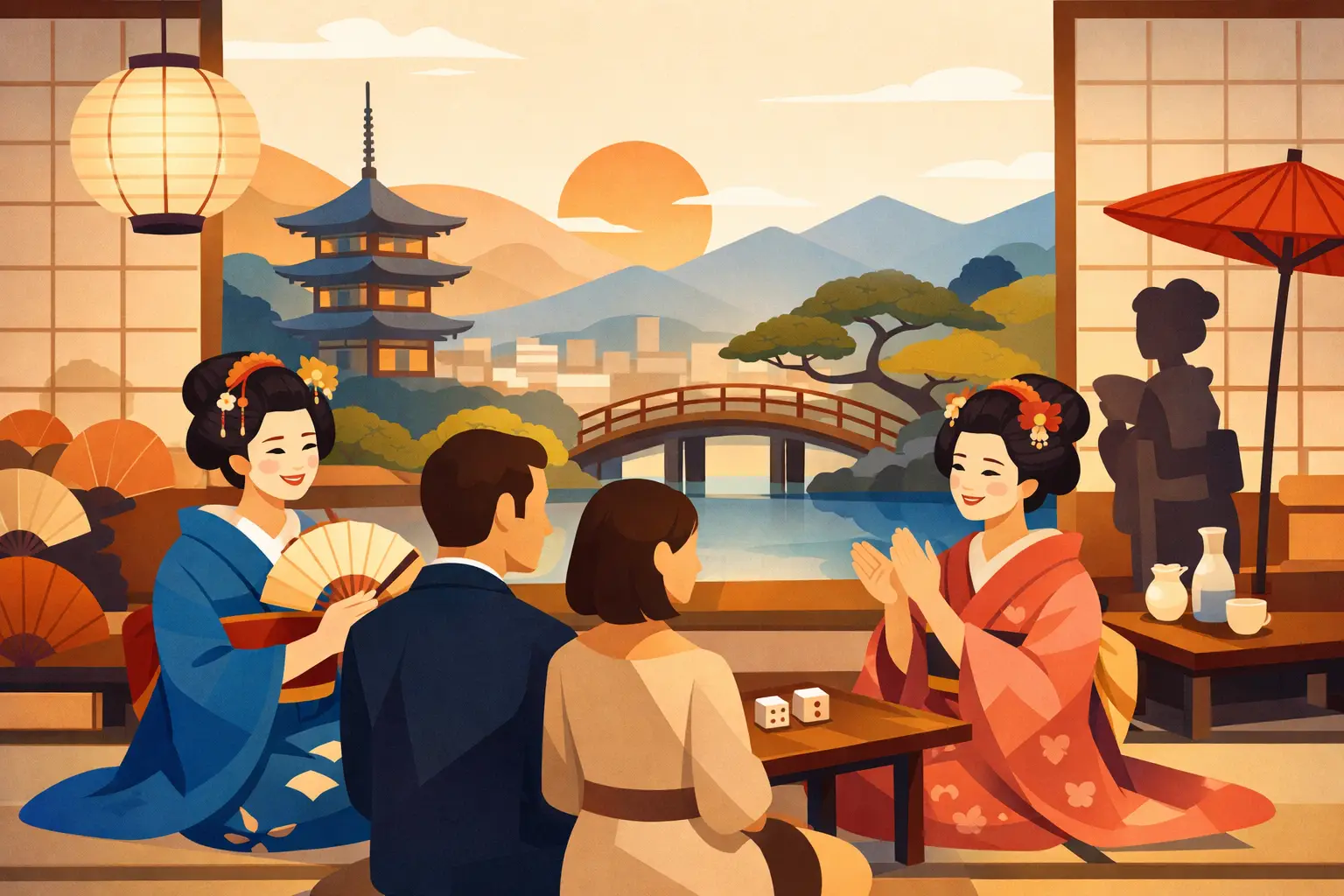
A quiet room in Kyoto can change the tone of an entire trip. The meal is beautifully arranged, the atmosphere feels intimate rather than theatrical, and then the evening shifts – a maiko or geisha invites guests into ozashiki games. For many travelers, an ozashiki games experience Kyoto offers is the moment traditional culture stops feeling distant and becomes personal, lively, and unexpectedly memorable.
What surprises first-time guests is how warm the experience can feel. People often arrive expecting something formal and difficult to follow. In reality, when the setting is thoughtfully hosted and clearly interpreted in English, the occasion feels refined without being stiff. That balance is exactly what makes this part of Kyoto culture so compelling.
目次
- What is an ozashiki games experience in Kyoto?
- Why this Kyoto experience feels so rare
- What the atmosphere is actually like
- How ozashiki games work
- The difference between authentic and tourist-oriented versions
- What to wear and how to behave
- Is an ozashiki games experience in Kyoto worth it?
- Who this experience suits best
What is an ozashiki games experience in Kyoto?
Ozashiki games are traditional parlor-style games played in the presence of geisha or maiko during a private entertainment gathering. The word ozashiki refers to a tatami room gathering, often connected with dining, hospitality, and performance. These games are not a sideshow. They are part of the social fabric of classical Kyoto entertainment, designed to create rapport, laughter, and elegant interaction between host and guest.
That point matters because many visitors assume a geisha experience is purely observational – perhaps a dance performance followed by photographs. Those elements can certainly be included, and they are beautiful. But ozashiki games add participation. Instead of watching culture from a distance, you are invited into it in a format that is playful, structured, and graciously guided.
In a premium setting, the games typically follow a traditional performance or accompany a multicourse meal. The pacing is deliberate. There is time to appreciate the room, the cuisine, and the artistry before the atmosphere becomes more animated.
Why this Kyoto experience feels so rare
Kyoto is full of cultural activities, but not all of them offer real access. That distinction is especially important here. Many travelers want an authentic encounter with geisha culture yet quickly find how difficult it can be to arrange one independently. Private introductions are often inaccessible, etiquette can feel intimidating, and the language barrier adds another layer of uncertainty.
A well-curated ozashiki games experience Kyoto visitors can book solves those concerns without flattening the tradition into something generic. You still feel the exclusivity of the setting, but the entry point is clear. English-speaking support, thoughtful hosting, and a structured program make the occasion approachable while preserving its refinement.
There is also a meaningful difference between a cultural demonstration and an actual hospitality experience. The former can be interesting. The latter stays with you. When a maiko smiles across the room, the shamisen begins, and guests are drawn into a centuries-shaped form of entertainment, Kyoto feels less like a destination and more like an invitation.
What the atmosphere is actually like
The most common misconception is that guests must know exactly how to behave from the moment they arrive. In truth, a quality host removes that pressure. You are not expected to be an expert in advance. You are expected to be respectful, attentive, and open.
The mood usually moves through stages. At first, there is admiration – the setting, the dress, the table, the poise of the performers. Then comes performance, often including traditional dance and, in more elevated formats, live shamisen. After that, the room softens. Conversation opens up. The games begin. Laughter is not out of place here. It is part of the charm.
That combination of beauty and ease is what makes the experience feel luxurious. Luxury, in this case, is not excess. It is the confidence that every detail has been arranged so guests can relax into the moment.
How ozashiki games work
The games themselves are light in spirit but rooted in tradition. They are designed to be easy to follow, even for international guests encountering them for the first time. Instructions are often demonstrated rather than heavily explained, which helps the room feel fluid rather than academic.
Some games involve rhythm, timing, or quick responses. Others are based on simple winning and losing patterns, often with humorous consequences such as taking a sip of a drink. The goal is not competition in a modern sense. It is shared enjoyment and connection.
This is where the value of English interpretation becomes especially clear. A polished interpreter can preserve the pace and mood of the room while making sure overseas guests understand the cues. Without that support, the same experience can feel opaque. With it, the interaction feels natural.
The difference between authentic and tourist-oriented versions
Not every Kyoto cultural program offers the same level of authenticity. That does not mean lower-key experiences are automatically poor choices, but it does mean travelers should be clear about what they want.
If your priority is a quick photo opportunity or a budget-friendly introduction, you may be satisfied with a simplified event. If your goal is a rare Kyoto moment with genuine atmosphere, high-quality cuisine, traditional entertainment, and direct interaction with real geisha or maiko, then the standard should be much higher.
Look for experiences that present the occasion as a complete hospitality setting rather than a stage show. The strongest options tend to include Kyoto-style dining, a private or carefully managed venue, authentic performers, and a format built for overseas guests without making the culture feel diluted. This is the space where brands such as GEISHAKYOTO have created real value – by pairing authenticity with clarity and comfort.
What to wear and how to behave
You do not need to arrive in kimono to belong in the room. Elegant, well-fitted attire is usually the better choice for international travelers, especially if you want to feel comfortable and polished without overcomplicating the evening. Think of it as fine dining with cultural significance.
Etiquette matters, but it is manageable. Arrive on time. Be courteous. Follow your host’s lead when taking photos, asking questions, or joining the games. Avoid treating the performers like props for content. The room should feel respectful, not transactional.
It also helps to understand that subtlety is part of the pleasure. Guests who come in ready to observe carefully often enjoy the experience more than those expecting constant spectacle. This is one of Kyoto’s quiet luxuries – the sophistication is in the details.
Is an ozashiki games experience in Kyoto worth it?
For the right traveler, very much so. If you value meaningful access, cultural depth, and memorable hospitality, this is not a minor add-on to a Kyoto itinerary. It can be the highlight of the visit.
That said, it depends on what kind of trip you want. Travelers focused on checking off major sights may prefer something shorter and more casual. Those celebrating a honeymoon, anniversary, private group journey, or once-in-a-lifetime visit usually appreciate the intimacy and polish of a premium booking far more.
The price reflects more than entertainment. You are paying for access, setting, artistry, interpretation, cuisine, and the confidence that the evening will be handled with care. For guests who understand that value, the experience often feels entirely justified.
Who this experience suits best
An ozashiki games experience Kyoto offers is particularly well suited to travelers who want more than sightseeing. Couples tend to love the intimacy. Families with adult children often appreciate the sense of occasion. Executive visitors and private groups value the sophistication and ease of a reservation-based cultural event that feels distinctively local without becoming logistically difficult.
It is also ideal for guests who may be curious about geisha culture but hesitant to navigate it on their own. When the evening is thoughtfully designed, uncertainty falls away. You are free to focus on the pleasure of being there.
A good Kyoto experience should leave you with more than photographs. It should give you a sense that, for a brief time, a very private world opened its doors. That is the enduring appeal of ozashiki games – not just that they are entertaining, but that they transform tradition into human connection. If your Kyoto plans include room for one truly special evening, this is the kind of memory that lingers long after the trip is over.
AUTHENTIC KYOTO EXPERIENCE