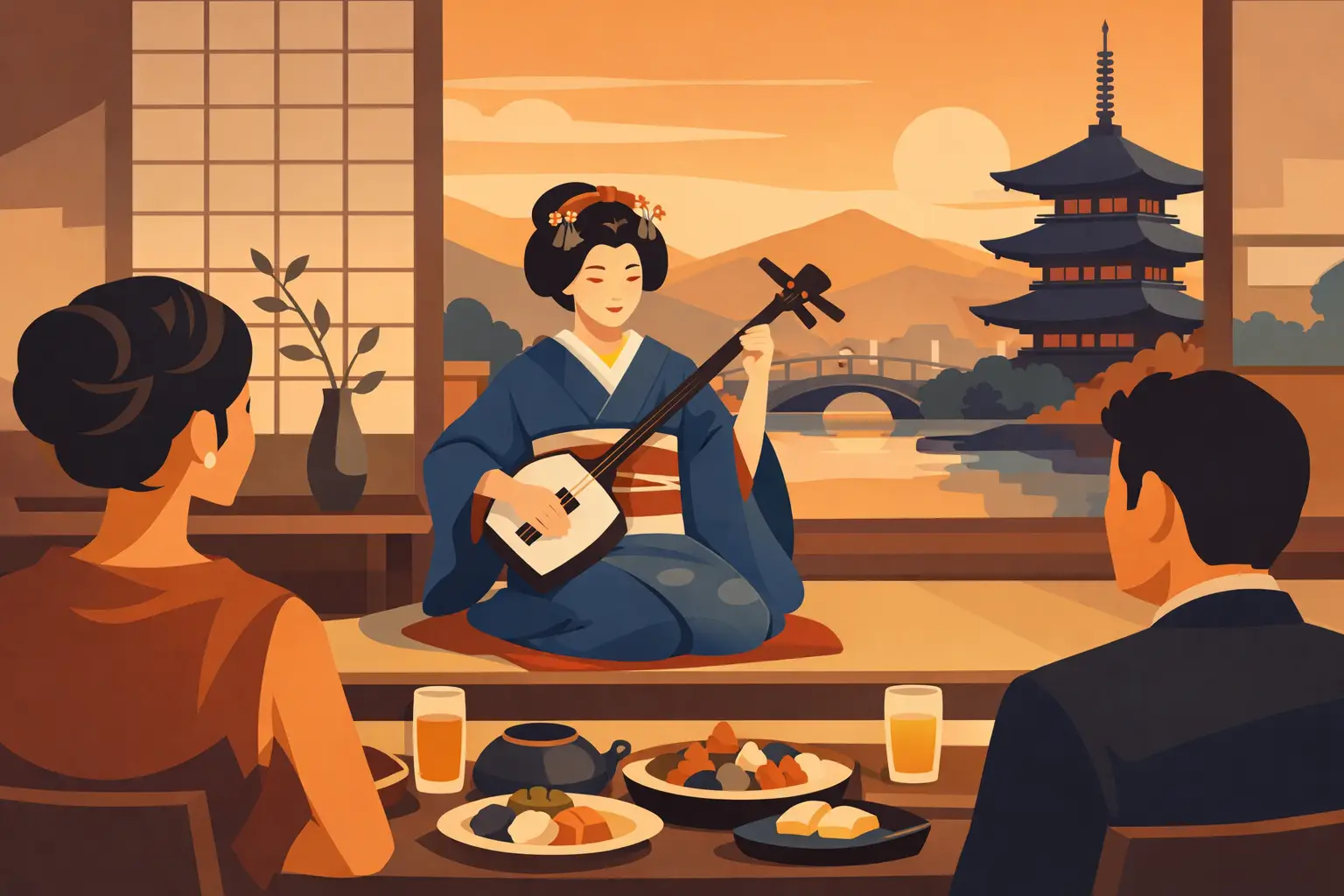
Kyoto becomes especially memorable when dinner is more than a meal. A shamisen performance with dinner Kyoto visitors can book offers something rarer – an evening shaped by sound, refinement, and direct access to living tradition. Instead of simply watching a staged show, guests step into a more intimate cultural setting where cuisine, performance, and hospitality are thoughtfully presented as one experience.
For many international travelers, this matters because Kyoto’s most refined cultural moments are not always easy to enter on your own. The city is rich with history, but authentic encounters can feel hidden behind language barriers, etiquette concerns, and uncertainty about what is genuinely traditional versus made for mass tourism. A carefully arranged dinner with shamisen changes that. It brings clarity, comfort, and a level of cultural access that feels both elevated and welcoming.
目次
- Why a shamisen performance with dinner in Kyoto feels so distinct
- What to expect from a premium Kyoto dinner experience
- Authenticity, access, and the value of curation
- Who this experience suits best
- How to choose the right shamisen performance with dinner Kyoto offers
- The difference between a meal and a memory
Why a shamisen performance with dinner in Kyoto feels so distinct
The shamisen is not background music. Its sound is crisp, expressive, and emotionally direct, carrying a texture that feels unmistakably Japanese without needing explanation. Heard in the right setting, it changes the rhythm of the room. Conversation softens, attention narrows, and dinner becomes part of a performance environment rather than a separate activity.
That setting matters. In Kyoto, traditional dining spaces are designed with restraint and balance, which suits shamisen beautifully. The architecture does not compete with the music. Seasonal cuisine arrives with visual precision, and each part of the evening supports the next. When the performance is integrated into dinner rather than added as entertainment, the result feels composed instead of commercial.
This is one reason travelers seeking a premium cultural evening often prioritize shamisen over larger theatrical productions. A bigger show may offer scale, but a smaller dining setting offers presence. You are close enough to hear the subtle attack of each note and to sense the discipline behind the performance. That intimacy is where Kyoto leaves its strongest impression.
What to expect from a premium Kyoto dinner experience
Not every cultural dinner in Kyoto offers the same standard. Some are designed mainly for volume, with fixed menus, rushed pacing, and generic performances. A premium experience is different. The quality appears in the details – the caliber of the performers, the elegance of the meal, the comfort of the setting, and the way international guests are guided through the evening.
In the best cases, dinner is served as Kyoto cuisine should be served: with attention to seasonality, presentation, and tempo. Courses are paced so the meal feels graceful rather than hurried. The room itself supports the atmosphere, whether that means a refined private venue or a traditional interior that allows guests to relax while still feeling the weight of the occasion.
The performance element should also feel authentic, not decorative. If geisha or maiko are involved, the evening becomes even more exceptional, because shamisen exists within a broader world of Kyoto entertainment arts. Music, dance, games, and conversation all belong to the same cultural tradition. Seeing those elements together offers a more complete understanding than hearing music alone.
For overseas guests, practical support is not a minor feature. English interpretation can transform the evening from beautiful but opaque to genuinely meaningful. It helps guests understand what they are seeing, when to participate, and how to appreciate the nuances without anxiety. Luxury is not only about exclusivity. It is also about ease.
Authenticity, access, and the value of curation
One of the most common questions travelers ask is whether these experiences are truly authentic. It is a fair question. Kyoto’s cultural reputation attracts interest from around the world, and not every offering reflects the same level of seriousness.
Authenticity is not simply a matter of age or aesthetics. It comes from the people involved, the structure of the event, and the respect shown to the tradition. Real performers, proper hospitality, and a format that allows guests to engage thoughtfully all matter. So does transparency. A trustworthy provider explains what is included, who you will meet, and what kind of cultural interaction is actually part of the reservation.
This is where curation has real value. For a first-time visitor, it can be almost impossible to judge which venues are reputable, which experiences are accessible to non-Japanese speakers, and which ones offer meaningful rather than superficial contact. A curated reservation removes guesswork. It allows guests to focus on the experience itself rather than logistics, uncertainty, or etiquette concerns.
That convenience is especially relevant for honeymooners, executives, and luxury travelers with limited time. A rare Kyoto moment should not depend on insider connections or hours of research. It should be presented with polish, clarity, and trust.
Who this experience suits best
A shamisen dinner experience is ideal for travelers who care less about checking off attractions and more about how a place actually feels. It suits couples celebrating something special, private groups looking for a memorable evening, and culturally curious visitors who want access beyond temples and sightseeing districts.
It is also well suited to guests who appreciate quiet luxury. This is not nightlife in the conventional sense. The pleasure comes from atmosphere, artistry, and proximity to a tradition that is usually difficult to encounter in a comfortable, bookable format. If your idea of a standout evening involves noise and spectacle, another type of entertainment may suit you better. If you value refinement, this is where Kyoto excels.
There is also a practical advantage for travelers who may feel hesitant about formal cultural settings. A well-hosted dinner lowers the barrier to entry. You are not expected to arrive with deep prior knowledge. With proper guidance, the experience remains elegant without becoming intimidating.
How to choose the right shamisen performance with dinner Kyoto offers
The strongest option depends on what kind of memory you want to bring home. If cuisine is your main priority, look closely at the dining component and whether the meal reflects Kyoto style rather than a generic set dinner. If your focus is cultural access, pay attention to who performs and whether interaction is part of the experience.
It is worth asking whether shamisen is central to the program or simply a brief addition. In some packages, live shamisen is a defining feature tied to a broader geisha or maiko experience. In others, it may be shorter and more limited. Neither format is automatically wrong, but expectations should match the offering.
Group size also shapes the evening. A larger room may create energy, while a smaller one usually allows for stronger personal connection and clearer viewing. Private or premium small-group formats often feel more exclusive, though they naturally come at a higher price point.
Language support deserves special attention. Even sophisticated travelers can miss much of the meaning without interpretation. Clear English explanation adds depth, especially when guests are introduced to performance customs, dining etiquette, or the role of shamisen within Kyoto’s entertainment culture.
For travelers seeking a polished and trustworthy format, services such as GEISHAKYOTO stand out by combining authentic cultural elements with premium hospitality and English-accessible presentation. That combination is difficult to replicate independently.
The difference between a meal and a memory
Anyone can reserve dinner in Kyoto. What is difficult to find is a dinner that feels unmistakably of Kyoto, where the setting, the service, the music, and the cultural access all align. When shamisen is performed in that environment, the evening acquires a kind of stillness that lingers. Guests often remember not just what they saw, but how carefully the entire experience was held together.
That is the real appeal. You are not buying a soundtrack with food beside it. You are entering a refined cultural frame where hospitality and performance are treated with equal seriousness. The best experiences do not feel busy or overproduced. They feel assured.
If Kyoto is part of a once-in-a-lifetime journey, this is the kind of evening worth choosing carefully. A well-curated shamisen dinner offers beauty, intimacy, and confidence all at once – and those are often the details that make travel feel truly exceptional.
AUTHENTIC KYOTO EXPERIENCE