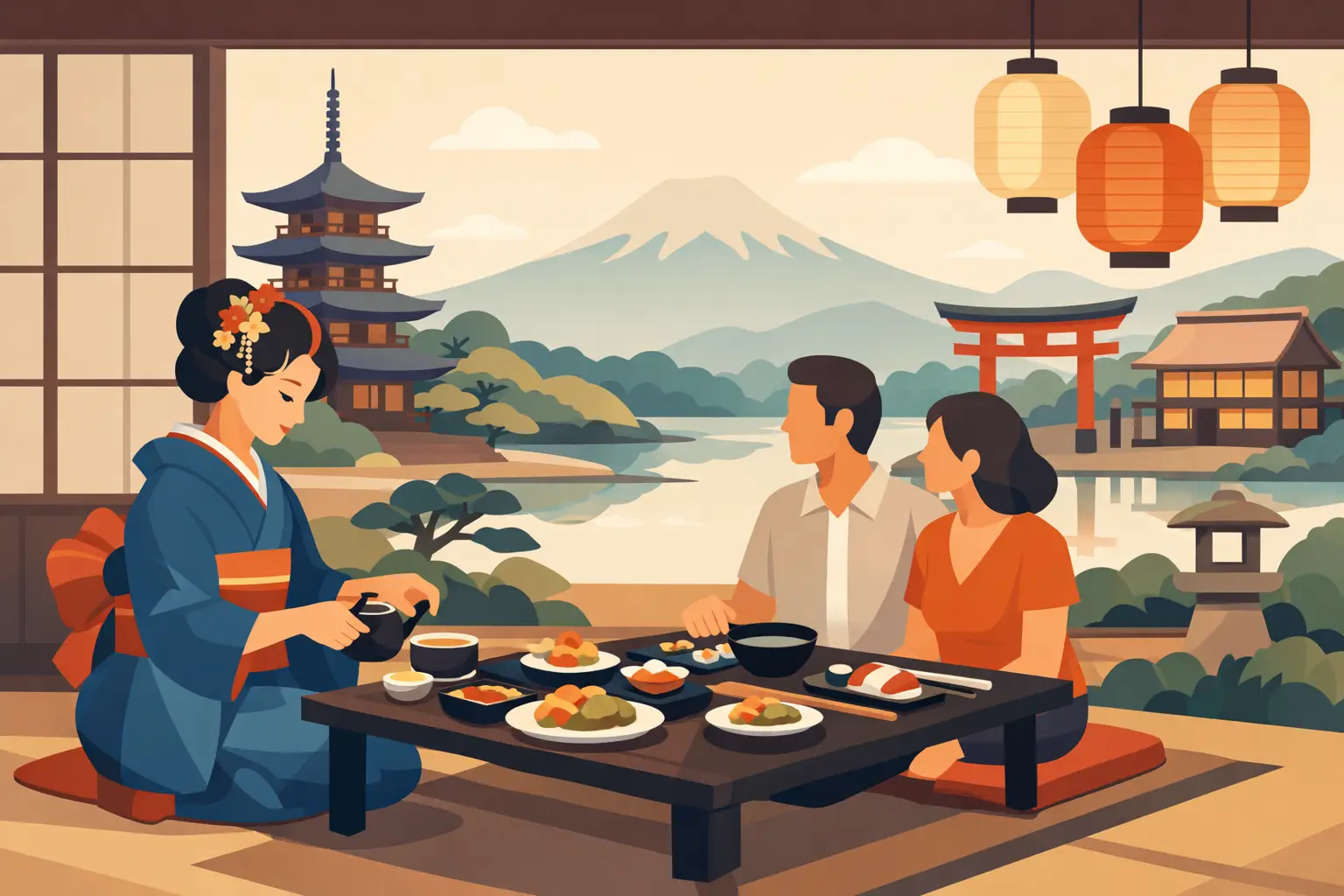
A private room in Kyoto changes the pace of a trip immediately. The city outside may be busy with temple visits and seasonal crowds, but a Kyoto cultural dining experience invites you into a quieter world – one shaped by etiquette, artistry, and hospitality that feels both intimate and deeply local. For travelers who want more than a beautiful meal, it offers something far rarer: meaningful access to tradition.
Kyoto has long been admired for preserving forms of culture that are difficult to encounter elsewhere in Japan. Dining here can be exquisite on its own, but when cuisine is paired with performance, conversation, and ceremonial grace, the experience becomes more than dinner or lunch. It becomes a memory with texture, one that engages taste, sound, movement, and atmosphere at once.
目次
- What defines a Kyoto cultural dining experience
- Why this experience feels so different from a standard meal
- The role of geisha and maiko in the Kyoto cultural dining experience
- What premium travelers should look for
- Kyoto cultural dining experience options vary for a reason
- What first-time guests often worry about
- Who this experience suits best
- Why the memory lasts
What defines a Kyoto cultural dining experience
Not every elegant meal in Kyoto qualifies. A true Kyoto cultural dining experience is distinguished by context as much as by cuisine. The setting matters. The service matters. Most of all, the human element matters.
At its highest level, this type of experience brings together Kyoto-style dining with living traditional arts. Guests may enjoy a carefully prepared meal while watching classical dance, listening to shamisen, or sharing light entertainment led by geisha or maiko in a proper, respectful setting. Rather than observing culture from a distance, you are invited into it with guidance, clarity, and hospitality.
That distinction is important for international visitors. Many travelers arrive in Kyoto hoping for an authentic geisha encounter, only to discover how difficult genuine access can be. Much of this world is private, relationship-based, and not naturally open to casual booking. Without trusted arrangements, visitors often settle for surface-level alternatives that look appealing but lack cultural depth.
A thoughtfully curated format changes that. It creates an entry point that honors tradition while making the experience accessible to guests who do not speak Japanese or know the etiquette in advance.
Why this experience feels so different from a standard meal
Luxury travelers often seek experiences that cannot be replicated elsewhere. A fine restaurant can be exceptional in many cities. A culturally grounded meal in Kyoto, hosted with authentic artistic participation, belongs to a much narrower category.
The difference begins with atmosphere. In a conventional restaurant, the focus is naturally on food and service. In a cultural dining setting, every element contributes to a sense of occasion. The room, the pace of the meal, the presentation, and the rhythm of performance all work together. There is a formality to it, but not coldness. When done properly, it feels welcoming rather than intimidating.
There is also a different kind of attention. Guests are not simply being served courses. They are being hosted into a refined social environment with its own customs and cadence. That may include traditional games, opportunities for photographs, or moments of conversation supported by English interpretation. These details reduce uncertainty while preserving the elegance of the occasion.
For many visitors, that balance is the key appeal. They want authenticity, but they also want to feel comfortable enough to enjoy it.
The role of geisha and maiko in the Kyoto cultural dining experience
Geisha and maiko are often misunderstood outside Japan. They are not background performers added for visual effect. They are highly trained artists and professional hosts whose work reflects years of discipline in dance, music, conversation, and etiquette.
In Kyoto, meeting real geisha or maiko in an appropriate setting is one of the city’s most distinctive cultural privileges. Their presence transforms the meal from something beautiful into something genuinely rare. A dance performance carries the weight of tradition. A shamisen performance adds emotional atmosphere that words do not quite capture. Even a simple exchange can reveal the poise and training that define this world.
That said, not every guest wants the same level of depth. Some travelers are drawn most strongly to the elegance of the visual experience and the chance to witness a performance up close. Others want interaction, interpretation, and a stronger sense of cultural understanding. The best experiences recognize this and are structured clearly, with inclusions that match different expectations.
What premium travelers should look for
If you are considering a Kyoto cultural dining experience, quality depends less on marketing language and more on how carefully the event is designed.
Authenticity should come first. That means real cultural practitioners, not themed entertainment. It also means a setting that respects the traditions being presented rather than turning them into spectacle.
Clarity is equally important. Premium travelers usually do not mind paying for excellence, but they do expect to know what is included. A well-designed package should make the format easy to understand: the length of the experience, whether Kyoto-style cuisine is served, whether dance or shamisen is included, whether there is interpretation in English, and whether guests will have time for photographs or interactive elements.
Comfort matters too, especially for overseas visitors. Even affluent, experienced travelers can feel unsure in highly traditional settings if they are worried about etiquette, language, or logistics. A polished experience removes friction without flattening the cultural character. In practice, that means smooth reservation handling, clear arrival guidance, and hosts who can bridge worlds gracefully.
Kyoto cultural dining experience options vary for a reason
One of the most useful things to understand is that these experiences are not all meant to serve the same traveler. Some are brief and ceremonial. Others are more immersive and performance-led. Neither approach is automatically better. It depends on the kind of memory you want to create.
A lunch format, for example, can be ideal for guests with a full Kyoto itinerary who still want a meaningful cultural highlight. It offers structure, convenience, and daylight ease, which can be especially appealing for couples, private groups, and first-time visitors to Japan. A carefully planned daytime experience can still feel exclusive and richly atmospheric without requiring a late evening commitment.
Higher-tier formats often add musical accompaniment, expanded interaction, or more premium inclusions. These additions are not just decorative. They deepen the sense of being hosted inside a complete cultural moment. For guests celebrating a honeymoon, milestone birthday, executive retreat, or once-in-a-lifetime journey, those details often justify the difference.
This is where curation matters. A trusted provider such as GEISHAKYOTO presents Kyoto tradition in a way that feels both elevated and approachable, which is exactly what many international guests are looking for.
What first-time guests often worry about
Many travelers hesitate before booking because they assume the experience may feel too formal, too inaccessible, or too difficult to navigate respectfully. These concerns are understandable.
The reality is that a well-hosted experience is designed to put guests at ease. You do not need specialist knowledge to appreciate the performance. You do not need fluent Japanese to enjoy conversation or understand the flow of the event. You do, however, benefit from a format that has anticipated these concerns in advance.
Etiquette is still part of the beauty. Respect for the setting, punctuality, and attentive participation all matter. But these expectations are not barriers. They are part of what makes the experience feel elevated. When guidance is provided clearly, most guests find the formality reassuring rather than stressful.
The other common concern is whether the experience will feel overly staged. This depends entirely on execution. Any cultural hospitality offering must balance access with integrity. The strongest examples do not pretend to open every private door in Kyoto. Instead, they create a genuine, thoughtfully framed encounter that is both bookable and respectful.
Who this experience suits best
A Kyoto cultural dining experience is especially compelling for travelers who care about memory over volume. If your ideal trip is built around a few outstanding moments rather than a crowded checklist, this format makes sense.
It suits couples who want a romantic and polished cultural event, families with older children interested in tradition, executives entertaining clients, and private groups marking an important occasion. It is also particularly appealing to repeat Japan visitors who have already seen major landmarks and now want access to something more intimate.
There is, however, a trade-off. Travelers focused mainly on speed, budget, or casual dining may not value the same things here. This is not simply a meal to fit between attractions. It asks for attention and rewards it with depth.
Why the memory lasts
Some travel experiences photograph beautifully and fade quickly. Others stay with you because they carry emotional precision. A refined room, seasonal cuisine, the sound of shamisen, the discipline of dance, and the warmth of being welcomed into a tradition that once seemed unreachable – these details tend to linger.
That is the enduring appeal of a Kyoto cultural dining experience. It offers not just access, but context. Not just performance, but presence. In a city known for beauty, that distinction is what makes the moment feel rare.
If you choose this kind of experience, choose one that respects both the culture and the guest. The right setting will not simply show you Kyoto. It will allow you, for a little while, to feel received by it.
AUTHENTIC KYOTO EXPERIENCE