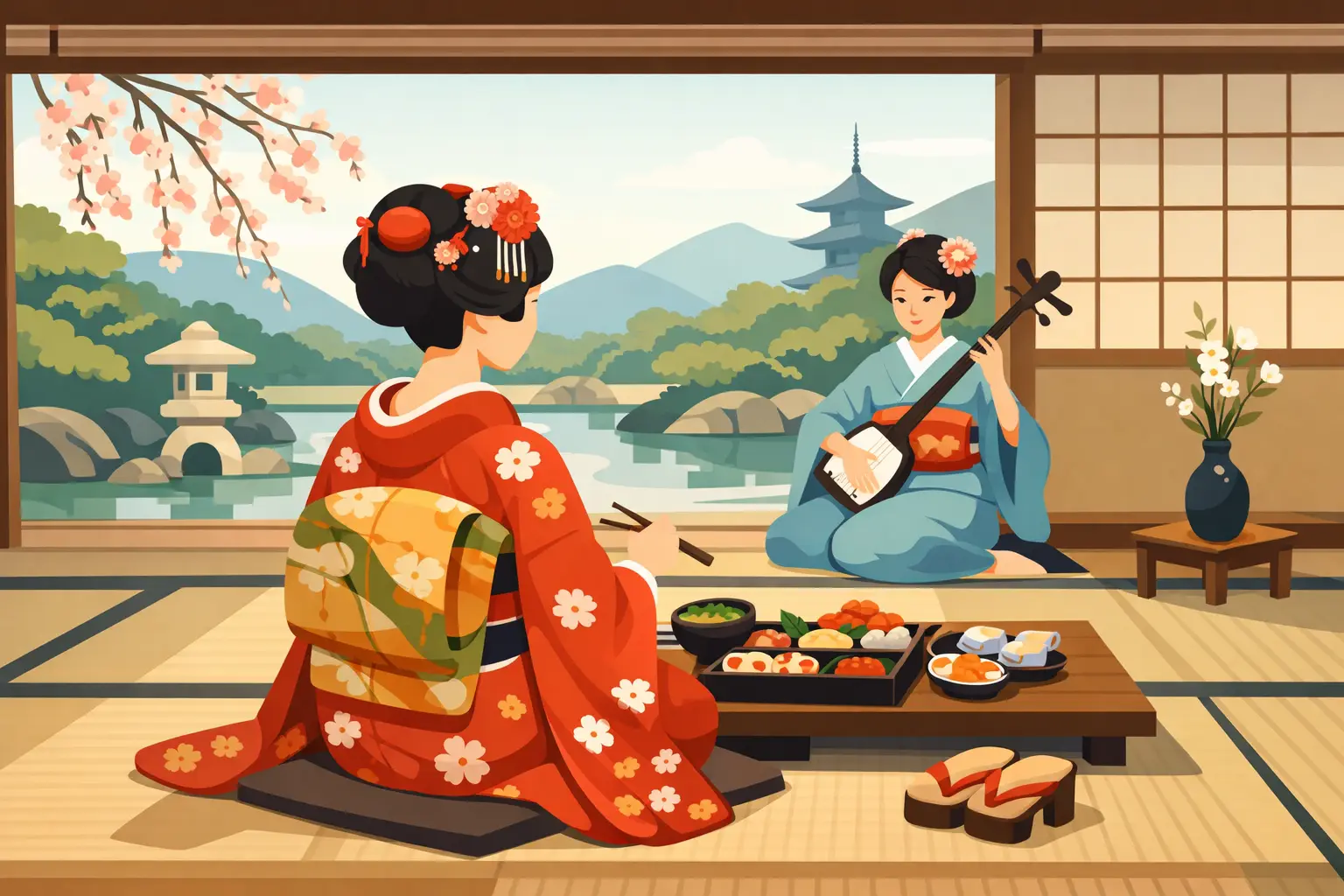
A maiko lunch Kyoto experience is not simply a meal with a performance attached. At its best, it is a rare Kyoto moment – one where cuisine, conversation, music, and seasonal beauty come together in a setting most visitors would never access on their own.
That distinction matters. Kyoto offers many cultural activities, but very few feel both genuinely refined and comfortably approachable for international guests. For travelers who want more than sightseeing, lunch with a maiko can become one of the most memorable hours of an entire Japan itinerary.
目次
- Why a maiko lunch in Kyoto feels so special
- What a maiko lunch Kyoto experience usually includes
- The difference between authentic and merely themed
- What happens during the lunch
- Etiquette without anxiety
- Who this experience is best for
- Pricing and what actually drives the value
- How to choose the right maiko lunch Kyoto plan
Why a maiko lunch in Kyoto feels so special
Kyoto is the historic heart of geisha culture, and maiko are part of that living tradition. A maiko is an apprentice in the geisha arts, trained in dance, etiquette, conversation, and the polished forms of entertainment that have long defined Kyoto hospitality. Seeing that tradition in person carries a different weight than encountering it in photographs or on a walking tour.
Lunch is also an especially appealing format. It feels elegant without requiring a late-night schedule, and it suits travelers who prefer a structured cultural experience in the middle of the day. For couples, private groups, and first-time visitors to Japan, it offers a more relaxed entry point into a world that can otherwise seem closed, formal, or difficult to arrange.
The best experiences are carefully curated. They do not leave guests wondering what to do, what to say, or whether they have chosen something authentic. Instead, they frame the occasion with clear guidance, graceful hosting, and the confidence that comes from a professionally arranged setting.
What a maiko lunch Kyoto experience usually includes
Not every plan is identical, and that is where quality differences begin. Some offerings are little more than a meal in the vicinity of traditional culture. Others are fully staged hospitality experiences with meaningful interaction and polished service throughout.
A premium maiko lunch Kyoto plan often includes a Kyoto-style meal served in a refined venue, time with a real maiko, a traditional dance performance, and opportunities for interaction rather than passive observation. In stronger packages, guests may also enjoy ozashiki asobi, the classic parlor games associated with geisha entertainment, as well as live shamisen music, commemorative photographs, and English interpretation.
Those details are not minor extras. They shape the atmosphere of the event. A dance performance brings grace and formality. Conversation and games create warmth. Interpretation removes the distance many overseas guests worry about. Photography gives the experience a tangible afterglow, especially for honeymooners, families, or special-occasion travelers.
The result should feel complete rather than pieced together.
The difference between authentic and merely themed
This is where many travelers hesitate, understandably. Kyoto is famous, and fame creates imitation. Some experiences use the language of tradition without offering meaningful access to it.
An authentic lunch with a maiko should center on a real practitioner of the tradition in a properly arranged setting. It should also respect the culture rather than flatten it into a novelty. That means the event is hosted with care, the timing is structured, and guests are guided through the experience in a way that feels elegant instead of transactional.
There is also a practical side to authenticity. If you do not speak Japanese, arranging a private cultural event independently can be difficult. Even when a visitor has the budget, the barriers are real – language, etiquette, trusted introductions, and uncertainty about what is actually being offered. A professionally curated experience solves those problems without making the occasion feel commercial or artificial.
That balance is important. The ideal experience is accessible, but it should never feel generic.
What happens during the lunch
Most guests begin with arrival at a traditional-style venue, often a private room or intimate dining space designed to preserve a sense of occasion. The setting matters as much as the schedule. It establishes quiet, beauty, and a degree of separation from the pace of the city outside.
The meal itself is usually arranged in Kyoto style, often emphasizing seasonality, visual presentation, and a measured pace. This is not the kind of lunch you rush through between temple visits. It is meant to be enjoyed with attention.
At the cultural heart of the experience is the maiko appearance. Depending on the plan, guests may watch a dance, listen to an explanation of customs and attire, engage in light conversation, or take part in traditional entertainment games. If shamisen is included, the atmosphere becomes even richer, adding a live musical dimension that many travelers would otherwise never encounter up close.
For international visitors, English-speaking support can transform the experience. Without it, guests may admire what they see but miss the meaning. With it, the room opens up. Etiquette becomes clear, the performance becomes more intelligible, and the human side of the encounter becomes easier to appreciate.
Etiquette without anxiety
One reason travelers postpone booking this kind of experience is fear of getting something wrong. That concern is common, especially among thoughtful visitors who want to show respect.
The good news is that a well-hosted maiko lunch is designed to make guests feel at ease. You are not expected to arrive as an expert in Kyoto customs. You are expected to be courteous, attentive, and open.
A few basics go a long way. Arrive on time. Dress neatly. Follow the host’s lead when it comes to seating, photographs, and conversation. Speak politely and avoid treating the maiko as a costume attraction. Curiosity is welcome. So is appreciation. The tone should be warm, not overfamiliar.
If a package includes guidance in English, much of the uncertainty disappears. That is one of the understated luxuries of a premium arrangement – not just access, but ease.
Who this experience is best for
A maiko lunch in Kyoto is particularly well suited to travelers who value culture but do not want a lecture disguised as entertainment. It appeals to guests who appreciate beauty, ceremony, and the privilege of entering a traditional world through a trusted introduction.
For honeymooners, it offers intimacy and elegance. For families with adult children, it creates a shared memory that feels meaningful rather than touristy. For executives or private groups, it works beautifully as a polished daytime event. And for first-time visitors to Kyoto, it can provide exactly the kind of grounded, elevated experience that separates a good trip from an unforgettable one.
That said, it may not be ideal for everyone. Travelers focused only on budget, speed, or high-energy sightseeing may prefer something more casual. This is an experience for guests willing to slow down and receive what Kyoto does best – subtlety, grace, and atmosphere.
Pricing and what actually drives the value
Prices for maiko lunches vary widely, and the cheapest option is rarely the best guide to value. What you are paying for is not lunch alone. You are paying for access, coordination, cultural legitimacy, service quality, and the comfort of knowing the event has been arranged to a high standard.
Several factors influence price: the venue, the meal level, the number of guests, whether the experience is private, and what is included beyond the appearance itself. A dance-only encounter will naturally feel different from a plan that includes games, shamisen, photos, souvenirs, and interpretation.
For many luxury travelers, that added structure is exactly the point. It removes friction and uncertainty. Rather than spending valuable time trying to decode conflicting options, you can reserve an experience that has been designed to feel smooth, respectful, and memorable from the first welcome to the final photograph.
A thoughtfully arranged experience from a specialist such as GEISHAKYOTO can be especially appealing for guests who want authenticity paired with clarity.
How to choose the right maiko lunch Kyoto plan
Start by asking what kind of memory you want to bring home. If you want a brief cultural highlight, a simpler lunch and dance presentation may be enough. If you want richer interaction, choose a plan that includes games, live music, and time for questions.
Also consider the role of language support. For most overseas guests, English interpretation is not just convenient. It is central to enjoying the experience fully. The same is true of photography and hosting. They may sound secondary when reading a package description, but in practice they often define how polished the event feels.
Finally, look for an experience that respects your time. Clear inclusions, reliable reservations, and straightforward guest guidance are all signs of quality. Luxury is not only about appearance. It is about confidence.
Kyoto has many beautiful lunches. Very few offer the privilege of sitting inside a living tradition with ease, warmth, and genuine refinement. If that is the memory you want from your visit, choosing well is worth it.
AUTHENTIC KYOTO EXPERIENCE