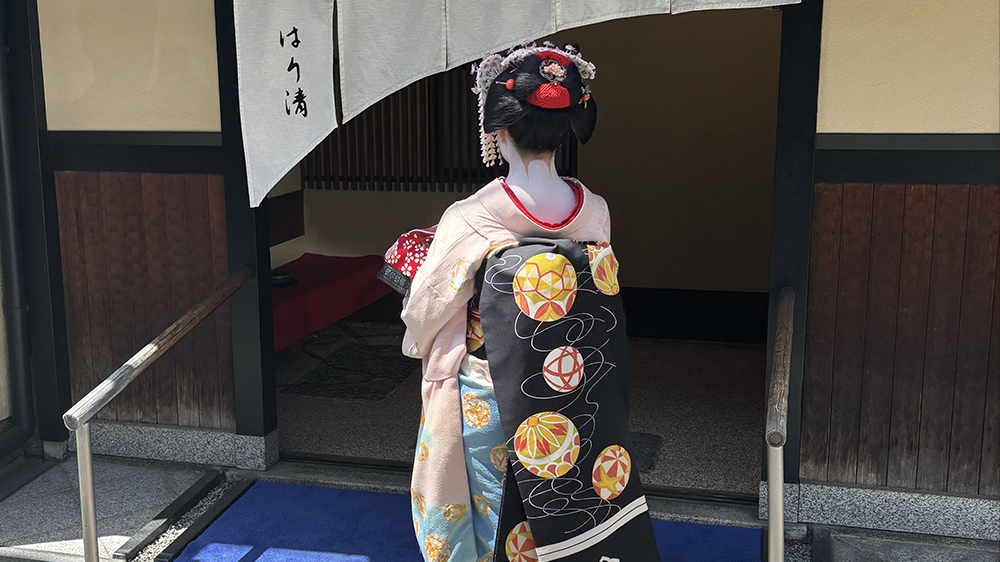
Few images capture the elegance of Kyoto more beautifully than a maiko walking along a stone-paved street in an exquisite kimono. Her white makeup, elaborate hairstyle, and graceful movements seem to belong to another era.
Yet geiko and maiko are not figures from the past. They are professional artists who continue to study, perform, and preserve Kyoto’s living cultural traditions.
Visitors often search for a famous geisha in Kyoto or hope to see a maiko while exploring Gion. Before seeking such an encounter, however, it is helpful to understand who these artists are, how their world operates, and how visitors can experience the culture respectfully.
目次
What Are Kyoto’s Geisha Districts?
Kyoto’s traditional entertainment districts are known as kagai, meaning “flower towns.” These are communities where geiko and maiko live, train, and perform.
Kyoto has five principal kagai:
- Gion Kobu
- Gion Higashi
- Pontocho
- Miyagawacho
- Kamishichiken
Each district has its own history, atmosphere, artistic traditions, and annual performances.
Gion Kobu is the largest and perhaps the best known internationally. Pontocho is famous for its narrow alley running beside the Kamo River, while Kamishichiken is Kyoto’s oldest geisha district and has a quieter, more intimate character.
These districts are not simply tourist attractions. They are working communities composed of teahouses, training schools, performance venues, restaurants, and okiya—the houses with which geiko and maiko are affiliated.
A Living Tradition Shaped Over Centuries
Kyoto’s entertainment districts developed around temples, shrines, and popular gathering places. Over time, they became centers for highly refined hospitality and traditional performing arts.
Geiko and maiko entertain guests through Japanese dance, shamisen music, singing, conversation, and traditional party games known as ozashiki asobi.
Their role requires far more than wearing a beautiful kimono. Years of practice are needed to master movement, music, etiquette, conversation, and the subtle awareness required to create a welcoming atmosphere.
This dedication is one reason Kyoto’s geiko culture continues to fascinate people from around the world.
What Is the Difference Between a Maiko and a Geiko?
Outside Japan, the word “geisha” is commonly used for professional female entertainers trained in traditional Japanese arts. In Kyoto, however, a fully qualified artist is generally called a geiko.
A maiko is an apprentice who is training to become a geiko.
The distinction can be seen in their clothing, hairstyles, makeup, professional responsibilities, and level of experience.
The Life and Training of a Maiko
A young woman who wishes to become a maiko typically joins an okiya, where she learns the customs and discipline of the kagai.
Before making her formal debut, she usually completes an introductory training period. During this time, she studies subjects such as:
- Traditional Japanese dance
- Shamisen and other musical instruments
- Singing
- Kyoto dialect
- Tea and dining etiquette
- Formal greetings
- Conversation and hospitality
- Proper kimono movement
After her debut, a maiko continues taking lessons while attending evening engagements with senior geiko and other maiko.
Her days can be demanding. Lessons and rehearsals often take place during the day, followed by preparations and evening performances. The spectacular appearance seen by guests is supported by a disciplined routine of practice and professional development.
Recognizing a Maiko
Maiko are generally associated with more colorful and elaborate styling.
Their appearance may include:
- Long, decorative kimono sleeves
- A trailing obi
- Seasonal hair ornaments
- Traditional hairstyles created using their own hair
- White makeup with youthful details
- Distinctive tall wooden footwear
The design of a maiko’s clothing and accessories changes as she advances through her apprenticeship. Even small details can communicate her experience and position within the kagai.
Erikae: Becoming a Geiko
The transition from maiko to geiko is called erikae, literally meaning “changing the collar.”
The name refers to the change from the red-accented collar associated with a maiko to the white collar worn by a geiko. It represents professional maturity and the beginning of a new stage in the artist’s career.
By this point, she has spent years developing her dance, music, hospitality, and performance skills.
A geiko’s appearance is usually more understated than that of a maiko. Her kimono and accessories convey refinement rather than youthful decoration, allowing the focus to rest on her artistry and presence.
The Professional Life of a Geiko
A geiko continues studying throughout her career. Traditional dance and music demand lifelong practice, and artists regularly prepare new pieces for private engagements and public performances.
Experienced geiko may also guide younger maiko, helping pass Kyoto’s customs, artistic techniques, and professional standards to the next generation.
During an engagement, a geiko may perform dance or music, lead conversation, explain traditions, and invite guests to participate in ozashiki games. Her ability to understand the mood of the room is an important part of her artistry.
Can Visitors Meet a Geiko or Maiko in Kyoto?
Yes, but a respectful, properly arranged experience is very different from attempting to approach someone on the street.
Geiko and maiko are usually traveling between lessons, appointments, and evening engagements when they are seen in public. They are working professionals, not street performers.
For visitors, the most meaningful encounter takes place in an organized setting where there is time for performance, conversation, cultural explanation, and photographs with permission.
Private Ozashiki Experiences
Traditionally, entertainment at certain teahouses operates through established relationships and introductions. First-time international visitors may therefore find it difficult to arrange an authentic engagement independently.
Today, selected restaurants, hotels, cultural organizers, and specialist services make these experiences more accessible.
A thoughtfully arranged geiko or maiko experience may include:
- A traditional meal
- Japanese dance
- Live shamisen music
- Conversation with interpretation
- Traditional ozashiki games
- A photography session
The atmosphere is usually intimate and refined. Rather than watching from a distant theater seat, guests can experience the details of the performance and hospitality at close range.
Seasonal Dance Performances
Kyoto’s annual dance productions offer another excellent introduction to geiko and maiko culture.
Well-known performances include:
- Miyako Odori
- Kyo Odori
- Kamogawa Odori
- Kitano Odori
- Gion Odori
These productions bring together dance, music, costumes, and seasonal stage design. They provide an opportunity to appreciate the training and coordination of an entire geisha district.
Performance schedules and ticket arrangements vary, so visitors should check current information before traveling.
Etiquette When Seeing a Geiko or Maiko
The popularity of Gion has sometimes led to crowding and intrusive behavior. Visitors should remember that the historic streets are also residential and professional spaces.
If you see a geiko or maiko outdoors:
- Do not block her path
- Do not follow or chase her
- Do not touch her clothing or accessories
- Do not enter private streets or properties
- Do not use flash photography at close range
- Ask permission before taking a posed photograph
- Follow all local signs and photography restrictions
A brief glimpse should be treated as part of the atmosphere of Kyoto, not as an opportunity to pursue someone for a photograph.
Booking an organized experience is more respectful and also provides a far richer understanding of the culture.
Why Kyoto’s Geiko Culture Still Matters
Geiko and maiko preserve more than an elegant visual tradition. Their work supports dance teachers, musicians, kimono specialists, hairdressers, dressers, craftspeople, restaurants, teahouses, and performance venues.
The kagai therefore represents an entire cultural ecosystem.
Maintaining this world is not easy. Years of training are required, and the discipline of traditional professional life can feel distant from modern lifestyles. Kyoto’s geisha districts must also balance privacy and authenticity with growing international interest.
Public performances, cultural programs, responsible tourism, and carefully organized private experiences can help visitors appreciate the tradition without reducing it to a spectacle.
A Culture Passed to the Next Generation
One of the most remarkable aspects of Kyoto’s geiko culture is its continuity.
Dance movements, musical techniques, seasonal customs, and forms of hospitality are passed directly from senior artists and teachers to younger performers. This creates a living connection between generations.
The tradition also continues to evolve. Geiko and maiko may participate in international events, cultural presentations, interviews, and carefully managed digital programs. These new formats can introduce the culture to a wider audience while preserving the standards of the kagai.
The goal is not simply to protect something old. It is to allow a sophisticated artistic profession to remain meaningful in the present.
Experience Geiko and Maiko Culture Respectfully
Seeing a maiko in Kyoto can be memorable, but understanding her training and cultural role makes the encounter far more meaningful.
The best experience is not found by waiting with a camera on a crowded street. It comes from entering a setting where the artists can perform properly, guests can ask thoughtful questions, and everyone can share the occasion with mutual respect.
A private geiko or maiko experience offers a rare opportunity to enjoy traditional dance, music, conversation, cuisine, and Kyoto hospitality together.
When approached with curiosity and consideration, it becomes more than entertainment. It becomes an encounter with one of Kyoto’s most refined living traditions.rformances, seasonal Kyoto cuisine, and meaningful cultural interaction in an elegant private setting.
AUTHENTIC KYOTO EXPERIENCE